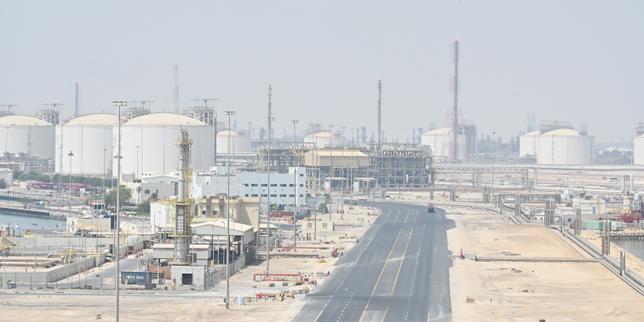
The global energy market is currently walking on a knife-edge. You’ve probably noticed your utility bills haven't exactly plummeted, and there's a good reason for that anxiety. While oil usually grabs the headlines when rockets fly in the Middle East, the real story right now is liquefied natural gas (LNG). Europe’s messy divorce from Russian pipeline gas has left the continent dangerously dependent on sea-borne shipments, and those shipments are currently caught in a geopolitical crossfire that shows no signs of cooling down.
It’s not just about a temporary spike in prices. We’re looking at a fundamental shift in how energy security is calculated. When the Israel-Hamas war intensified and sparked broader regional instability, including the Red Sea blockade by Houthi rebels, the math for European energy buyers changed overnight. They’re no longer just buying a commodity; they’re paying a massive "uncertainty premium" that reflects the risk of the world’s most vital maritime arteries being choked off.
The end of the cheap gas era
For decades, Europe relied on the steady, boring flow of gas through Siberian pipelines. It was cheap, it was consistent, and it allowed for a certain level of industrial complacency. That world is dead. Since 2022, the EU has pivoted toward LNG, much of which comes from the United States and Qatar. This move was a tactical win for energy independence from Russia, but it introduced a new vulnerability: the sea.
Unlike a buried pipe, a tanker is a slow-moving target subject to the whims of regional warlords and international maritime law. When tensions flare in the Middle East, the Strait of Hormuz and the Suez Canal become the most important stretches of water on the planet. About 20% of the world's LNG trade passes through the Strait of Hormuz. If that gate closes, even partially, the "choc gazier" or gas shock everyone's whispering about becomes an unavoidable reality.
We saw a glimpse of this when Chevron was forced to temporarily shut down the Tamar gas field off the coast of Israel. While Tamar primarily serves regional markets like Egypt and Jordan, its closure sent ripples all the way to the Dutch TTF—the benchmark for European gas prices. It proved that in today's interconnected market, a localized conflict in the Levant can lighten the wallets of a factory owner in Germany or a homeowner in France.
Why the Red Sea matters more than you think
The Red Sea isn't just a transit point; it's the main artery for Qatari gas heading to Europe. Qatar is one of the world's largest LNG exporters, and they’ve historically favored the Suez Canal route to reach European terminals. When Houthi rebels began attacking commercial vessels, the risk profile for these multi-million dollar cargoes skyrocketed.
Many tankers are now opting for the "long way around" the Cape of Good Hope. This isn't just a minor detour. It adds about 9 to 14 days to the journey. Think about the logistics. Longer journeys mean tankers are tied up for more time, which effectively reduces the total number of ships available globally. It’s a supply chain squeeze. You’re paying more not because there’s less gas in the ground, but because it’s getting harder and more expensive to move it from point A to point B.
Insurance costs have also gone through the roof. War risk premiums for vessels traveling through the Red Sea have spiked, and those costs are passed directly to the consumer. It’s a silent tax on energy that most people don't see until they open their monthly statement.
The psychological floor of the market
Markets hate a vacuum, but they hate uncertainty even more. Traders are currently pricing in a "worst-case scenario" even when the day-to-day data looks okay. European storage levels are actually quite healthy—often hovering around 60% to 70% even late in the winter season. Ordinarily, high storage would mean lower prices. But the Middle East conflict has created a psychological floor.
Investors are terrified of a "perfect storm" where a cold snap in Asia increases competition for cargoes at the same time a major Middle Eastern supply point gets hit. This fear keeps prices artificially high. It’s a classic case of the market acting on what might happen rather than what is happening.
I’ve seen this play out before. In energy trading, perception is reality. If the market believes a strike on Iranian infrastructure or a closure of the Strait of Hormuz is even 5% likely, they’ll trade as if it’s a certainty to protect their downside. This "risk-off" behavior is what's keeping the European industrial sector in a state of semi-paralysis. High energy costs make chemical production, steel manufacturing, and glassmaking almost unviable in some parts of the EU.
Asia is the silent competitor
You can't talk about the Middle East gas shock without looking at China, Japan, and South Korea. They don't have pipelines; they’ve always lived on LNG. When European buyers get nervous about Middle Eastern supply, they start bidding up the price of American cargoes to lure them away from Asian ports.
This creates a global bidding war. The Middle East conflict has essentially linked the energy fates of a Tokyo utility and a Madrid power plant. If Qatar’s exports are disrupted, both regions will fight over the remaining scraps from the US Gulf Coast. It’s a zero-sum game. Every ship redirected to the English Channel is a ship that doesn't dock in the East China Sea, and the highest bidder wins.
The myth of the quick fix
Politicians love to talk about "diversification" as if it’s something you can do over a weekend. It's not. Building a new LNG import terminal (FSRU) takes time. Signing long-term contracts takes months of negotiation. And most importantly, increasing global production capacity takes years of massive capital investment.
The US is expanding its export capacity, and Qatar is working on the North Field East project, which will significantly boost its output by 2026 and 2027. But we aren't there yet. We’re in the "gap years." This is the period where global supply is tight, demand is rising, and the geopolitical landscape is a minefield.
People often ask why we don't just use more renewables to offset this. While wind and solar are growing at a record pace, they can't yet handle the "baseload" requirements of heavy industry or the massive spikes in heating demand during a deep freeze. Gas is the "bridge fuel," but that bridge is currently under fire.
What happens if the conflict escalates
If we see a direct confrontation involving major regional powers, the current price volatility will look like a calm day at the beach. A total closure of the Strait of Hormuz would likely double or triple gas prices in weeks. We aren't just talking about expensive heating; we're talking about energy rationing and industrial shutdowns on a scale not seen since the 1970s.
Even if the conflict stays "contained" to its current borders, the damage is done. The trust in global supply chains is broken. Companies are now looking at "near-shoring" energy-intensive processes or simply moving them to the US, where gas prices are a fraction of what they are in Europe because the supply is domestic and doesn't have to cross an ocean.
Practical steps for the road ahead
If you're managing a business or just trying to protect your personal finances from the next leg of this energy crisis, stop waiting for "normal" to return. The volatility is the new normal.
- Lock in rates when the news cycle is quiet. Markets often overreact to bad news and then drift during lulls. Use those lulls to sign fixed-price contracts if you're a commercial user.
- Invest in efficiency now. Every therm of gas you don't use is a therm you don't have to buy from a volatile global market. The ROI on heat pumps and industrial insulation has never been better.
- Watch the spreads. Keep an eye on the difference between US Henry Hub prices and European TTF. If the gap narrows, the pressure might be easing. If it widens, get ready for a bumpy ride.
- Monitor inventory levels. Don't just look at the price; look at the storage data from Gas Infrastructure Europe (GIE). If storage drops faster than the five-year average during a conflict escalation, prices will moon.
The era of ignoring where your energy comes from is over. We’re all energy analysts now, whether we like it or not. The situation in the Middle East is a stark reminder that the "global village" is actually a collection of neighborhoods that don't always get along—and the pipes and paths connecting them are much more fragile than they look. Stay hedged and stay informed.