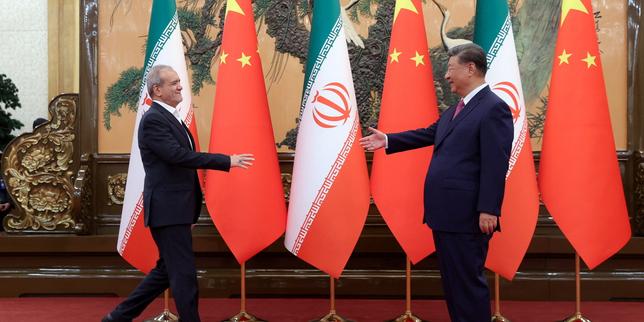
Beijing is officially losing its patience with the chaos in the Middle East. While the rest of the world watches the back-and-forth strikes between Israel, the U.S., and Iranian-backed groups, China is looking at its ledger. For the CCP, this isn't just about regional stability or human rights. It’s about the massive flow of oil that fuels the Chinese economy and the strategic investments they’ve spent decades building.
When American and Israeli strikes hit targets linked to Tehran, they aren't just hitting military assets. They’re rattling the cage of China’s primary energy partner. You have to understand that China is the world's largest importer of crude oil. A huge chunk of that comes from Iran, often through "dark fleet" tankers and clever re-labeling to dodge sanctions. When the bombs start falling, those supply lines get nervous.
Beijing’s recent "expression of concern" sounds like standard diplomatic fluff, but it’s actually a sharp warning. They’re tired of Western military intervention messing with their bottom line.
The Oil Connection That Dictates Beijings Loyalties
Money talks. China doesn't support Iran because they share a deep ideological bond. They do it because they need the gas. Over the last few years, China has become the literal lifeblood of the Iranian economy. While Western sanctions tried to starve Tehran of cash, Beijing stepped in as the buyer of last resort.
Recent data suggests China imports upwards of 1 million barrels of Iranian oil per day. That’s a massive volume. Most of this flows into small, independent refineries in the Shandong province. These "teapots" don't have much international exposure, so they don't care about U.S. sanctions. For them, Iranian crude is a bargain. For the Chinese government, it’s a strategic necessity.
When the U.S. conducts retaliatory strikes against Iranian proxies in Iraq or Syria, or when Israeli operations target Iranian interests, the risk of a wider maritime conflict spikes. If the Strait of Hormuz gets squeezed, China’s energy security takes a direct hit. That’s why you see Wang Yi and other top officials suddenly sounding like peace activists. It’s not about pacifism. It’s about protecting the tankers.
Security vs Sovereignty in the Chinese Playbook
China loves to talk about "sovereignty" and "non-interference." It’s their favorite shield. They use it to deflect criticism of their own domestic policies, but they also use it as a weapon against U.S. foreign policy.
By condemning strikes against Iranian-linked targets, Beijing is positioning itself as the "sane" alternative to American "hegemony." They’re telling the Global South that while the U.S. drops bombs, China builds bridges—and pipelines. It’s a powerful narrative that works well in capitals across Africa, Southeast Asia, and South America.
But don't be fooled. This isn't a principled stance. China has stayed remarkably quiet about Iran’s own destabilizing actions through groups like the Houthis or Hezbollah. Why? Because as long as those groups aren't hitting Chinese ships, Beijing doesn't see it as their problem. The moment the Houthis started accidentally targeting vessels with Chinese links in the Red Sea, the tone in Beijing shifted instantly. They started leaning on Tehran to reign in the rebels.
It shows that China’s "unconditional support" actually has plenty of conditions.
The US Israeli Strike Ripple Effect
Every time a missile hits an Iranian-backed militia, the price of shipping insurance goes up. For a country that relies on the "Belt and Road Initiative" to move goods globally, higher shipping costs are a nightmare.
The recent escalations have forced China to acknowledge a reality they’ve tried to avoid: they can't be a global superpower that only does business. Eventually, you have to deal with the security side of things. The U.S. has been the "policeman" of the Middle East for decades, ensuring the free flow of oil. China has been a "free rider" in this system, enjoying the security the U.S. Navy provides while simultaneously criticizing U.S. presence in the region.
Now that the security situation is breaking down, China is in a corner. They don't want to get militarily involved—they don't have the carrier groups or the logistics to do it anyway—but they can't afford to let the region burn.
Why the 25 Year Pact Matters Right Now
In 2021, China and Iran signed a 25-year "Strategic Cooperation Agreement." It was rumored to be worth $400 billion. While the actual investment numbers haven't hit those heights yet, the intent is clear. China wants Iran to be its permanent anchor in the Persian Gulf.
- Infrastructure: China is eyeing Iranian ports like Chahbahar.
- Telecoms: Huawei and other Chinese firms are deeply embedded in Iran's digital backbone.
- Military Drills: We’ve seen joint naval exercises between China, Russia, and Iran.
These aren't just symbolic gestures. They’re building an alternative power bloc. When the U.S. strikes Iranian assets, it’s seen in Beijing as an indirect strike on this burgeoning alliance. It’s a challenge to the "new world order" that Xi Jinping is trying to curate.
How to Track This Developing Friction
You shouldn't just listen to what the Chinese Foreign Ministry says in their press briefings. That’s the scripted version. If you want to see how this actually plays out, you have to watch the trade data and the movement of the "dark fleet."
If China starts diversifying its oil sources even further—moving toward more Russian or Brazilian crude—it’s a sign they think Iran is becoming too hot to handle. Conversely, if they double down on Iranian investments despite the strikes, they’re signaling that they’ve decided to fully back Tehran against the West.
Watch the yuan-denominated oil trades. One of China’s biggest goals is "petroyuan"—breaking the dollar’s grip on the oil market. Iran is the perfect partner for this because they’re already locked out of the dollar system. Every strike that pushes Iran further into China’s arms actually helps Beijing's long-term goal of de-dollarization.
The "anger" from Beijing isn't just about the loss of life or the breach of international law. It's the frustration of a giant that wants to keep its head down and keep growing, but finds itself tethered to a partner that keeps getting into fights.
Keep an eye on the official statements from the Shanghai Cooperation Organisation (SCO). Iran recently became a full member. If the SCO starts issuing collective condemnations of U.S. actions, we’re entering a new era of formal bloc-based confrontation.
Stop looking at these Middle East strikes as isolated military events. Start looking at them as tremors in the foundation of the global economy. China certainly is.
If you're looking to hedge against this volatility, pay attention to energy sectors in markets less exposed to the Persian Gulf. The shift in global trade routes isn't coming; it’s already happening. Check the weekly shipping freight rates and the Suez Canal transit numbers. Those figures tell the real story of this conflict far better than any diplomat can.