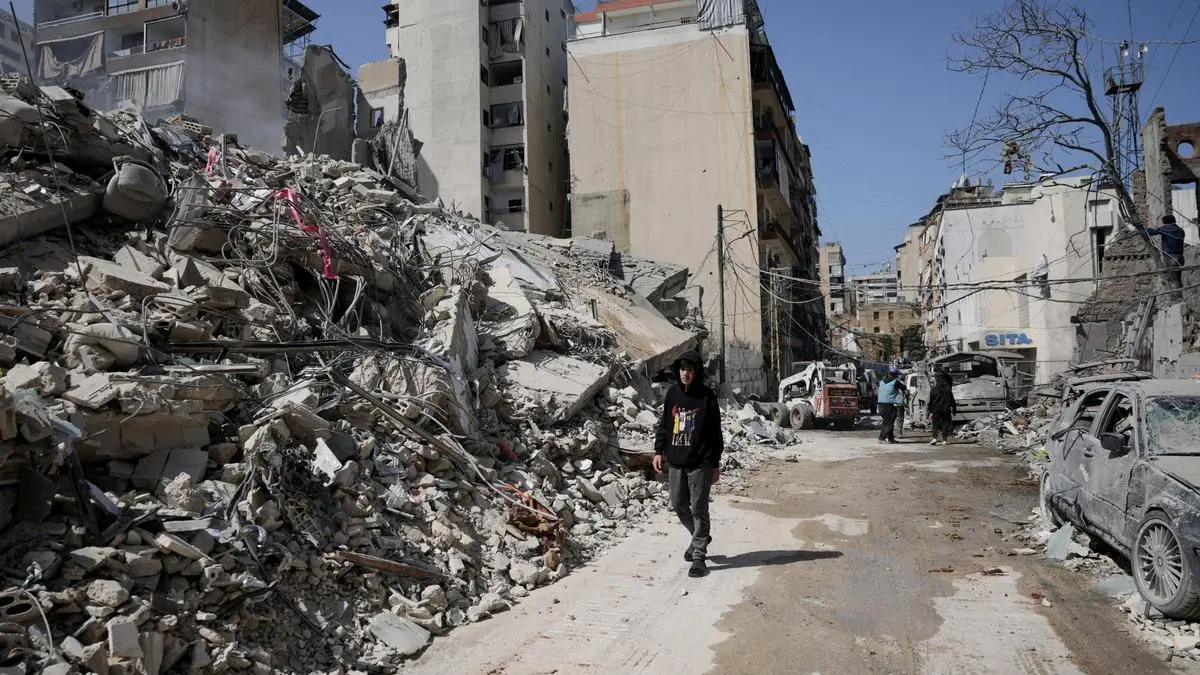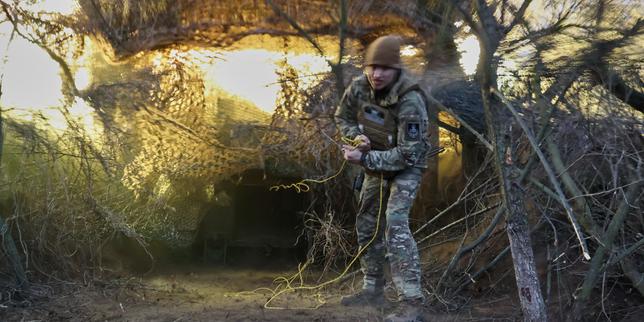
The war in Ukraine has entered a phase of brutal, grinding expansion. On one side, Moscow has committed to a massive tactical push spanning 100 kilometers across the Donetsk and Zaporizhzhia regions. On the other, Kyiv is bypasssing the trenches entirely, striking deep into the heart of the Russian military-industrial complex. This twin-track escalation marks a shift from localized battles for specific villages to a systemic attempt by both nations to break the other’s capacity to stay in the fight.
While Russian infantry and armor attempt to overwhelm Ukrainian defenses along a massive arc, Ukraine is targeting the very source of Russian air power. Recent strikes on two major aircraft manufacturing plants deep inside Russian territory highlight a strategy of "industrial decapitation." By hitting the facilities that produce and repair the Su-34 and Su-35 fighter jets, Ukraine aims to ground the Russian Air Force before its planes even reach the runway.
The Geography of the Hundred Kilometer Push
Moscow’s decision to activate a 100-kilometer stretch of the front is not merely an attempt to gain territory. It is a stress test for the Ukrainian military. By attacking simultaneously across such a wide expanse in the east and south, Russian commanders are forcing Kyiv to make impossible choices about where to deploy its limited reserves and dwindling ammunition stocks.
This is a war of attrition on a scale not seen in Europe since 1945. The Russian strategy relies on a massive superiority in artillery and manpower. They are betting that if they push everywhere at once, the Ukrainian line will eventually snap at its weakest link. This "active defense" has morphed into a full-scale offensive that seeks to seize the remaining parts of the Donbas while creating a buffer zone in Zaporizhzhia to protect the "land bridge" to Crimea.
Ukrainian forces find themselves in a precarious position. They are trading space for time, digging in where the terrain allows, and using precision strikes to blunt the Russian advance. However, the sheer breadth of the offensive makes traditional defense difficult. When the front moves as a single, massive wave, there are no quiet sectors. Every battalion is engaged. Every battery is under fire.
Targeting the Aluminum Heart of the Russian Air Force
While the ground war remains a meat grinder, Ukraine’s long-range drone program has become its most effective asymmetric tool. The recent strikes on two Russian aviation plants are a masterclass in hitting an opponent where it hurts most. These aren't just symbolic attacks. They target the specialized infrastructure required to maintain modern combat aircraft.
A modern fighter jet is a fragile machine. It requires constant maintenance, specialized spare parts, and high-precision calibration. If you destroy the hangar where the wings are attached or the laboratory where the avionics are tested, you don't just lose one plane. You lose the ability to field dozens of them.
The plants targeted are central to the production of Russia’s most modern airframes. By bringing the war to the factory floor, Kyiv is telling the Russian defense industry that no distance is safe. This forces Moscow to divert precious air defense systems away from the front lines to protect its industrial heartland. Every S-400 battery moved to protect a factory in the Russian interior is one less battery protecting Russian troops from Ukrainian HIMARS or Storm Shadow missiles.
The Logistics of Sustained Escalation
War is, at its core, a contest of logistics. Russia’s current offensive requires a staggering amount of fuel, shells, and fresh bodies. The 100-kilometer push is a logistical nightmare even for a military as large as Russia’s. Moving supplies to such a broad front requires a complex web of rail and road networks that are constantly under threat from Ukrainian sabotage and drone strikes.
Ukraine, meanwhile, faces a different logistical crisis. It is entirely dependent on Western aid for its high-end capabilities. The delay in shell shipments has forced Ukrainian gunners to ration their fire, often waiting for the perfect target while Russian batteries fire with near-impunity. This disparity is what has allowed the Russian front to expand.
The "how" of this escalation is found in the dark corners of global supply chains. Russia has successfully pivoted its economy to a war footing, sourcing microchips through third countries and ramping up domestic production of "dumb" bombs converted into precision-guided glide bombs with cheap kits. These glide bombs have become the scourge of Ukrainian defensive positions, allowing Russian jets to strike from safely behind their own lines.
The Asymmetric Response and the Death of Distance
The strike on Russian aviation plants proves that "distance" is a dying concept in modern warfare. Ukraine has developed a domestic drone industry from almost nothing, producing one-way "suicide" drones that can fly hundreds of kilometers with remarkable accuracy. These are not the high-tech, multi-million dollar Reapers used by the United States. They are plywood and fiberglass machines powered by simple engines, carrying just enough explosives to wreck a sensitive piece of machinery.
These drones are the "poor man’s cruise missile." They are cheap to build, difficult to detect on radar because of their low altitude and small size, and can be launched from the back of a pickup truck. When Ukraine sends dozens of these at a single target, they overwhelm the local air defenses. It only takes one getting through to cause millions of dollars in damage and months of production delays.
This creates a psychological front as well. For the workers in those Russian factories, the war was something that happened "out there" in the occupied territories. Now, the sirens are screaming in their own cities. The industrial workers of Russia are learning what the citizens of Kharkiv and Kyiv have known for years.
The Zaporizhzhia Pivot and the Threat to the South
While the world watches the Donbas, the 100-kilometer push in Zaporizhzhia carries higher strategic stakes. This is the gateway to the south. If Russia manages to push the Ukrainian lines back significantly here, they secure their grip on the occupied nuclear power plant and ensure that the land route to Crimea remains out of reach for Ukrainian tube artillery.
The terrain in Zaporizhzhia is flat and open. It is a graveyard for tanks. Both sides have laid some of the most dense minefields in history. To advance here, Russia is using "meat waves"—small groups of infantry sent forward to identify Ukrainian firing positions, followed by massive artillery barrages. It is a slow, bloody, and expensive way to fight, but the Kremlin has shown a total disregard for the cost in human life as long as the map changes color.
The Fragility of the Russian Momentum
Despite the current offensive, Russia's position is not as dominant as it appears. The 100-kilometer front is a massive gamble. It consumes resources at a rate that is unsustainable in the long term, even for Russia. Their stocks of Soviet-era tanks and armored vehicles are finite. While they can refurbish old T-62s and T-55s, these are no match for modern anti-tank weapons on a one-to-one basis.
The success of the Russian push depends on the Ukrainian line breaking before the Russian logistical system collapses under the weight of its own requirements. If Ukraine can hold the line—even if they lose a few kilometers of scorched earth—while continuing to wreck the Russian industrial base with drones, the tide could shift again.
The strikes on the aviation plants are a signal to the West as much as to Moscow. They demonstrate that Ukraine has the will and the capability to take the fight to Russian soil, even without the permission to use Western long-range missiles for such tasks. It is a declaration of independence in the middle of a struggle for survival.
The Shifting Calculus of Modern Conflict
The conflict is no longer just about who has the most soldiers or the best tanks. It is about who can iterate faster. Ukraine’s drone operators are constantly updating their software to bypass Russian electronic warfare. Russian engineers are constantly up-armoring their tanks with "turtle" shells to survive drone hits.
This is a live-fire laboratory for the future of war. We are seeing the end of the era where a large nation could rely on its size to stay safe. In a world of cheap, long-range precision, every factory is a front-line position. Every rail bridge is a target. The 100-kilometer push in the east is a 19th-century strategy being met by 21st-century technology.
The Russian offensive will likely continue through the summer. They will seek to capitalize on their current advantage in numbers and firepower. But every day that a Russian aircraft plant remains offline or a refinery burns, the foundation of that offensive grows a little weaker.
The real story isn't just the movement of the line on a map. It is the systematic destruction of the machinery of war, happening hundreds of miles away from the sound of the guns. If you want to know how the ground war ends, stop looking at the trenches and start looking at the factories.