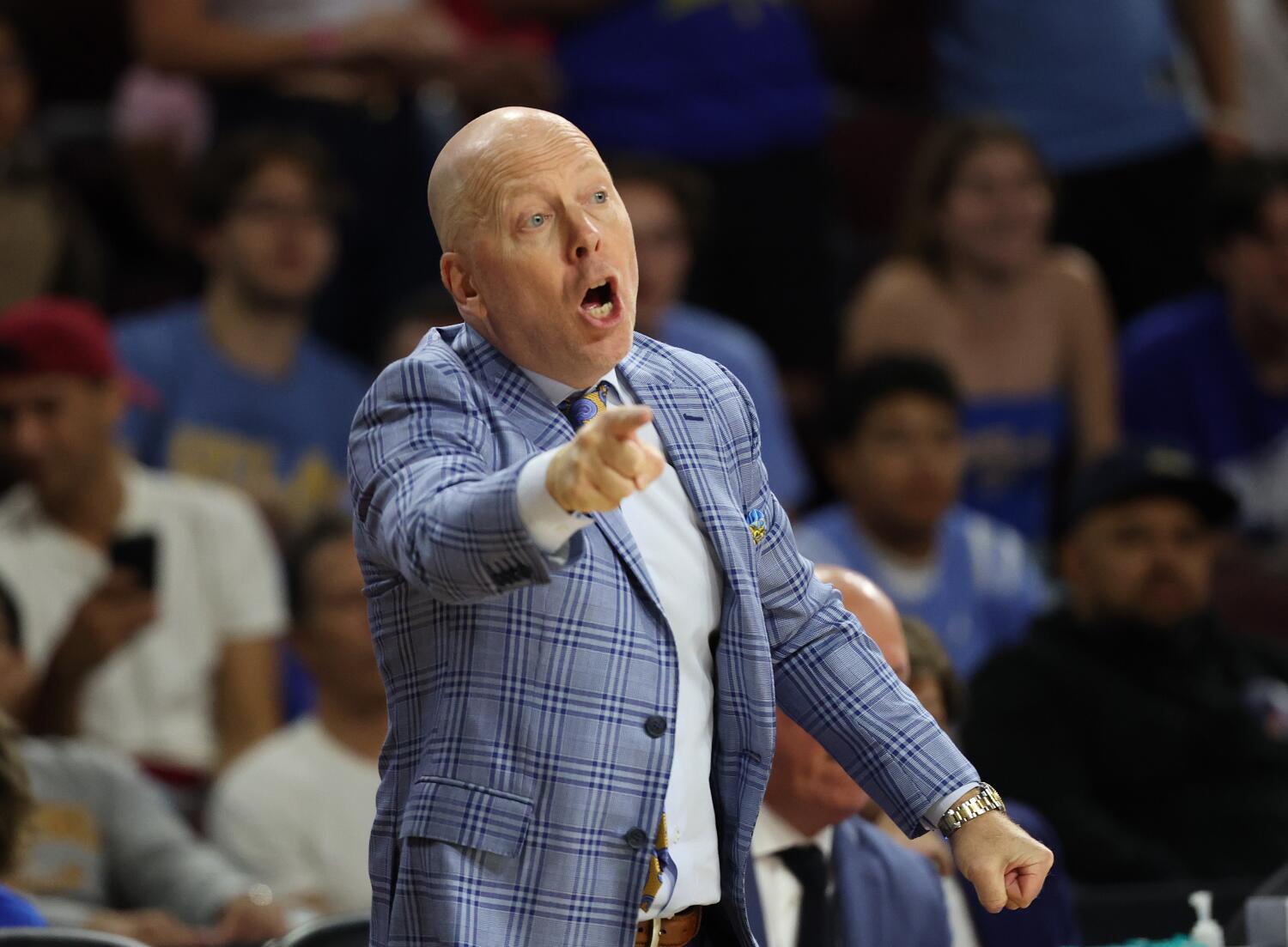
The NCAA Selection Committee just handed Mick Cronin a riddle wrapped in a cross-country flight. By slotting UCLA as a No. 7 seed against a physical, defensive-minded No. 10 UCF squad in Philadelphia, the bracket-makers have set the stage for a classic stylistic clash that threatens to end the Bruins' season before the second weekend even begins. This is not a reward for a solid season; it is a high-stakes stress test of UCLA’s half-court execution against one of the most disruptive units in the Big 12.
For UCLA, the No. 7 seed represents a precarious middle ground. They avoided the "First Four" in Dayton, but they lost the luxury of a preferred regional destination. Instead of staying out West, they are being shipped to the Wells Fargo Center, deep in East Coast territory, to face a Golden Knights team that thrives on making games ugly. To survive the opening round, the Bruins must solve a UCF defense that ranks among the nation's elite in forcing turnovers and contesting the rim.
The Geography of Disadvantage
Bracketology is often discussed in terms of matchups, but logistics matter just as much in the opening round. UCLA is traveling across three time zones to play a game in a city where they have no natural footprint. While Philadelphia is a neutral site on paper, the travel fatigue and the shift in routine can be the marginal difference in a game decided by two or three possessions.
The Bruins have spent the year trying to find a consistent offensive identity. Sending that search party to the East Coast against a Big 12 opponent is a recipe for frustration. UCF doesn’t just beat teams; they grind them down. They play a brand of basketball that is physically taxing, prioritizing offensive rebounding and second-chance points. If UCLA starts slow due to the travel lag, they may find themselves chasing a lead against a team that knows exactly how to bleed the clock.
Breaking the Golden Knight Pressure
The core of this game lies in the backcourt. UCF’s defensive philosophy is built on disruption. They want to push the ball handler toward the sidelines and use their length to take away passing lanes. For a UCLA team that has occasionally struggled with high-pressure man-to-man looks, this is a nightmare draw.
Cronin’s teams are usually defined by their "toughness," a nebulous sportswriting term that translates to taking care of the ball and winning the 50-50 scraps. Against UCF, that toughness will be tested at the point of attack. If UCLA's guards cannot handle the initial wave of pressure without burning 15 seconds off the shot clock, the Bruins will be forced into late-clock heaves. That is exactly where UCF wants them.
The Battle for the Paint
UCLA’s path to victory involves neutralizing the Knights' athleticism near the basket. UCF doesn't just block shots; they alter the geometry of the drive. They play with a verticality that scares off smaller guards, forcing teams to rely on mid-range jumpers.
- Rim Protection: UCF’s interior defenders are disciplined. They stay on their feet and wait for the driver to commit.
- Rebound Margins: The Bruins cannot afford to give up double-digit offensive rebounds. If they do, the possession count will tilt heavily in UCF's favor.
- Free Throw Disparity: This will be a physical game. The officiating crew’s tolerance for hand-checking will dictate whether UCLA can get to the line or if they will be bullied on the perimeter.
The Coaching Chess Match
Mick Cronin is a tournament veteran who understands how to shorten a game. Johnny Dawkins, however, has proven he can coach up an underdog. The tactical battle here centers on the "kill shots"—those 10-0 runs that define March Madness. UCLA needs to find a way to spark an offensive burst against a team designed to prevent them.
The Bruins often rely on a slow, methodical pace. While this limits turnovers, it also means every empty possession carries more weight. Against UCF, UCLA might actually benefit from pushing the pace before the Knights can set their half-court trap. It is a risky strategy for a team that prefers control, but playing UCF in a half-court slog is a coin flip at best.
Why the No. 7 Seed is a Trap
Historically, the 7-10 matchup is the most volatile in the tournament. The talent gap is non-existent. Often, the No. 10 seed is a team from a powerhouse conference—like the Big 12—that played a grueling schedule and is battle-hardened. UCF fits that description perfectly. They have spent the last four months playing in a league where there are no nights off.
UCLA, meanwhile, has navigated a conference transition that hasn't always provided the same level of nightly resistance. The jump in physicality from a standard conference game to a Big 12-style defensive slugfest can be jarring. If the Bruins expect a finesse game, they will be out of the tournament by Friday night.
Tactical Adjustment Priorities
To advance, UCLA needs to focus on three specific areas of the box score:
- Turnover Percentage: Anything over 12 turnovers for UCLA likely results in a loss. UCF converts live-ball turnovers into transition dunks better than almost anyone in their bracket.
- Corner Three Defense: UCF looks to drive and kick. UCLA’s wing defenders must stay home on shooters rather than over-helping in the paint.
- The "Third Scorer": Everyone knows who UCLA’s primary options are. The difference-maker will be whether a bench player or a secondary starter can contribute 12 to 15 points to relieve the pressure on the stars.
The Philadelphia Factor
The Wells Fargo Center is a massive arena that can feel cold and cavernous if the crowd isn't engaged. For an afternoon game, the atmosphere can be flat. UCLA has to bring its own energy. They cannot wait for a "home" crowd to get behind them, because in Philadelphia, the fans are more likely to pull for the underdog or simply wait for the next game on the schedule.
The Bruins’ history in the tournament is decorated with deep runs, but those runs were built on the backs of elite playmaking. This year’s squad is more blue-collar. They win by attrition. The problem is that UCF is the ultimate attrition team. It’s like trying to out-grind a whetstone.
Evaluating the Bench Depth
In a high-intensity game where fouls will be called frequently, bench depth becomes the hidden variable. UCLA’s rotation has shortened as the season progressed. If two of their starters find themselves in foul trouble early in the second half, the drop-off in production could be catastrophic. UCF tends to play a deeper rotation, using their fouls as a resource to keep their starters fresh for the final four minutes.
The Bruins need their second unit to do more than just "not lose the lead." They need active minutes—deflections, hustle plays, and the occasional bucket to keep the offense breathing. If the bench gives them nothing, the starters will be gassed by the time the game reaches the "winning time" stretch.
Facing the Reality of the Bracket
If UCLA manages to survive the Knights, their reward is likely a date with a No. 2 seed. But looking past UCF is the fastest way to an early exit. The Knights are a team that plays with a chip on their shoulder, representing a program that is still fighting for national respect. UCLA is the blue blood, the "big name" that every No. 10 seed wants to take down.
The pressure is entirely on the Bruins. For UCF, a win is a program-defining moment. For UCLA, a win is simply what is expected. Navigating that psychological disparity is often the hardest part of the first round.
Watch the early foul calls on UCLA’s primary rim protector. If the Bruins are forced to play a small-ball lineup to avoid foul trouble, UCF will feast on the glass and turn this game into a slow-motion blowout. UCLA must dictate the terms of engagement from the opening tip, or they will be just another storied program heading home early with a long, quiet flight back to Los Angeles.