Twenty-one miles.
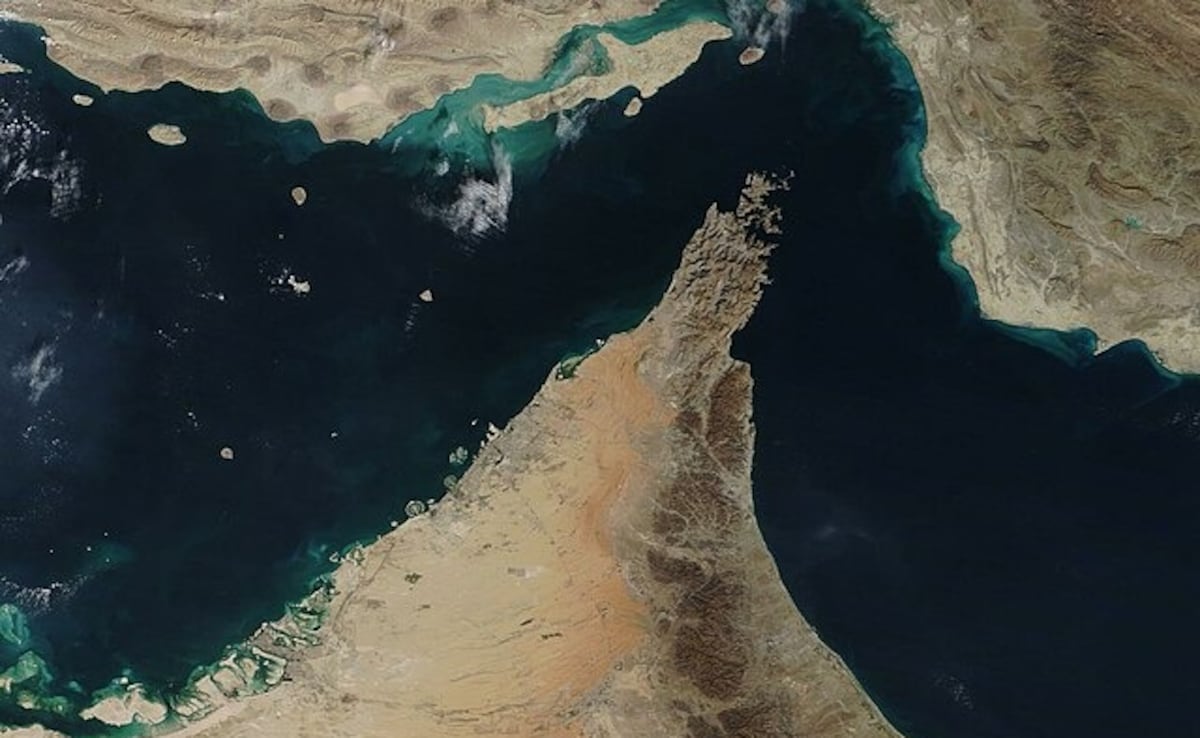
That is the width of the gap. If you were standing on the rugged, sun-scorched cliffs of Oman’s Musandam Peninsula, you could almost imagine seeing the Iranian coastline through a pair of decent binoculars. It is a distance shorter than a standard marathon. Yet, through this tiny, jagged throat of water known as the Strait of Hormuz, the lifeblood of the modern world pulses with a frantic, rhythmic intensity.
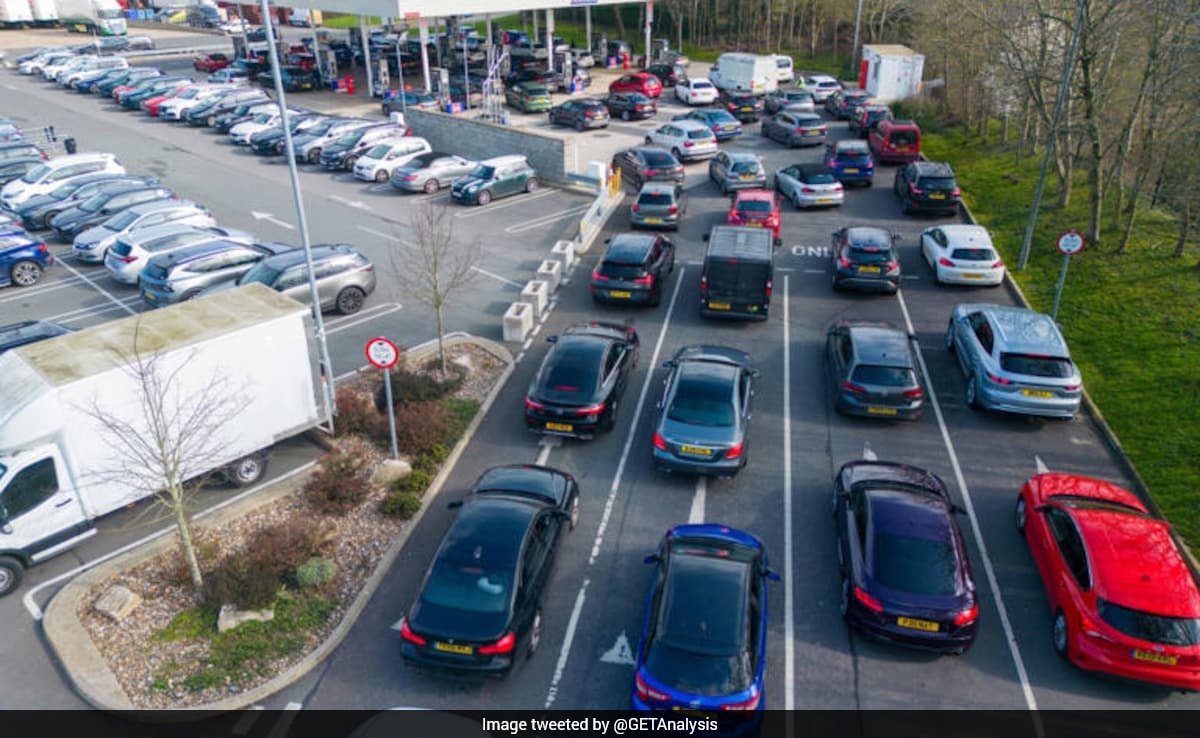
Consider Rajesh. He is a fictional composite of the millions of commuters in Bengaluru, sitting in a stationary car at 8:30 AM. The humid air is thick with the smell of exhaust. He glances at his fuel gauge, then at the price scrolling on a digital billboard at the petrol station. To Rajesh, the geopolitical tension in the Persian Gulf is a headline he swipes past on his phone. He doesn't see the connection between the grey, steel hull of a VLCC (Very Large Crude Carrier) navigating a narrow shipping lane five thousand kilometers away and the fact that his monthly commute just became five hundred rupees more expensive.
But the connection is absolute. It is visceral. India is not just a neighbor to this waterway; it is tethered to it by an invisible, high-tension wire.
The Geography of Vulnerability
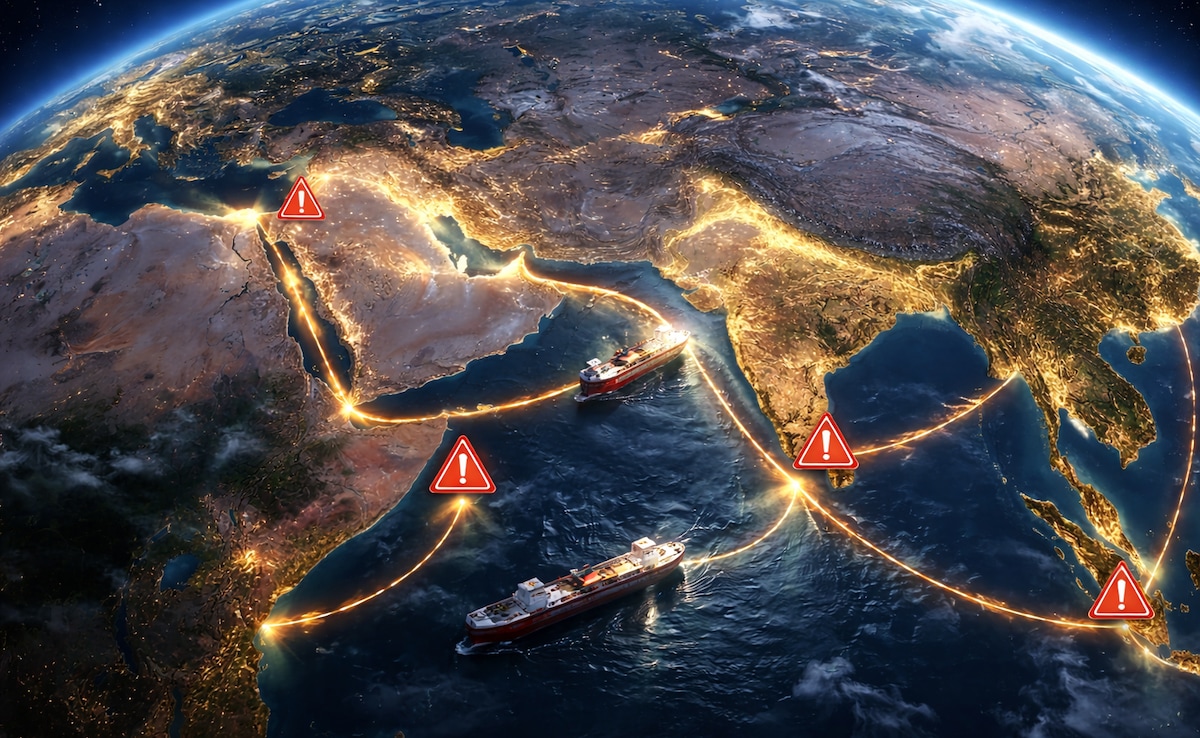
The Strait of Hormuz is a geographic fluke that became an economic chokehold. It connects the Persian Gulf with the Gulf of Oman and the Arabian Sea. On a map, it looks like a pinched nerve. Through this nerve passes roughly one-fifth of the world’s total oil consumption. For India, the stakes are even higher. Nearly 60% of our crude oil imports and a massive chunk of our Liquefied Natural Gas (LNG) transit through this specific patch of blue.
Imagine a giant funnel. The wide end spans the oil fields of Iraq, Kuwait, Saudi Arabia, and the UAE. The narrow spout is Hormuz. If a single pebble—or in this case, a single naval mine or a stray drone—blocks that spout, the pressure builds instantly.
The mathematics of a shutdown are terrifying. Economists estimate that even a temporary disruption could send global oil prices screaming past $150 a barrel. For a nation like India, which imports over 80% of its oil, this isn't just a "business challenge." It is a systemic shock. When oil prices spike, the cost of transporting a tomato from a farm in Maharashtra to a market in Delhi spikes. The cost of plastic packaging spikes. The value of the Rupee sags under the weight of a widening trade deficit.
The Ghosts in the Water
History has a way of repeating itself, usually with higher stakes. During the "Tanker War" of the 1980s, hundreds of merchant ships were attacked in these waters. Sailors lived in a state of perpetual, low-grade dread.
To understand the human element, you have to look at the merchant mariner. Imagine a young captain from Kerala, commanding a vessel worth two hundred million dollars, carrying a cargo that could power a small city for a month. As he enters the Strait, the atmosphere on the bridge changes. The radar screen isn't just showing traffic; it’s showing potential threats. Speedboats zip through the waves like hornets. High-altitude drones circle unseen.
The mariner knows that the "Deep Water" channel—the only part of the Strait deep enough for his massive ship—is only two miles wide in each direction. There is no room to maneuver. There is no "pulling over" if things go wrong. He is a target in a narrow hallway.
India’s response to this vulnerability has been quiet but intense. Operation Sankalp, the Indian Navy's persistent presence in the region, isn't just about military posturing. It is a psychological shield. When an Indian-flagged tanker sees an Indian destroyer on the horizon, the tension on the bridge drops by a few degrees. It is a message: we are watching our own.
The Ripple Effect on the Kitchen Table
The narrative of global energy often feels like it belongs in wood-paneled boardrooms or the Situation Room. We talk about "barrels per day" and "strategic reserves" as if they are abstract points on a graph. They aren't.
When the Strait of Hormuz catches a cold, the Indian middle class gets pneumonia.
Think about the "Strategic Petroleum Reserves" (SPR). These are massive, man-made salt caverns buried deep underground in places like Visakhapatnam and Mangaluru. They are filled with millions of barrels of emergency crude. In a metaphorical sense, they are India’s national "inverter" battery. If the main power line—the Strait—is cut, we can keep the lights on for about nine days.
But nine days is a blink of an eye in a geopolitical crisis.
This is why India is pivoting. The frantic push toward green hydrogen, the subsidies for electric scooters, and the massive solar farms in Rajasthan are not just about "saving the planet." They are about breaking the leash. Every megawatt of power generated by the Indian sun is a drop of oil we don't have to risk bringing through the Strait.
The Invisible War of Nerves
There is a specific kind of silence that happens when a major shipping lane is threatened. It’s the silence of insurance markets.
Insurance companies are the ultimate realists. When tensions rise between Iran and the West, the "War Risk Premium" for ships entering the Gulf doesn't just increase—it explodes. This is a hidden tax on every consumer. You don't see it on your receipt, but it’s there, baked into the price of your laptop, your sneakers, and your medicine.
The Strait of Hormuz is a theater of the "Grey Zone." This is a state of being that is neither peace nor war. It is a constant simmer. A seized tanker here, a limpet mine there. It is designed to keep the world off-balance. For India, navigating this requires a diplomatic dance that would make a tightrope walker dizzy. We must maintain a strategic partnership with the United States while keeping a functional, even friendly, relationship with Iran. We need the oil from the Arabs, but we need the port access in Chabahar to bypass Pakistan.
The Cost of the Status Quo
Let’s go back to the human scale.
Suppose a conflict actually breaks out. The Strait is mined. A single tanker is sunk in the channel. Within 48 hours, the logistics of the planet begin to seize. In India, the government faces an impossible choice: pass the astronomical fuel costs onto a population already struggling with inflation, or bleed the national treasury dry through subsidies to keep the peace.
This isn't a "worst-case scenario" dreamed up by novelists. It is a contingency plan sitting in a folder in every major world capital.
We live in an era where we crave "seamless" experiences. We want our goods delivered in twenty-four hours. We want our energy to be a background utility we never have to think about. But the reality is that our comfort is built on a foundation of incredible fragility. Our modern lives are draped across a few miles of turbulent water in the Middle East.
The Strait of Hormuz is a reminder that geography still matters. In a world of digital clouds and intangible assets, the most powerful force on earth is still a physical choke point. It is a place where a single decision by a commander of a small patrol boat can change the interest rates in Mumbai.
We are all passengers on those tankers, whether we like it or not. The metal of the ship might be thousands of miles away, but the vibration of the engine is what keeps our world spinning.
The sun sets over the Musandam Peninsula, casting long, dark shadows across the water. Below, the tankers continue their slow, silent parade. They move with the weight of civilizations on their backs, squeezing through the gap, praying that the world stays sane for just one more day.
The silence of the Strait is not peace. It is the sound of the world holding its breath.