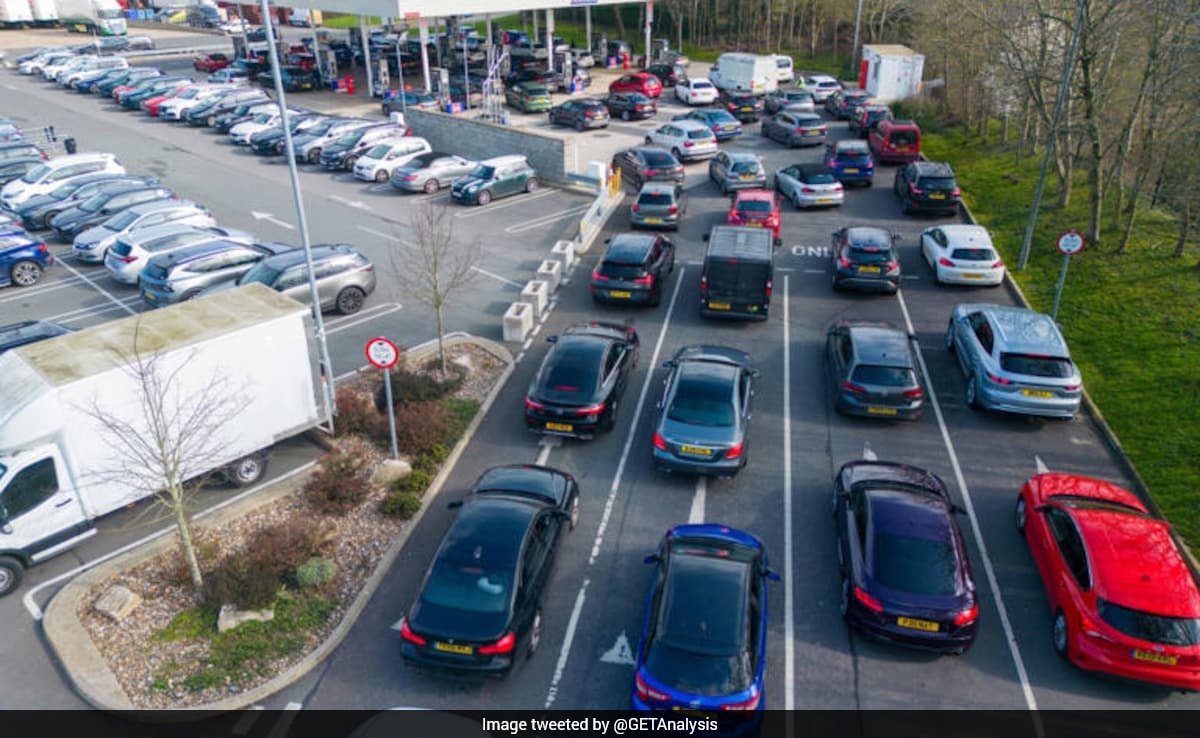
The media loves a predictable villain. Right now, it’s you. Every time a petrol station runs dry or a queue snakes around a suburban roundabout, the headlines pivot to the same tired script: "Stop panic buying." Government ministers stand behind podiums, hands outstretched in a gesture of faux-calm, telling the public that there is plenty of fuel in the terminal and that the only problem is the person in front of you with a five-gallon jerry can.
They are lying. Not about the physical volume of fuel, but about the stability of the system.
Calling it "panic" is a gaslighting tactic designed to shift the blame from systemic logistical fragility onto individual psychology. In reality, what we are seeing isn’t a mass mental breakdown. It is a series of rational actors making the most logical choice available in a high-risk, low-trust environment. If you know the supply chain is held together by spit and prayer, and you have a job to get to tomorrow, the only irrational move is to wait.
The Myth of the "Sufficient" Supply Chain
The "lazy consensus" argues that because there is technically enough petrol in the country to meet demand, the shortage is artificial. This misses the entire point of modern logistics.
In a world governed by Just-In-Time (JIT) delivery, "enough" is a dangerously fluid concept. Our energy infrastructure operates on razor-thin margins. We don't have vast reservoirs of fuel sitting at every local station. We have a constant, vibrating flow of tankers that must arrive within specific windows to prevent the pumps from sucking air.
When the UK government points to the total volume of fuel at refineries, they are showing you the ocean while you’re dying of thirst in the desert. The problem isn't the volume; it's the velocity. A 10% increase in demand doesn't just cause a 10% longer wait; it causes a total systemic collapse because the "buffer" in the system is effectively zero.
I have spent a decade analyzing market volatility. I have seen what happens when "efficient" systems meet reality. Efficiency is just another word for "no spare capacity." When the public senses a tremor in that capacity, they aren't "panicking"—they are performing a stress test that the system was never designed to pass.
Game Theory and the Petrol Pump
Let's look at this through the lens of a classic Prisoner’s Dilemma.
Imagine two neighbors, Dave and Sarah.
- Scenario A: Neither Dave nor Sarah buys extra fuel. The system remains stable.
- Scenario B: Dave buys extra fuel, but Sarah doesn't. Dave can get to work for the next two weeks. Sarah is stranded when the station runs dry.
- Scenario C: Both buy extra fuel. The station runs dry faster, but both have at least half a tank to survive the initial drought.
In a low-trust society where the government has a track record of failing to manage infrastructure—from rail strikes to soaring energy bills—Sarah would be a fool to choose Scenario A. She has no guarantee that Dave will play fair, and she has even less guarantee that the government will fix the "driver shortage" or "logistics bottleneck" by Tuesday.
By filling up today, Sarah is hedging her bets. It’s a micro-insurance policy. The "panic" is actually a distributed, crowdsourced realization that the state can no longer guarantee the basics.
The Hidden Cost of Being a "Good Citizen"
The plea to "avoid panic buying" is essentially an invitation to be the last person holding the bag. It is a request for you to altruistically accept the risk of personal catastrophe so that the government doesn't have to deal with a bad news cycle.
If you follow the advice of the "experts" and wait until your light is blinking red, you are volunteering for unemployment, missed school runs, and isolation. The people telling you to stay home have private drivers or guaranteed fuel contracts. They aren't the ones wondering if they’ll have enough derv to get the van to the site on Monday morning.
Why the Price Hike Fears are Justified
The competitor's piece suggests that people are overreacting to "fears" of a price hike. This is a staggering display of economic illiteracy.
Energy prices aren't an abstract bogeyman; they are the primary driver of inflation. When the price of Brent Crude moves, or when wholesale gas prices spike, it doesn't just stay at the terminal. It ripples through every single layer of the economy.
$$P_t = (C_{prod} + C_{trans} + C_{tax}) \times (1 + M)$$
Where:
- $P_t$ is the price at the pump.
- $C_{trans}$ is the cost of transportation (which rises when there is a driver shortage).
- $M$ is the margin stations add to cover their own soaring electricity costs.
Consumers aren't stupid. They see the $C_{trans}$ rising as haulage firms hike wages to attract drivers. They see the $M$ rising as independent forecourts try to stay solvent. Buying fuel now isn't just about securing the liquid; it's a currency play. You are locking in a price today for a commodity that is guaranteed to be more expensive tomorrow. In any other context, we’d call that "smart investing." In the context of a petrol station, we call it "hoarding."
The "Driver Shortage" is a Wage Shortage
We are told the root cause is a lack of HGV drivers. This is another half-truth. There is no shortage of people with HGV licenses. There is a shortage of people willing to work grueling hours, sleep in laybys with no facilities, and deal with suffocating bureaucracy for stagnant wages.
For years, the industry relied on cheap, imported labor to paper over the cracks of a miserable working environment. Now that the "synergy" of easy labor and open borders has evaporated, the true cost of logistics is being revealed.
The queues aren't the problem. They are a symptom of a market finally being forced to price in the reality of labor. If you want the fuel to flow, you have to pay the person moving it. Until the wages reflect the hardship, the supply chain will remain brittle. No amount of "keep calm" posters will change the physics of a trucking industry that is $100,000$ drivers short.
How to Actually Navigate the Collapse
Stop listening to the "don't worry" crowd. They have no skin in your game. Instead, adopt a "Prepper Lite" mentality that treats the UK supply chain as the emerging-market-tier entity it has become.
- Maintain a 50% Floor: Never let your tank drop below half. This isn't panic; it's a buffer. It ensures that if a three-day shortage hits, you aren't part of the desperate crowd at the pumps.
- Ignore the "Greed" Narrative: Forecourts aren't your enemy. They operate on margins thinner than a credit card. If a local station raises prices during a surge, they are using the only tool they have to manage demand and ensure they don't run dry in two hours. Pay the premium for the availability.
- Diversify Your Dependence: If your life is 100% dependent on a single fuel type and a single vehicle, you are fragile. The shift to EVs isn't just about the environment; it’s about energy decentralization. Being able to "fuel up" from a solar panel on your roof is the ultimate contrarian move against a broken grid.
The next time you see a queue at a petrol station, don't shake your head at the "idiots." Understand that you are looking at a group of people who have correctly identified that the "pivotal" infrastructure they rely on is failing. They are taking action to protect their families while the government is still trying to figure out which intern to blame for the press release.
The system is broken. The "panic" is the only thing making sense.
Stop being a "good citizen" and start being a prepared one. Buy the fuel.
Would you like me to analyze the specific economic impact of the HGV driver wage increases on UK grocery inflation?