Donald Trump’s recent rhetoric regarding Iran has shifted toward a specific, chilling target: the country's water infrastructure. During a series of briefings and public statements, he suggested that if tensions escalate, the United States could cripple Iran by taking out its desalination plants. It’s a threat that sounds simple on a map but carries terrifying consequences for millions of civilians and the regional environment.
We’ve seen talk of "maximum pressure" before. Usually, that means sanctions on oil or banking. This is different. This is about the very thing people need to survive every single day. If you live in a coastal city like Bushehr or Bandar Abbas, your tap water likely comes from the Persian Gulf after it’s been stripped of salt and minerals. Taking that away isn’t just a military move. It’s a humanitarian catastrophe waiting to happen. For another view, consider: this related article.
The Desalination Lifeline
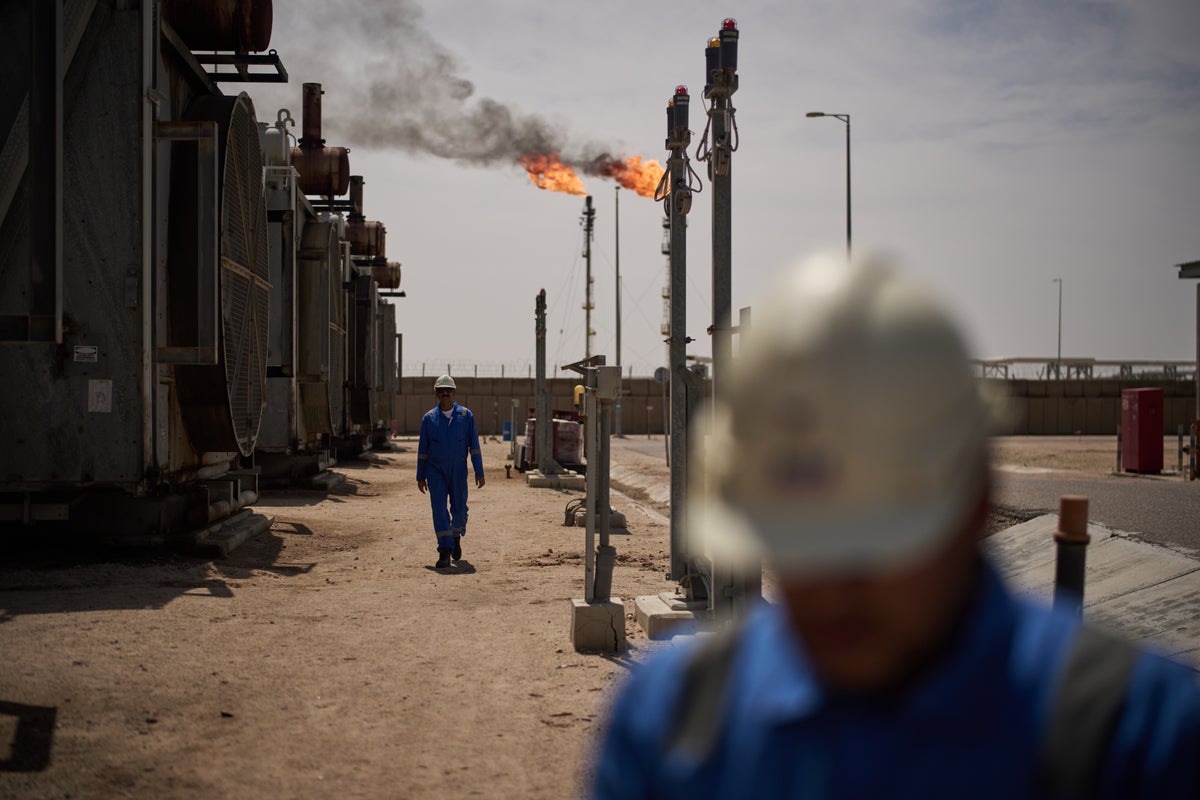
Iran isn't just some desert wasteland with a few wells. It’s a nation facing a chronic, soul-crushing water crisis. Decades of groundwater depletion and mismanagement have left the central plateau parched. To fix this, the Iranian government has bet big on the coast. They’ve spent billions on massive facilities that turn seawater into drinkable water.
These plants aren't just for drinking. They drive industry. They keep hospitals running. They provide the cooling water for power stations. When a leader talks about "destroying" these sites, they aren't just talking about concrete and pipes. They’re talking about turning off the life support system for the southern provinces. Further reporting on the subject has been shared by The Washington Post.
The scale here is massive. We’re talking about hundreds of thousands of cubic meters of water per day. You can't replace that with bottled water or trucked-in tanks. Not for a population of millions. If those plants go dark, the clock starts ticking on a mass migration event that would make previous refugee crises look small.
Environmental Blowback and the Persian Gulf
Nobody talks about the brine. Desalination works by sucking in seawater and pushing out fresh water, leaving behind a hyper-salty sludge called brine. If these plants are bombed, you aren't just stopping the water flow. You’re potentially causing massive chemical and salt-load spills into the Persian Gulf.
The Gulf is a shallow, enclosed body of water. It doesn't flush out into the ocean easily. Any major strike on industrial infrastructure along the coast risks an ecological disaster that wouldn't respect borders. Saudi Arabia, the UAE, and Kuwait all share these waters. They also happen to rely on the same Gulf for their desalination.
Imagine a scenario where a strike on an Iranian plant leads to a massive oil or chemical leak that gets sucked into the intake valves of a Dubai or Abu Dhabi water plant. It’s a domino effect. War in this region is never contained. It bleeds across the water.
Why This Strategy Often Fails
History shows us that targeting civilian infrastructure usually backfires. It doesn't always make a population turn on its leaders. Often, it does the opposite. It breeds a generation of resentment.
Look at the air campaigns of the 20th century. When you take away a person's water, you don't make them want democracy. You make them want revenge. From a tactical perspective, it’s also a nightmare. These plants are often located near nuclear facilities or major civilian hubs. The collateral damage isn't just a risk; it's a certainty.
Trump’s team likely sees this as the ultimate leverage. The idea is that the Iranian regime will do anything to prevent a total internal collapse triggered by thirst. But it’s a gamble with a low ceiling and a floor that drops straight into a dark abyss.
What This Means for Global Stability
The price of oil always reacts to tension in the Strait of Hormuz, but this adds a new layer of volatility. If Iran feels its literal survival—its water—is under threat, their response won't be limited to diplomacy. We’d likely see attempts to block the Strait, which handles about 20% of the world's total oil consumption.
We also have to consider the precedent. If the U.S. validates the destruction of water infrastructure as a legitimate "first strike" or "heavy pressure" tactic, every other regional power takes note. It turns water into a weapon of war globally. In a world getting hotter and drier, that’s a terrifying door to open.
The Humanitarian Math
Let’s get real about the numbers. If the main plants in Hormozgan province were to go offline, you’d have roughly 1.5 million people without reliable water within 48 hours. Modern cities don't have "backup" rivers. They have pipes.
Disease is the next step. Without clean water, sanitation fails. Cholera and other waterborne illnesses aren't things of the past in a war zone; they’re the immediate future. The cost of the subsequent "humanitarian aid" required would likely dwarf any perceived military gain from the strike.
Realities on the Ground
Iran has been hardening these sites. They know they’re targets. Many of the newer projects are being built with "passive defense" in mind—essentially burying key components or duplicating systems to make them harder to kill with a single missile.
This means a "surgical strike" is mostly a myth. To actually stop the water, you have to level the entire site. That requires a massive amount of ordnance and sustained bombing. This isn't a "one and done" operation. It's an act of total war.
Immediate Practical Realities
For anyone watching the geopolitical markets, this rhetoric matters because it signals a move away from targeted military strikes toward "total society" pressure. If you're invested in energy or regional logistics, the risk profile just shifted.
- Monitor the "Water-Energy Nexus" reports from groups like the International Energy Agency (IEA). They track how dependent these power grids are on desalination.
- Watch for Iranian "maneuvers" in the Gulf. Any threat to water is usually met with a threat to shipping lanes.
- Don't ignore the civilian toll. International law, specifically the Geneva Conventions, has very clear rules about "objects indispensable to the survival of the civilian population." Targeting water is a war crime under most interpretations.
This isn't just tough talk on a campaign trail or at a rally. It's a fundamental shift in how the U.S. might approach conflict in the Middle East. It moves the target from the soldier to the citizen. Whether that's an effective deterrent or a recipe for a century of regional chaos is a question the world might soon have to answer the hard way.