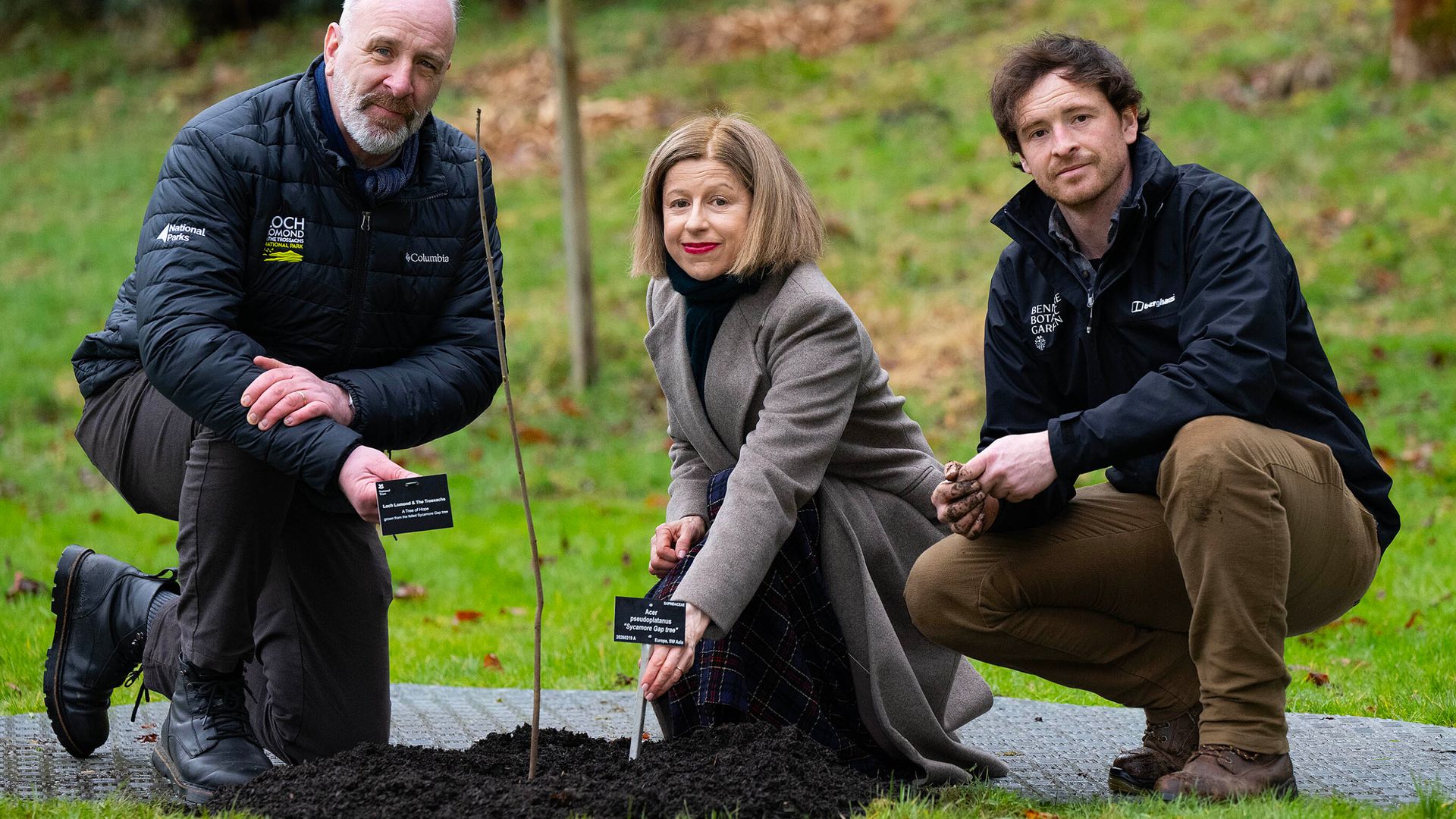
The replacement of the Sycamore Gap tree is not a simple act of gardening but a high-stakes exercise in biological replication and symbolic continuity within a managed ecosystem. When the original Acer pseudoplatanus was illegally felled in September 2023, it created a structural void in the Hadrian’s Wall landscape—a UNESCO World Heritage site—that required a response grounded in genetic preservation and silvicultural precision. The planting of a "clone" sapling at a secret location, and the subsequent public rollout of related saplings, represents a three-phased operational recovery: genetic salvage, nursery-stage stabilization, and distributed reforestation.
The Genetic Continuity Protocol
The survival of the Sycamore Gap lineage depended entirely on the "salvage biology" performed in the immediate aftermath of the felling. National Trust specialists collected scion wood (young shoots) and seeds from the downed 200-year-old tree. This material was transported to the Specialist Plant Conservation Centre, where two primary propagation paths were initiated:
- Grafting (Clonal Replication): Scion wood from the original tree was joined to compatible rootstock. This ensures that the resulting sapling is genetically identical to the original. From a biological standpoint, the "new" tree is a physiological extension of the old one, carrying the same DNA and potential growth characteristics.
- Sexual Reproduction (Genetic Diversity): Thousands of seeds were harvested and germinated. Unlike the grafts, these seedlings are "offspring"—they contain a mix of the parent tree’s DNA and the DNA of whichever sycamore provided the pollen.
The distinction between these two methods is critical for the long-term resilience of the site. While the clone provides historical and aesthetic "sameness," the seedlings provide the genetic variation necessary to withstand future pathogens or shifting climatic variables in the Northumbrian climate.
Environmental Stress Variables and Site Selection
The decision to plant "sapling eight" at a specific, undisclosed location within the National Park—rather than immediately at the original stump—is a tactical move to mitigate high failure rates associated with "replant disease" and site-specific trauma. The original site at the "gap" is subject to extreme wind tunneling and high foot traffic, both of which are lethal to a young sapling during its establishment phase.
The "Establishment Function" for a new tree in this environment can be defined by the relationship between root-to-shoot ratio and local caloric availability:
$$E = \frac{R_m \cdot S_q}{W_v + P_p}$$
Where:
- $E$ is the Establishment Success Rate.
- $R_m$ is the Root Mass development.
- $S_q$ is Soil Quality/Mycorrhizal health.
- $W_v$ is Wind Velocity (the primary stressor at the Gap).
- $P_p$ is Pathogen Pressure (including potential fungal infections from the decaying original stump).
The National Trust’s current strategy utilizes a "distributed risk" model. By planting saplings in various locations first, they create a redundant biological backup system. If one sapling fails due to localized drought or vandalism, the genetic line persists in other nodes of the network.
The Mycorrhizal Bottleneck
One factor often overlooked in public-facing reports is the role of soil microbiology. The original Sycamore Gap tree had two centuries to develop a complex symbiotic relationship with underground fungal networks (mycorrhizae). These fungi extend the root system's reach, facilitating water uptake and nutrient exchange.
When a mature tree is removed, this network begins to collapse or shift. A sapling introduced to the "sterile" environment of a fresh felling site lacks the established fungal support required to survive the harsh winters of Northern England. The conservation team is likely utilizing "soil inoculation," where soil from the original site is mixed with nursery medium to "teach" the sapling’s roots how to interact with the specific microbial community of the National Park.
Cultural Asset Management vs. Ecological Reality
The Sycamore Gap project highlights a tension between Ecological Function and Heritage Value. Ecologically, a sycamore is an introduced species in the UK, often regarded with ambivalence by conservationists who prefer native oak or rowan. However, as a "cultural keystone species," its value is calculated through public engagement and landscape identity.
The "Value Matrix" of the restoration project can be categorized into:
- Historical Accuracy: Maintaining the specific silhouette of the tree within the dip of the wall.
- Public Efficacy: Providing a focal point for communal grief and eventual "healing" narratives.
- Scientific Advancement: Using the felling as a test case for rapid clonal recovery of heritage specimens.
The logistical challenge lies in the "Growth Lag." A sycamore takes approximately 30 to 50 years to reach a stature where it begins to resemble the iconic image of the original. During this multi-decade gap, the site is vulnerable to "relevance decay," where the public’s connection to the specific location weakens because the visual payoff—the massive, symmetrical canopy—is absent.
Strategic Resilience and the "Hope Saplings" Initiative
To counter relevance decay, the National Trust launched the "Trees of Hope" initiative, distributing 49 saplings (representing the 49 feet of the original tree's height) to various communities. This is a brilliant exercise in decentralized conservation. By moving the "asset" (the genetic material) away from a single point of failure (the Gap), they have insured the legacy against future localized disasters.
This creates a "Human-Tree Feedback Loop":
- Distribution: Saplings are sent to schools and community centers.
- Engagement: Local stewardship increases the survival probability of individual trees through consistent watering and protection.
- Data Collection: Scientists can observe how the same genetic material performs across different microclimates in the UK, providing a live lab for phenotypic plasticity.
Engineering the Future Canopy
The final phase of this strategy involves the original stump itself. Recent reports indicate that the stump is still "alive," with new shoots emerging from the base. This process, known as coppicing, is an ancient woodland management technique.
The strategic choice now is whether to allow the original stump to grow into a "multi-stemmed" bush-like structure or to prune it back to a single leader to recreate the original tree. Coppicing offers the fastest route to a "green presence" at the Gap, but it will not produce the "classic" tree shape for many decades, if ever.
The most robust path forward involves a hybrid approach:
- Phase 1: Maintain the coppiced growth at the original site to stabilize the soil and maintain the existing mycorrhizal network.
- Phase 2: Monitor the "cloned" saplings in their nursery environments until they reach a "caliper" (trunk diameter) of at least 10–15cm, making them resilient enough for the harsh conditions of the Gap.
- Phase 3: Execute a "succession planting" where a cloned sapling is eventually integrated near the original stump, ensuring the iconic silhouette is restored while the original roots continue to provide biological foundation.
The long-term success of the Sycamore Gap restoration will be measured not by the survival of a single sapling, but by the establishment of a resilient, multi-generational population of Acer pseudoplatanus that can withstand both the environmental rigors of the Northumbrian moors and the unpredictable actions of human actors. The project must transition from a "reactive repair" to a "proactive landscape management" model, utilizing the distributed saplings as a genetic reservoir that ensures this specific biological line can never be truly extinguished by a single act of destruction.
Would you like me to analyze the specific soil composition and climate data of the Northumberland National Park to determine the optimal planting window for the remaining saplings?