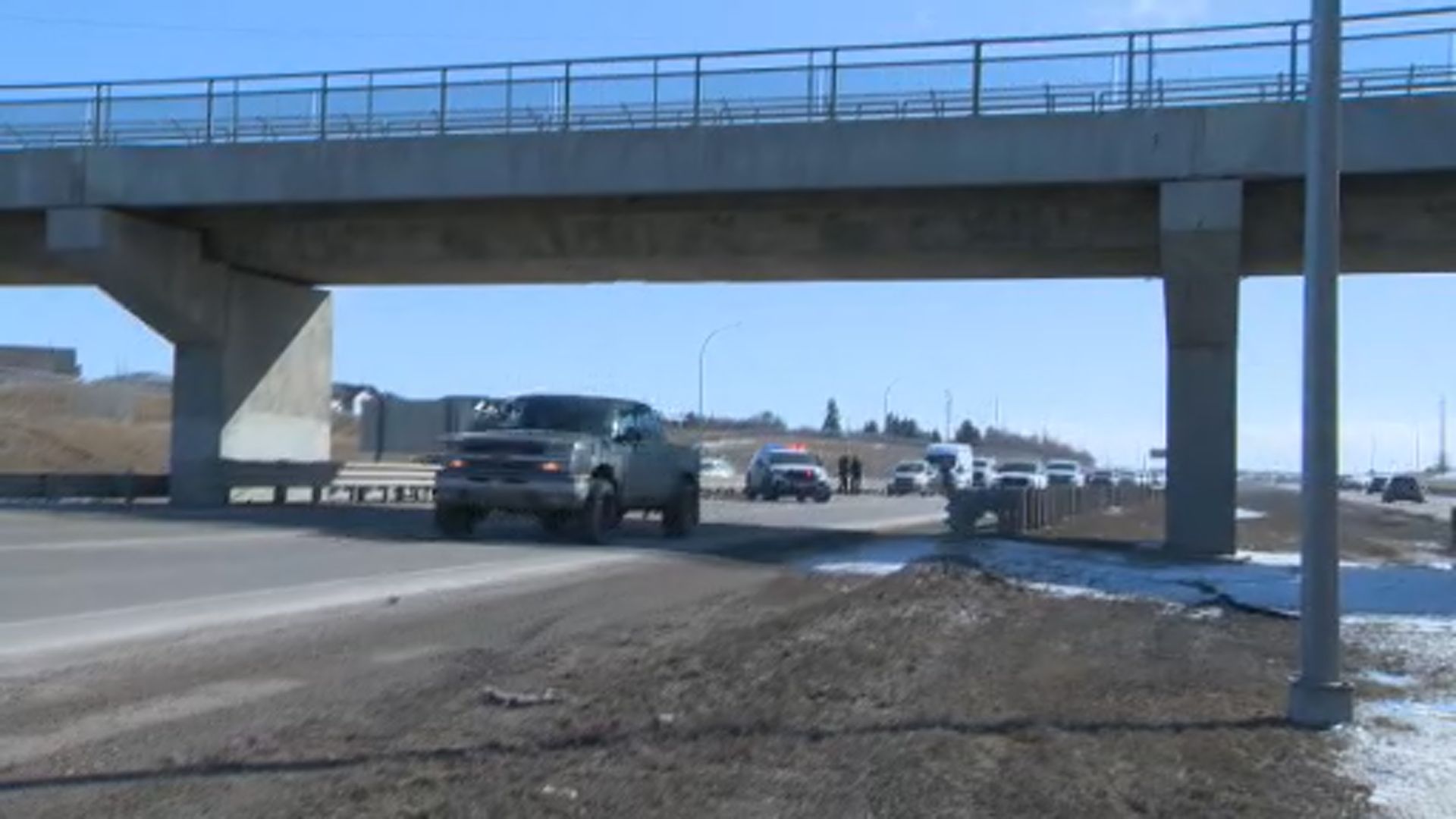
Stop blaming the truck drivers. Stop calling for more yellow paint. Stop pretending that a third bridge strike in Saskatoon in a single month is some freak statistical anomaly or a sign of decaying driver intelligence.
The media loves a "clueless trucker" narrative. It’s easy. It’s clickable. It’s also wrong. When three separate vehicles strike concrete overpasses in thirty days, you aren't looking at a streak of bad luck; you are looking at a fundamental failure of urban design that treats high-velocity logistics like an afterthought. We are obsessed with "bridge strikes" as isolated traffic incidents. They aren't. They are the physical manifestation of a "Just-in-Time" delivery culture colliding with infrastructure built for a world that no longer exists.
The Myth of the "Inattentive Driver"
The lazy consensus suggests that if we just put up bigger signs or louder bells, the problem vanishes. This is the "Safety Third" fallacy. I’ve consulted on logistics chains for a decade, and I can tell you that a driver behind the wheel of a $200,000 rig doesn't want to peel the roof off their trailer like a tin of sardines.
We’ve built a digital environment that overrides physical reality. Most of these drivers are navigating via GPS systems that, while sophisticated, often prioritize "fastest route" over "clearance-safe route" unless the fleet has shelled out for top-tier, enterprise-grade telematics. Even then, data lag is real. If a road was repaved last summer, adding two inches of asphalt to the deck, the clearance height changed. Did the city update the physical signage? Maybe. Did they update the digital map layer used by every logistics API? Almost certainly not.
When the clearance says 4.2 meters but the road has been resurfaced three times since the bridge was built, that sign is a lie. We are penalizing drivers for failing to solve a physics problem that the city itself hasn't bothered to measure in years.
Why Raising Bridges is a Waste of Money
The immediate outcry from the "do something" crowd is always the same: "Raise the bridges!"
This is economically illiterate. To raise a single overpass like the one on Circle Drive or Idylwyld, you aren't just lifting a slab of concrete. You are re-grading kilometers of approach road. You are adjusting utility lines, drainage systems, and neighboring property access. The cost-to-benefit ratio is a joke.
If Saskatoon spent $50 million raising three bridges, it wouldn't stop the strikes. It would just change the threshold. The logistics industry will always move toward the largest possible volume to maximize margins. If you make the hole bigger, the industry will build a bigger peg.
Instead of trying to move the mountains, we need to talk about Geofencing as Law.
The Hard Truth About Municipal Liability
Cities hide behind the "Driver is Responsible" shield because it’s a legal get-out-of-jail-free card. But let’s look at the data. Most bridge strikes occur in "blind spots" of the local grid where industrial zones transition into residential or commercial corridors.
Imagine a scenario where every overpass with a clearance under 4.5 meters was equipped with a simple, low-cost LIDAR sensor 200 meters ahead of the structure. If a vehicle exceeds the height, it triggers a physical barrier—not a sign, but a "clacker" or a heavy rubber curtain—and an immediate, localized radio override.
Why hasn't this happened? Because if a city installs a "Warning System," they suddenly assume a portion of the liability if that system fails. By doing nothing but hanging a piece of sheet metal with a number on it, the city keeps the liability 100% on the driver and the trucking company. This isn't a safety strategy; it's a legal shield. Saskatoon isn't failing to fix the bridges; it’s successfully avoiding the insurance bill.
The Death of the Local Knowledge
Twenty years ago, a trucker in Saskatchewan knew the "low spots" because they drove the same routes for thirty years. They had "tribal knowledge."
Today, the driver is likely a contractor from three provinces away, squeezed by a dispatcher in a different time zone, running on a 14-hour clock that punishes every minute of idling. We have stripped the "human" out of the driver's seat and replaced it with an algorithmic pressure cooker.
You want to stop the strikes?
- Stop Resurfacing Without Recalibrating: Every time a road crew lays down new asphalt under an overpass, the clearance height must be certified and updated in a public-access digital registry.
- Mandatory Load-Height Sensors: Any commercial vehicle over a certain weight class should be required to have an active height-sensing unit that communicates with the cab's GPS. If your load is $4.3$ meters and the route has a $4.2$ meter bridge, the truck shouldn't just "warn" you; the ignition should be geofenced to prevent entry into that corridor.
- End the Fine-Only Model: Fining a trucking company $10,000$ is a line item on an expense report. It doesn't change behavior. Suspend the commercial operating license for the entire fleet for 48 hours. Watch how fast "routing accuracy" becomes the CEO’s top priority.
The Industry Insider’s Take
I have seen companies spend millions on "Safety Culture" seminars while simultaneously forcing drivers to use consumer-grade tablets for navigation because the "Pro" versions cost an extra $15 a month.
The three hits in Saskatoon aren't a coincidence. They are the result of a system that prizes the speed of a Prime delivery over the structural integrity of a bridge. We are trying to solve a 21st-century logistics surge with 1950s infrastructure and 1990s signage.
The bridge didn't get lower. The world just got faster, and our ability to pay attention stayed the same. If we keep pretending this is about "bad drivers," we’re going to be sweeping glass and twisted steel off the pavement every month for the next decade.
Accept that the current signage is a relic. Accept that the driver is an extension of an algorithm. Fix the data, or keep the tow trucks on speed dial.
Go look at the clearance signs on your way home today. Ask yourself when that number was last measured with a physical tape. You’ll realize we are all driving on a hope and a prayer.
Stop looking at the bridge. Start looking at the map.
Would you like me to draft a proposal for a mandatory municipal LIDAR registry for high-risk overpasses?