The smell of charred rubber has a way of clinging to the back of the throat long after the smoke clears. It is a thick, chemical bitterness that suggests something vital has been unmade. In the early hours of a Tuesday in north London, that scent didn't just signal a fire. It signaled a rupture in the unspoken contract of a neighborhood.
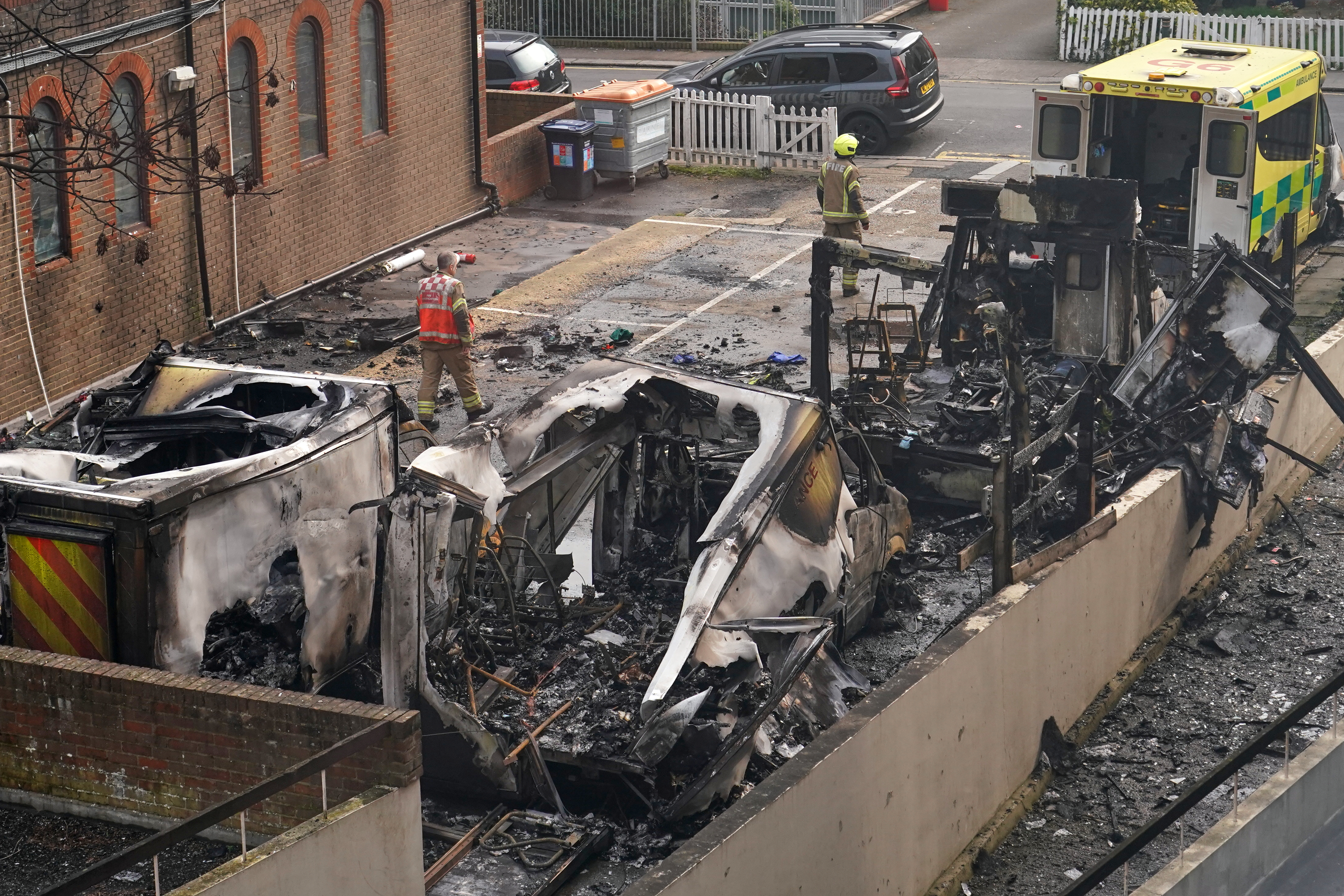
Two ambulances sat in the darkness, their white paint blistered into blackened scales. These weren't just vehicles; they were the physical manifestation of a promise. Hatzola, the volunteer emergency medical service that operates within the Jewish community and far beyond it, relies on these vans to bridge the terrifying gap between a heart stopping and a professional arriving. When the accelerant was poured and the match was struck, the intent wasn't just to destroy property. It was to ensure that the next time a grandmother in Stamford Hill feels a crushing weight in her chest, the help she expects might not come.
Arson is a loud crime, but its consequences are quiet.
The Anatomy of a Lifeline
To understand what was lost when the flames climbed those tires, you have to understand the rhythm of a volunteer medic’s life. Imagine a man named David. He is hypothetical, but his schedule is shared by hundreds of real Londoners. David is a plumber by trade. He is sitting down to dinner with his children when the radio on his belt chirps. It is a "Category 1"—a life-threatening emergency three streets away.
He doesn't finish his pasta. He doesn't wait for a paycheck because there isn't one. He kisses his wife, grabs his kit, and runs to the garage where the ambulance is stationed.
Now, imagine David reaching that garage and finding only a skeleton of melted plastic and warped steel.
The Hatzola model is built on a specific kind of hyper-local efficiency. Because the volunteers live and work in the same narrow grid of streets they serve, their response times are often measured in seconds, not minutes. In a city like London, where traffic can turn a three-mile drive into a thirty-minute crawl, those seconds are the currency of survival. By torching these vehicles, the attackers didn't just strike at a religious minority. They stole time from the dying.
When the Neighborhood Bleeds
The Metropolitan Police are treating this as a hate crime. The word "antisemitism" appears in the headlines, and for many, it carries a weary, familiar weight. But labels can sometimes sanitize the raw reality of the act. This wasn't a protest or a political statement. It was a targeted strike against a mercy service.
The statistics tell a sobering story of rising tensions across the U.K., but numbers are cold. They don't capture the look on a neighbor's face when they walk past the blackened patch of pavement the next morning. They don't capture the sudden, sharp realization that the people who come to save you are being hunted because of who they are.
Consider the irony of the target. Hatzola, while rooted in Jewish tradition and funded by the community, does not check passports or prayer books at the scene of an accident. If a cyclist collapses or a child chokes in the vicinity of a volunteer, they are treated. The fire didn't discriminate. It destroyed equipment meant for anyone, regardless of the faith they keep or the language they speak. The smoke drifted over every rooftop in the borough, indifferent to the mezuzahs on the doorposts.
The Invisible Stakes of a Burnt Engine
There is a technical side to this tragedy that rarely makes the evening news. An ambulance is not a van with a siren; it is a mobile intensive care unit. Inside those charred hulls were defibrillators, oxygen delivery systems, and trauma kits worth tens of thousands of pounds. These are items purchased through bake sales, small monthly donations, and the quiet generosity of a community that has learned, through centuries of history, that it must often look after its own.
Replacing a specialized vehicle isn't as simple as visiting a dealership. It involves months of custom outfitting and rigorous safety certifications. During those months, the "fleet" is diminished. The safety net has a hole in it.
The real damage, however, isn't financial. It is psychological.
Living in a city requires a certain level of trust. You trust that the bridge will hold. You trust that the water is clean. Most importantly, you trust in the "neutrality of the helper." We operate under the assumption that even in our deepest divisions, the ambulance is a sanctuary. It is the white flag on the battlefield. When you burn the ambulance, you burn the white flag. You signal that there is no space left that is sacred, no service that is exempt from the reach of malice.
The Sound of Resilience
But hate is often a failure of imagination. The person who poured the petrol likely imagined that the fire would spark fear, that the community would retreat, that the sirens would stay silent out of a newfound sense of vulnerability.
They were wrong.
In the aftermath of the attack, the response wasn't a shuttering of doors. It was a mobilization. The mechanics of the neighborhood began looking for temporary replacements. The volunteers checked their radios. The plumbing and the teaching and the accounting continued, interrupted only by the familiar pings of the emergency dispatch system.
We often think of "hate" as a grand, sweeping force, but it is frequently small, cowardly, and nocturnal. It happens in the shadows because it cannot survive the scrutiny of the sun. Resilience, on the other hand, is a daylight activity. It is the act of showing up for a shift when you know there are people who wish you didn't exist. It is the act of cleaning the soot off the pavement so the new ambulance has a place to park.
The charred remains of those vehicles were eventually towed away, leaving behind nothing but a dark stain on the concrete. That stain will fade with the rain and the grinding of tires. What remains is the sound of the radio.
Somewhere in north London tonight, a volunteer is sitting at a kitchen table. They are tired. Their family is loud. But their kit is packed, and their shoes are by the door. They are waiting for the call that tells them someone—anyone—is in trouble.
They will go. They will drive through the streets where the fire happened, and they will do the work of saving lives in a world that sometimes feels intent on breaking them. The sirens will not be silent. They will simply be louder than the flames ever were.
The street is quiet now, but the air is different. You can still smell the smoke if you look for it, but if you listen, you can hear the heartbeat of a city that refuses to stop beating, no matter who tries to cut the pulse.