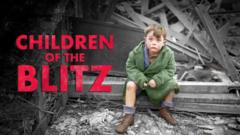
The British government’s evacuation strategy during the Second World War, formally known as Operation Pied Piper, remains the largest internal migration event in the nation’s history. While often framed through the lens of individual memory, the movement of 1.5 million people in the first three days of September 1939 represents a massive logistical and sociological stress test. To understand the impact of this event, one must move beyond the sentimentalized view of displaced children and analyze the structural friction between urban industrial centers and rural agrarian economies. The displacement functioned as a violent collision of two distinct British identities, revealing deep systemic fractures in public health, wealth distribution, and social infrastructure.
The Tri-Phasic Taxonomy of Evacuation
The success or failure of the evacuation process can be categorized into three distinct operational phases. Each phase presented unique variables that dictated the psychological and physical outcomes for the displaced population.
1. The Mobilization and Transport Phase
The primary objective was the rapid removal of "non-essential" persons—children, pregnant women, and the disabled—from "evacuation areas" (high-density industrial targets) to "reception areas" (low-density rural zones). This was a triumph of rail logistics but a failure of human screening. The government utilized a "blind allocation" model. Authorities did not match the specific needs of the child to the capabilities of the host. This lack of data-driven placement created an immediate systemic mismatch.
2. The Billeting and Integration Phase
Once at the destination, the process transitioned to the billeting system. Under the Emergency Powers (Defence) Act 1939, householders in reception areas were legally required to accept evacuees. This created a forced-tenancy model. The "choosing" process, often occurring in village halls, functioned as a primitive marketplace where physical appearance and perceived social standing dictated a child’s placement.
3. The Repatriation and "Phoney War" Flux
The lack of immediate aerial bombardment in late 1939 led to a significant "rebound effect." By January 1940, nearly 60% of evacuees had returned to their urban homes. This created a volatile cycle of displacement and return that undermined the strategic objective of minimizing civilian casualties. The government’s inability to account for the emotional cost of familial separation led to a breakdown in the evacuation’s efficacy until the commencement of the Blitz in September 1940.
The Socio-Economic Friction Coefficient
The evacuation acted as a diagnostic tool for the state of British public health. For many rural host families, the arrival of urban children was their first direct exposure to the consequences of extreme urban poverty. This exposure created a "shock of recognition" that eventually paved the way for the post-war welfare state.
The Urban-Rural Health Gap
The disparity in health standards was quantifiable through several key indicators:
- Pathogenic Load: Rates of head lice, impetigo, and scabies were significantly higher in urban evacuees than in their rural counterparts.
- Nutritional Deficits: The prevalence of rickets and general malnutrition in children from industrial centers like London, Liverpool, and Glasgow highlighted the failure of the 1930s food distribution systems.
- Behavioral Divergence: The "bed-wetting" phenomenon (enuresis) was widely documented. While rural hosts often attributed this to a lack of discipline, modern psychological analysis identifies it as a direct psychosomatic response to the trauma of separation and the loss of a secure "attachment figure."
Cultural Capital and Class Collision
The evacuation forced a merger between the working-class urban proletariat and the middle-class or landed rural gentry. This created a friction coefficient that manifested in linguistic barriers, differing dietary habits, and conflicting views on religious observance. In many cases, the "host" family attempted to "civilize" the evacuee, a process that inherently devalued the child's primary home life and created a sense of dual-identity crisis.
The Cognitive Cost of Familial Deconstruction
The psychological impact of evacuation is best understood through the framework of Attachment Theory, developed largely by John Bowlby, whose observations of wartime children informed his foundational work. The government’s strategy focused on physical safety (the "Body") while ignoring the developmental necessity of the "Secure Base."
The separation of a child from their mother at a critical developmental stage—without a transition period—resulted in a high incidence of "Affectionless Psychopathy" or reactive attachment disorder. The children were not merely "moving"; they were being stripped of their primary regulatory system.
The variable that determined a "successful" evacuation was not the quality of the rural home, but the Relational Continuity maintained through letters and visits. Those children whose parents remained accessible via consistent communication showed significantly higher resilience. Conversely, those who felt "discarded" by their parents to satisfy a state mandate suffered long-term deficits in trust and emotional regulation.
[Image of John Bowlby’s Attachment Theory stages]
Education as a Disrupted Utility
The evacuation caused a near-total collapse of the standardized education system. In reception areas, school populations doubled overnight. This led to the "Shift System," where local children attended school in the morning and evacuees in the afternoon.
Structural Deficiencies in Remote Learning
- Resource Dilution: Textbooks, stationery, and laboratory equipment were insufficient for the doubled headcount.
- Pedagogical Mismatch: Urban teachers, who often traveled with their pupils, had to adapt their curriculum to makeshift classrooms in barns, church halls, or private homes.
- The Labor Pull: In rural areas, the pressure for children to contribute to the "Dig for Victory" campaign often superseded educational goals. Older evacuees were frequently absorbed into agricultural labor, effectively ending their formal education prematurely.
The Gendered Burden of the Billeting System
The operational burden of the evacuation fell almost exclusively on women. While the state provided a small stipend (8 shillings and 6 pence for the first child, 10 shillings and 6 pence for subsequent children), this did not cover the labor-intensive reality of managing extra residents.
Host mothers were expected to manage the hygiene, feeding, and emotional labor of children who were often traumatized and physically ill. This created a hidden economy of domestic labor that was never fully compensated. The tension between the "sending mother" and the "receiving mother" was a recurring point of failure. The sending mother often felt judged by the host’s higher living standards, while the host mother felt burdened by the perceived "neglect" of the urban parent.
Long-Term Societal Reconfiguration
The evacuation did more than protect lives; it changed the political consciousness of the British electorate. The "common experience" of the war was, in reality, a series of deeply uncomfortable cross-class encounters.
The data gathered by social observers and health officials during the evacuation provided the empirical evidence needed for the 1942 Beveridge Report. The "Five Giant Evils" (Want, Disease, Ignorance, Squalor, and Idleness) were no longer abstract concepts; they had been lived and witnessed by the rural middle class who now had a vested interest in their eradication.
The evacuation was a catalyst for the Education Act of 1944 (The Butler Act), which sought to standardize the very system that had fractured so badly during the displacement. It proved that a child’s geographic origin should not dictate their health or educational outcomes.
Strategic Assessment of Civilian Displacement
When analyzing the evacuation as a model for modern civil defense, several critical bottlenecks emerge. Any strategy involving the mass movement of populations must prioritize data over speed. The "blind" nature of Operation Pied Piper created social friction that could have been mitigated through a centralized database of skills, health requirements, and psychological profiles.
The failure to provide psychological support for the "billetors" created a high burnout rate, leading to the frequent "shuffling" of children between homes, which compounded their trauma. A modern displacement strategy would require a "Relational Management" layer—a dedicated workforce trained to mediate between displaced persons and their hosts.
The British wartime evacuation was a logistical success in terms of kinetic safety but a structural failure in terms of social and psychological integration. Its legacy is not found in the nostalgia of steam trains and gas masks, but in the permanent expansion of the state's responsibility toward the individual.
The strategic imperative for any future internal migration event is the move from a "Container Model" (simply moving bodies from point A to point B) to a "Systemic Integration Model." This requires the pre-positioning of modular infrastructure, the digital mapping of host capabilities, and a tiered psychological response plan that recognizes the family unit as a non-negotiable component of civilian resilience.