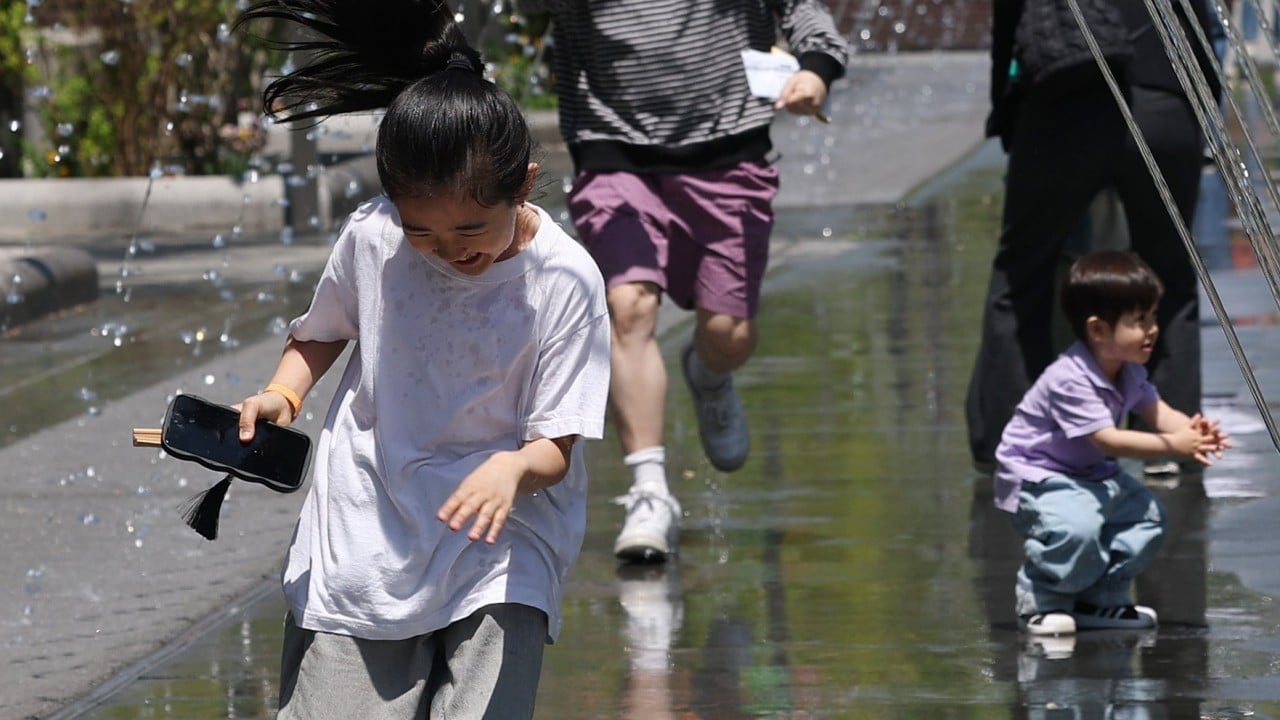
The air in Seoul used to have a season of mercy. Now, it has a season of weight.
Walk outside in mid-July, and the atmosphere doesn't just surround you; it sits on your chest. It is a thick, wet wool blanket soaked in boiling water. You can see the heat shimmering off the asphalt of Gangnam, turning the glass skyscrapers into liquid ghosts. This isn't the romanticized summer of K-dramas. This is a quiet, invisible emergency that has forced the South Korean government to rewrite its survival manual for the first time in nearly two decades.
For eighteen years, the nation’s disaster alert system remained largely static, a relic of a time when "hot" meant uncomfortable rather than lethal. But the climate has broken its old promises. In 2024 and 2025, the mercury didn't just climb; it stayed there, refusing to retreat even when the sun went down. This phenomenon, known as a tropical night, has become a relentless thief of sleep and health.
Consider Kim Min-jun, a hypothetical but statistically accurate representation of the thousands of delivery riders zipping through the city. To Kim, the new "Extreme Heat Emergency" alert on his phone isn't just a notification. It is a warning that his workplace—the open road—has become a furnace. When the government elevates the status to "Serious," the highest level in its four-tier system, it is acknowledging that the very act of existing outdoors has become a gamble.
The Anatomy of a New Emergency
The Ministry of the Interior and Safety didn't make this change on a whim. The data demanded it. Under the old rules, alerts were triggered by simple temperature thresholds. But humans don't just react to temperature. We react to the "felt" heat—the brutal intersection of humidity, wind speed, and radiant energy.
The updated system now integrates the Wet-Bulb Globe Temperature (WBGT). It sounds like a dry laboratory term, but it is the difference between life and death for someone like Kim.
When humidity is high, sweat—our body’s primary cooling mechanism—cannot evaporate. It just pools on the skin, useless. Your internal temperature begins to rise. Your heart beats faster, trying to shove blood toward your skin to cool it down, but there is no relief to be found. Eventually, the machinery of the body simply begins to seize.
By officially adding "extreme heat" to the list of national emergencies alongside floods and earthquakes, South Korea is stripping away the illusion that heat is a temporary inconvenience. It is now classified as a structural disaster.
The Social Divide of the Thermometer
Heat is not an equalizer. It is a predator that hunts the vulnerable.
While the affluent retreat into the filtered, chilled air of high-rise apartments and climate-controlled malls, the "Gosiwon" residents—those living in tiny, windowless cubicles—are trapped in urban heat islands. In these cramped quarters, the walls hold the heat of the day long into the night, radiating it back at the inhabitants.
The government’s new protocols explicitly target these gaps. The "Serious" level alert now triggers mandatory cooling breaks for outdoor workers and mobilizes local officials to check on the elderly living alone. It is a recognition that a digit on a screen translates to a physical struggle in the basement apartments of Banpo-dong.
The stakes are invisible until they are undeniable. You don't see heat the way you see a typhoon’s wind or a flood’s surge. You only see the result: the empty parks, the strained power grid, and the ambulances idling outside construction sites.
A Culture Under Pressure
South Koreans are famously resilient. There is a cultural pride in "Palis-palis"—the "hurry-hurry" mindset that built a global powerhouse from the ashes of war. But you cannot outrun a heatwave. You cannot work harder to make the air more breathable.
This cultural friction is where the new emergency status meets reality. When the government issues a "Serious" alert, it isn't just a suggestion to slow down. It is a desperate plea to override the national instinct to keep going at all costs. It provides the legal and social cover for a site manager to halt a construction project or for a delivery app to pause operations without the fear of falling behind.
The energy required to keep a nation of 51 million people cool is staggering. As the heat emergency level rises, so does the strain on the Korea Electric Power Corporation (KEPCO). We are trapped in a feedback loop: the hotter it gets, the more we use air conditioning; the more we use air conditioning, the more waste heat we pump into the streets and the more carbon we emit, ensuring that next year will be even worse.
The Ghost of 2018
To understand why the government acted now, you have to look back at the trauma of 2018. That year, South Korea experienced its hottest summer on record since observations began in 1907. Seoul hit 39.6 degrees Celsius (103.3°F). People died in their homes. Crops withered in the fields. The nation realized its infrastructure was built for a world that no longer exists.
The 18-year gap between major updates to the alert system reflects a period of transition. We spent two decades hoping the 2018s of the world were outliers. The new emergency framework is an admission that they are now the baseline.
It is a sobering shift in the national psyche. The government is no longer just managing the weather; it is managing a crisis of habitability. The new alerts are designed to be louder, more intrusive, and more frequent. They are meant to break through the noise of daily life and force a moment of pause.
The Silent Afternoon
Imagine a Tuesday in late August. The "Extreme Heat Emergency" has been active for three days. The streets of Seoul, usually a chaotic symphony of movement, fall strangely silent by 2:00 PM. The only sound is the rhythmic hum of millions of outdoor AC units, breathing hot air into the narrow alleys.
In this silence, the true cost of the climate shift becomes clear. It isn't just about the numbers on a thermometer. It is about the loss of the public square. It is about the grandfather who can no longer walk to the park to play chess with his friends because the trek across the sun-baked plaza is too dangerous. It is about the thinning of the social fabric as we all retreat into our private, cooled bubbles.
South Korea’s move to modernize its alert system is a blueprint for a warming world, but it is also a confession. We are learning to live in a world where the sun is no longer a source of growth, but a force to be mitigated.
The notification on the phone chirps again. Another "Serious" alert. Another day of the melting sky. We look at the screen, wipe the salt from our eyes, and retreat further indoors, waiting for a breeze that might never come.
The wool blanket isn't going anywhere. We are just learning how to breathe underneath it.


