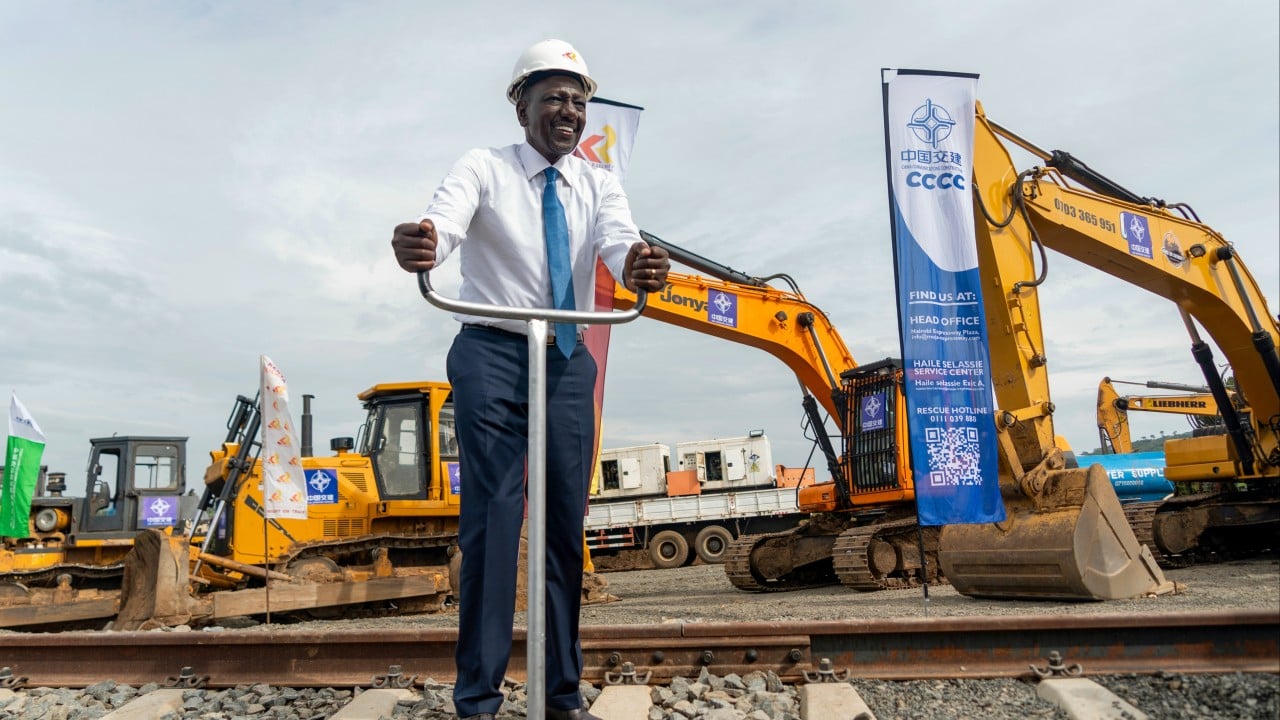
In the red dust of Narok, the silence of a six-year hiatus has finally been broken by the mechanical roar of Chinese-made excavators. For over half a decade, the Standard Gauge Railway (SGR) was the world’s most expensive "bridge to nowhere," a modern steel track that terminated abruptly in a thicket at Suswa, an hour outside Nairobi. To critics, it was the ultimate monument to the "debt trap" narrative. To the Kenyan government, it was a half-finished symphony.
As of March 2026, the music has started again.
Kenya and China have officially reignited the extension of the SGR, a $5.5 billion push to drive the rail from its dead-end at Naivasha toward the lakeside hub of Kisumu and onward to the Malaba border with Uganda. But this isn’t just a construction update. It is a desperate, high-stakes pivot in how African megaprojects are financed, born from the realization that a railway that doesn't reach a border is nothing more than a very expensive sightseeing tour.
The Securitization Gamble
The most striking shift in this revival isn't the engineering; it’s the ledger. Between 2014 and 2019, Kenya built the first phases of the SGR using direct bilateral loans from the Export-Import Bank of China. When the debt reached a breaking point, Beijing pulled the plug, leaving the project stranded.
Now, President William Ruto has signed the Miscellaneous Fees and Levies Amendment Act, 2026, a legal maneuver designed to bypass traditional borrowing. Under this law, the government can use up to 90% of the Railway Development Levy—a 2% tax on all imports—as collateral to secure new financing. By "securitizing" this tax, Kenya is effectively betting its future trade revenue to pay for the tracks today.
It is an attempt to shed the "debt trap" label by moving Chinese involvement from the role of a traditional lender to that of an "investor" and "technology partner". China Road and Bridge Corporation (CRBC) is reportedly putting $500 million of its own skin in the game, a sign that Beijing is no longer willing to just hand over checks without a direct stake in the project’s operational success.
The Geopolitical Clock is Ticking
Kenya’s sudden urgency isn't happening in a vacuum. To the south, Tanzania has been quietly laying its own electrified SGR, aiming to capture the lucrative transit trade of landlocked neighbors like Uganda, Rwanda, and the DRC. For decades, the Port of Mombasa was the undisputed gateway to East Africa. Without a modern rail link to the interior, that dominance is evaporating.
The numbers tell a story of logistical failure. Currently, goods arriving at Mombasa can take up to 80 hours to reach the Malaba border and over 100 hours to reach Kampala by road. The new rail link aims to slash travel time between Nairobi and Kampala from 14 hours to just four.
The Planned SGR Expansion
| Phase | Route | Distance | Status (March 2026) |
|---|---|---|---|
| Phase 1 | Mombasa to Nairobi | 472 km | Operational |
| Phase 2A | Nairobi to Naivasha | 120 km | Operational |
| Phase 2B | Naivasha to Kisumu | 264 km | Groundbreaking March 2026 |
| Phase 2C | Kisumu to Malaba | ~100 km | Planning / Early Works |
Engineering the Western Frontier
The extension to Kisumu (Phase 2B) is a massive undertaking that dwarfs the earlier segments in complexity. The route requires 79 railway bridges stretching 43 kilometers and eight tunnels totaling 14 kilometers. This isn't just about laying track; it’s about conquering the Rift Valley’s brutal geography to link the Indian Ocean to Lake Victoria.
By connecting to Kisumu, the railway transforms into a "multimodal" beast. Cargo won't just sit on wagons; it will be offloaded onto ships in Lake Victoria, creating a spiderweb of trade that reaches Mwanza in Tanzania and Entebbe in Uganda. This "Blue Economy" integration is the carrot being dangled to justify the eye-watering $5.5 billion price tag.
The Sceptic’s Corner
Despite the fanfare, the "most consequential" rail project in Africa still rests on a foundation of "if."
- The Uganda Factor: The SGR only works if Uganda builds its side of the border. While President Yoweri Museveni attended the March 2026 groundbreaking, Uganda has its own history of financing delays and flirtations with alternative partners.
- The Debt Shadow: While the government claims securitization "does not add to the mountain of public debt," the IMF remains wary. If import volumes drop—perhaps due to another global supply chain crisis or the 2026 Strait of Hormuz tensions—the revenue stream for the Railway Development Levy could dry up, leaving the taxpayer to fill the gap.
- Environmental Toll: Unlike the Nairobi-Mombasa stretch, which was criticized for cutting through Tsavo National Park, the new phase promises "green design" and low-carbon construction. Whether these are meaningful safeguards or merely PR window-dressing for a project under intense scrutiny remains to be seen.
The SGR is no longer just a railway. It is a $10 billion-plus experiment in whether a developing nation can build its way out of a middle-income trap using the very infrastructure that initially threatened to bankrupt it. The excavators are moving, the money is flowing again, and the "railway to nowhere" finally has a destination.
Success now depends on whether the cargo actually follows the steel.