Food prices shouldn't feel like a punishment. For millions of people right now, the simple act of walking down a supermarket aisle has become a source of intense anxiety. It's not just about the math at the checkout. It's about the shame that comes when you can't afford the basics. Grocery stores are finally waking up to a harsh reality. Their traditional ways of "helping" the poor often end up making people feel like second-class citizens. We’re seeing a shift. Grocers are starting to realize that providing cost-of-living help with dignity isn't just good PR. It’s the only way to keep a community whole.
You’ve probably seen the old model. It’s the "charity" bin at the front of the store. Or maybe it’s the neon-yellow "reduced for quick sale" stickers that practically scream "I’m struggling" to everyone behind you in line. That doesn’t work. It creates a barrier. People who need help will often avoid it if it means losing their pride. The new approach focuses on integration. It’s about making the discount experience indistinguishable from the luxury experience.
Why the Old Charity Model Fails Every Time
Traditional food banks and "poverty aisles" are broken. They rely on the idea that if you're desperate, you shouldn't care how you get your food. That’s wrong. Humans are wired for agency. When you take away someone’s ability to choose what they eat, you take away a piece of their identity. I’ve seen families walk past free food because the environment felt dehumanizing.
Most grocery stores used to treat "value" customers as a separate demographic to be managed. They’d put the cheapest items in the hardest-to-reach places or in packaging that looked intentionally ugly. This "poor-shaming" via design is a relic of the past. Today’s smart retailers understand that everyone wants a pleasant shopping experience. If you make the budget options look as good as the premium ones, you remove the social stigma.
The numbers back this up. According to data from the Joseph Rowntree Foundation, the stress of food insecurity is compounded by the social isolation of not being able to shop "normally." When grocers bridge that gap, they don't just sell more milk. They build long-term loyalty that survives beyond the current economic crunch.
Social Supermarkets and the Power of Choice
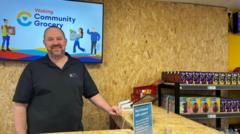
One of the most effective ways grocers are stepping up is through the "social supermarket" concept. These aren't just warehouses for leftovers. They're curated spaces. Look at how some retailers are partnering with community interest companies to create shops where memberships are low-cost, but the experience is high-end.
You walk in. You grab a basket. You pick out the brands you actually like. You pay a fraction of the cost, but you're still paying. That act of transaction is vital. It maintains the "shopper" identity rather than the "beneficiary" identity. It’s a subtle shift that changes everything.
Retailers like Iceland and Waitrose have experimented with different versions of this. Some offer "community shops" in high-need areas. Others focus on "wonky" veg programs that aren't just about saving money, but about reducing waste. By framing low prices as an environmental win, the store gives the customer a sense of purpose. You aren't buying the cheap carrots because you're broke; you're buying them because you're saving the planet. That's a massive psychological win.
The Problem With Technology and Digital Dividends
Technology is a double-edged sword in the fight for dignity. On one hand, apps can hide discounts. If you’re using a digital coupon or a loyalty card to get 50% off, nobody in the queue knows. It’s private. That’s great.
But there’s a catch. Digital exclusion is real. The people who need the most help are often the ones with the least access to high-speed data or the latest smartphones. If the "best" prices are locked behind a complex app, you’re excluding the elderly and the most vulnerable. Smart grocers are moving toward "automatic" discounts. They’re using loyalty data to apply savings at the till without the customer having to jump through hoops.
I’ve seen stores where the "club price" is the only price. That’s okay, but it can feel coercive. The better move is when grocers use data to predict when a regular shopper is struggling. Imagine getting a personalized voucher for the essentials you buy every week, sent via mail or text, without having to ask. That’s proactive help. It says "we see you" without saying "you’re a charity case."
Price Caps and the Politics of the Pantry
We can't talk about dignity without talking about the actual cost. Some countries have experimented with government-mandated price caps on essentials. Grocers hate this. They say it kills competition. Honestly, they have a point. When you cap the price of bread, the quality often drops, or the size of the loaf shrinks. We call it shrinkflation. It’s a sneaky way to keep prices low while giving the customer less.
True dignity means getting what you pay for. A "value" loaf of bread shouldn't be 40% air and preservatives. Retailers that are winning right now are the ones investing in the quality of their own-label basics. They’re making sure that the budget version of a product is nutritionally sound. If a parent can only afford the cheapest peanut butter, that peanut butter shouldn't be loaded with palm oil and sugar. Health is a dignity issue.
Moving Toward a Better Retail Environment
If you're a grocer—or even just a shopper who cares—there are concrete steps to take. We need to stop seeing "cheap" as a dirty word. We need to demand that retailers treat their value ranges with the same design respect as their luxury lines.
First, look at the physical layout. Stores should mix value items with premium ones rather than segregating them in a "clearance" corner. This encourages "blind" shopping where your budget isn't on display. Second, supermarkets need to invest in "round-up" programs at the till that fund local food projects quietly. This turns the store into a hub for community wealth rather than just a place that extracts it.
Finally, we need to talk about the workers. Many people who work in grocery stores are the same people who can’t afford to shop there. Providing cost-of-living help starts with the staff. A grocer can’t claim to support dignity if its own employees are relying on the food bank in the breakroom.
Start looking at your local store differently. Check if they have a "discreet" help policy. See if they offer free fruit for kids or if they’ve ditched the aggressive yellow stickers for something more subtle. Support the businesses that realize a customer’s self-worth is worth more than a few cents of margin.
Next time you’re at the checkout, notice the small things. The way a cashier handles a declined card or a voucher can make or break someone's day. Dignity is a choice made in every single transaction. It’s time we held the big chains accountable for making that choice every time.