The steam rising from a Manhattan manhole cover doesn't smell like it used to. Today, it’s a sterilized vapor, a byproduct of a city that has been scrubbed, priced out, and polished until it reflects the glass towers of billionaires. But lately, millions of people who have never stepped foot on a subway are catching a scent of something different. They are smelling the grit, the rain-slicked asphalt, and the blue-tinted melancholy of a New York that supposedly died thirty years ago.
It started with a few grainy clips on a phone screen. Then a song. Now, a full-blown obsession.
The sudden, sweeping resurgence of interest in the 1990s New York City aesthetic—triggered by the viral footprints of the film Love Story—isn't just a trend. It isn't about baggy jeans or leather blazers. It is a collective, digital haunting. We are mourning a version of a city that felt tactile, dangerous, and inexplicably romantic, precisely because it was the last era before the internet swallowed our physical reality whole.
The Analog Heartbeat
Think about a payphone.
To a teenager in 2026, it is a relic, a strange metal skeleton attached to a wall. But in the mid-90s, that payphone was a lifeline. It represented the tension of waiting. If you were meeting someone under the clock at Grand Central and they didn't show, you stayed. You watched the crowd. You felt the weight of the minutes. There was no "on my way" text to dissolve the mystery.
When modern audiences watch the rain-drenched streets of 1990s New York in Love Story, they aren't just seeing a setting. They are seeing a world where people had to look at each other. The cinematography captures a specific palette: the warm amber of incandescent streetlights, the charcoal smudge of the skyline, and the absence of the cold, LED glow that defines our current nights.
This visual language acts as a sedative for a generation overstimulated by high-definition clarity. There is a deep, human comfort in the grain. We are realizing that when we traded the "grit" for the "grid," we lost the texture of the city.
The Myth of the Dangerous Paradise
Critics often point out that the 90s weren't all jazz clubs and poetic walks in Central Park. The crime rates were higher. The subway cars were louder and less reliable. The city felt like it was vibrating on the edge of a breakdown.
Yet, that is exactly why the era has become a sanctuary for the modern mind.
The danger of 90s New York offered a stakes-driven reality. In a world where everything is now tracked, logged, and optimized, the idea of being "lost" in a vast, indifferent metropolis feels like the ultimate luxury. We see characters in these stories navigating a city that doesn't care about them, and strangely, that makes their personal connections feel more vital. When you find love in a city of eight million without a GPS or a dating app, it feels like a miracle.
It feels earned.
The 1990s represented a "sweet spot" in urban history. The city had begun to pull itself out of the fiscal decay of the 70s and the crack epidemic of the 80s, but it hadn't yet become a playground for the global elite. There were still dive bars on corners where now stand bank branches. There were artists living in lofts that hadn't been partitioned into $8,000-a-month "micro-studios."
The Wardrobe of a Lost Republic
The fashion isn't just about clothes; it’s about armor.
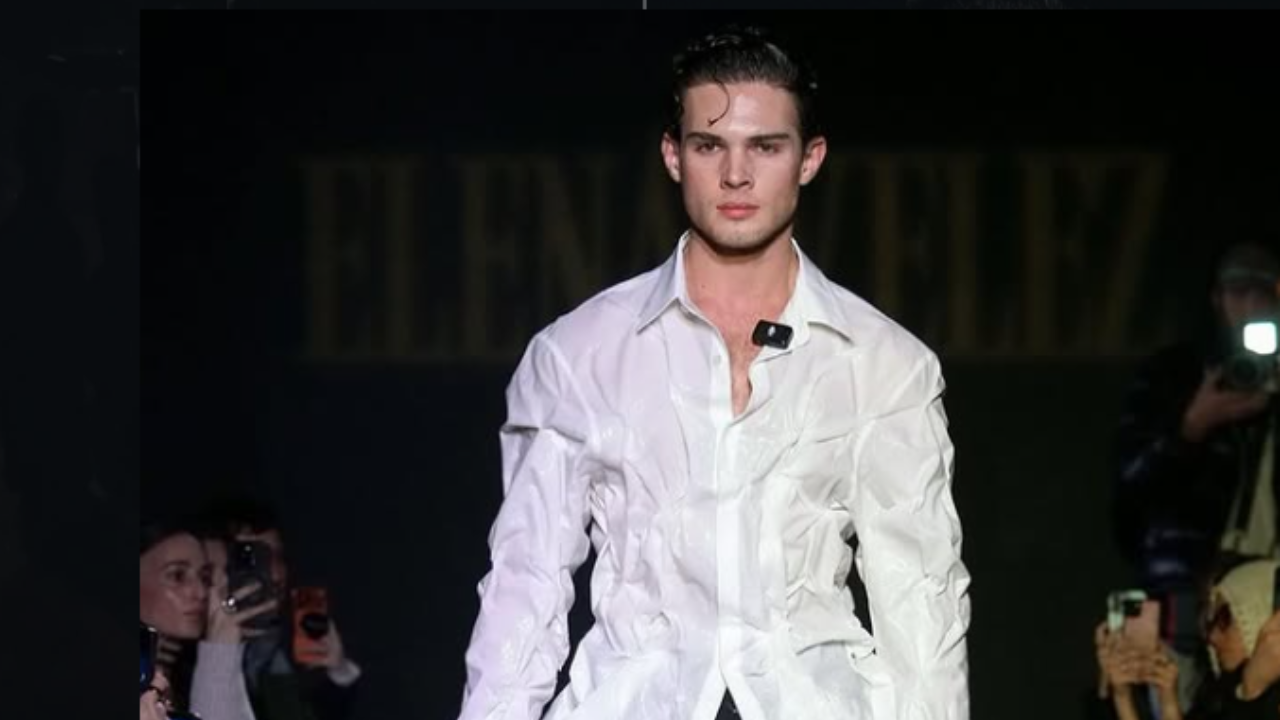
The long wool coats, the heavy boots, the oversized knits—they all suggest a life lived outdoors, moving through the elements. Modern fashion often feels like it’s designed for the transition from an Uber to an air-conditioned office. The 90s look, revitalized by the "Love Story" effect, celebrates the pedestrian.
It’s the uniform of someone who walks ten miles a day on concrete. It’s the clothing of a person who has nowhere to be but everywhere to go.
When we see these outfits reflected in TikTok transitions or Instagram mood boards, we are witnessing a desire to return to a physical existence. We want to feel the weight of a heavy jacket. We want to hear the sound of boots on a metal grate. We are tired of the weightless, frictionless life of the digital age.
Why Now?
Sociologists often talk about the twenty-year cycle of nostalgia, but this is different. This is a thirty-year leap, skipping over the frantic energy of the 2000s and the hipster irony of the 2010s.
We are reaching back to the 90s because it was the last time the world felt "finished." There was a sense of a "post-historical" calm after the Cold War ended and before the Twin Towers fell. New York was the center of that calm. It was a place where you could go to reinvent yourself without a digital trail following you.
Imagine a young woman named Sarah. In 1996, Sarah moves to the East Village with nothing but a suitcase and a notebook. She finds a waitress job by walking into a cafe and asking. She meets a guy because he’s reading the same book at a newsstand. Her parents don't hear from her for three days because she’s busy living.
In 2026, Sarah’s life is a series of notifications. Her movements are mapped. Her job hunt is an algorithmic lottery. Her dating life is a catalog of faces.
When Sarah watches a film that captures the 90s, she isn't just watching a period piece. She is watching a ghost of the life she could have had. She sees a version of herself that was allowed to be private. She sees a city that was allowed to be messy.
The Architecture of Loneliness
New York has always been a lonely place, but the 90s offered a communal loneliness. You were lonely together in a crowded theater or a smoky bar.
Today’s New York is a place of isolated convenience. You can live in a high-rise, order your groceries, work your job, and watch your movies without ever speaking to another human being. The "Love Story" phenomenon is a reaction against this isolation. It romanticizes the "meet-cute," the accidental brush of shoulders, and the shared umbrella.
It reminds us that the city is supposed to be a friction machine. It is supposed to rub people together until sparks fly.
The digital world has eliminated the friction, and in doing so, it has eliminated the sparks. We are looking back at the 90s because we miss the heat. We miss the unpredictability of a Tuesday night in Soho when you didn't have a plan and your phone was dead, so you just walked until something happened.
The Sound of the City
Close your eyes and listen to the New York of thirty years ago.
It isn't the sound of sirens and jackhammers—those are eternal. It’s the sound of paper. The snapping open of a New York Times on the 6 train. The rustle of a brown paper bag. The click of a cassette tape.
These sounds are disappearing from our lives, replaced by the haptic buzz of a glass screen. The obsession with the 90s aesthetic is an attempt to reclaim the tactile. It’s why vinyl sales are peaking. It’s why film photography is back. We want things we can hold. We want things that can break.
The 90s New York of our current imagination is a city made of brick, bone, and breath. It is a city where the stakes were real because you couldn't just "undo" a mistake. If you missed your train, you waited. If you lost your map, you asked for directions. If you fell in love, you had to find a way to stay in touch.
We aren't falling for a decade. We are falling for the idea that our lives can be more than a stream of data.
A man stands on the corner of 14th Street today, wearing a vintage oversized blazer and holding a film camera. He looks like he belongs in 1994. He is trying to summon a feeling he never actually experienced. He is trying to catch a glimpse of the ghost. He takes a photo of a pigeon, or a puddle, or a girl in a red coat, hoping that when the film is developed, it will reveal a world that still has secrets.
He is looking for a city that hasn't been mapped yet. He is looking for a version of himself that is still a mystery.
The lights of the Empire State Building flicker in the distance, but they aren't the same bulbs that shone on the 90s. They are smarter now. They can change color with a keystroke. They are efficient. They are perfect.
But down on the street, in the shadows between the streetlights, there is still a little bit of darkness left. And in that darkness, the 90s are still happening. The rain is still falling on the asphalt, the payphones are still ringing in the wind, and two people are still meeting under a clock, with no idea what happens next.