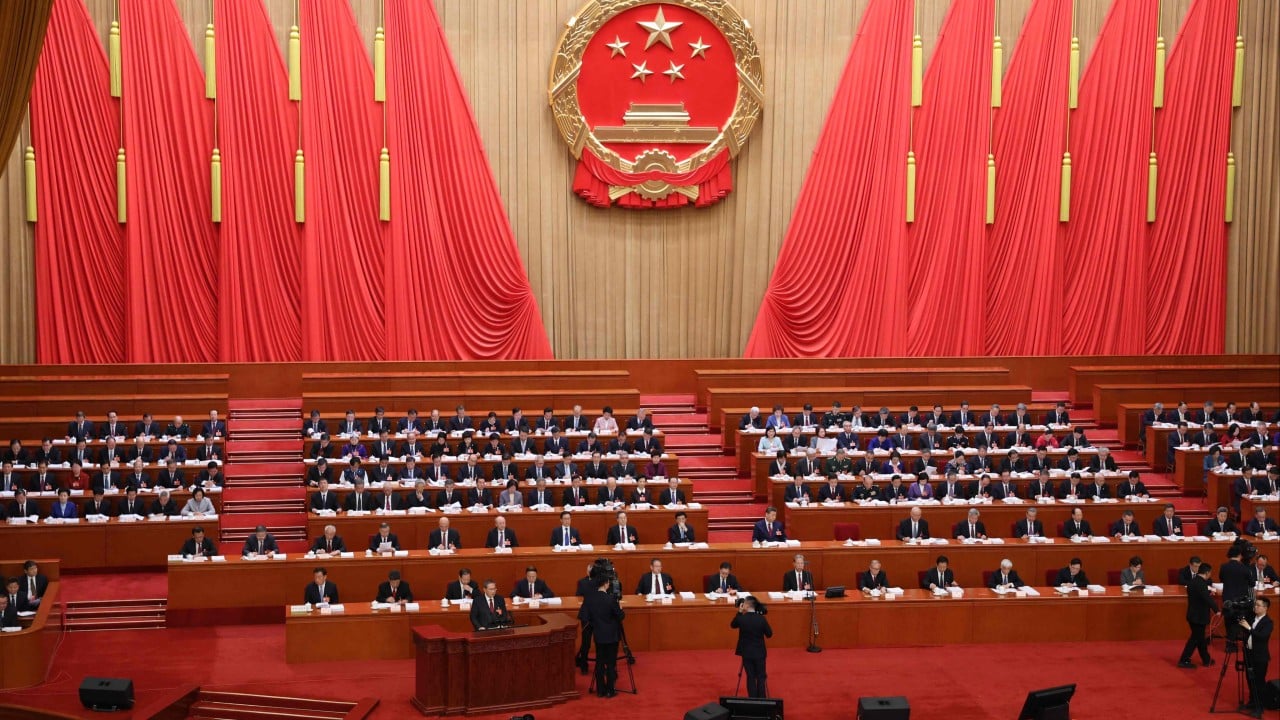
China just signaled a massive shift in how it plans to survive the rest of the decade. While headlines focus on the 2026 GDP growth target of 4.5% to 5%, the real story isn't the number. It's the total pivot toward what President Xi Jinping calls "new quality productive forces." Basically, Beijing is done pretending that property and cheap exports will carry the weight anymore. They're betting the house on high-tech self-reliance and a capital market that actually functions for investors rather than just state giants.
If you've been watching the "Two Sessions" meetings in Beijing this week, the vibe is different. It's less about raw expansion and more about "geoeconomic resilience." Premier Li Qiang didn't hide the fact that the external environment is getting uglier. With trade tensions with the U.S. hitting a fever pitch and triple-digit tariffs becoming a real threat, China is hunkerng down.
The Tech First Survival Strategy
Forget the old "Made in China" label. The new 15th Five-Year Plan (2026-2030) puts technology at the absolute center of national security. We’re talking about a 7.1% jump in science and technology spending, hitting nearly 1.3 trillion yuan this year alone.
I've seen plenty of these plans before, but the urgency here is next level. Beijing is moving to insulate itself from U.S. export controls by pouring cash into "breakthrough" sectors.
- Semiconductors and AI: They're aiming to raise the "core digital economy" value-added to 12.5% of GDP.
- The AI Plus Initiative: This isn't just a buzzword. It's a mandate to embed AI across every factory floor and supply chain in the country.
- Future Tech: Quantum computing, brain-computer interfaces, and nuclear fusion are no longer science fiction in these documents. They're listed as the next "pillar industries."
The goal is simple. If you can't buy the best chips or software from the West, you build them yourself—or you build something better that the West eventually has to buy from you. It's a high-stakes gamble that ignores the immediate pain of a property slump to secure a tech-dominated future.
Rebalancing Trade Without Losing the Edge
Last year, China’s trade surplus hit a staggering $1.2 trillion. That’s a massive win on paper, but it’s also a giant target on their back. The new policy mix aims for "balanced trade." Minister of Commerce Wang Wentao is talking about opening up more to imports of premium consumer goods and advanced components.
But don't get it twisted. This isn't China being "nice." It's a tactical move to share market opportunities so other countries don't follow the U.S. lead on aggressive tariffs. They’re also "externalizing" their industrial ecosystem. You'll notice more Chinese firms moving labor-intensive parts of their supply chains to Southeast Asia. This keeps them competitive while bypassing some of those nasty "Origin: China" trade barriers.
Capital Market Reforms That Actually Mean Something
For years, global investors have complained that China’s stock markets are a black box. Wu Qing, the head of the China Securities Regulatory Commission, is now promising a "transparent, stable, and predictable" environment. Honestly, we've heard it before, but the 2026 plan includes specific tools to boost domestic investment worth 800 billion yuan.
The focus is on "high-quality" listing standards. They want to flush out the "zombie" companies and make room for the tech champions they’re currently subsidizing. If you're looking at Chinese assets, the message is clear: the state wants your capital to flow into AI and "new energy," not real estate.
Why Consumption Is Still the Elephant in the Room
There's a lot of talk about a "notable" increase in household consumption, but the actual numbers for things like pension increases (20 yuan a month) are tiny. It's marginal, not structural. This is where the plan might stumble. You can't have a high-tech superpower if the people living in it are too worried about their retirement or the property crash to spend money.
Beijing is betting that high-tech jobs will eventually fix the "weak demand" problem. It's a "controlled glide" in growth while they swap out the old economic engine for a new one. It's risky because the transition is happening exactly when the global trade floor is falling out.
What You Should Do Now
If you’re an investor or a business leader dealing with China, the old playbook is dead.
- Follow the Subsidies: Look at the "six emerging pillar industries," especially the low-altitude economy (drones) and intelligent robots. That's where the 7 trillion yuan in infrastructure and public service investment is headed.
- Watch the Southeast Asia Interface: If you can't deal with China directly due to geopolitical risk, look at the "nearshore" production hubs in Vietnam and Indonesia where Chinese tech is being exported.
- Ignore the 4.5% GDP Floor: Don't panic about the lower growth target. It’s a sign that the government is willing to sacrifice short-term speed for long-term structural health.
The 2026 roadmap proves that China is choosing a path of "fortress economy" built on silicon and software. Whether they can do that while keeping 1.4 billion people happy is the multi-trillion dollar question. Start shifting your focus toward their "AI Plus" sectors now, as that's where the regulatory and financial support will be most aggressive for the next four years.