India’s refusal to issue a formal condemnation or celebratory statement regarding the kinetic elimination of Supreme Leader Ali Khamenei is not a diplomatic oversight; it is a calculated hedging strategy dictated by the convergence of energy security, maritime trade vulnerabilities, and the specific mechanics of the North-South Transport Corridor. New Delhi views the Middle East through the lens of transactionality rather than ideology. When a primary regional actor is removed, the immediate response is a recalibration of risk across three specific vectors: the physical security of the Persian Gulf, the stability of the energy price floor, and the integrity of non-Western trade routes.
The Tri-Vector Strategic Framework
The Indian Ministry of External Affairs (MEA) operates under a doctrine of "De-hyphenation," which allows for the simultaneous pursuit of strategic partnerships with Israel while maintaining critical infrastructure ties with Iran. This policy is tested when a leadership decapitation occurs. To understand India’s silence, one must analyze the specific dependencies that would be jeopardized by a vocal stance.
1. The Energy Price Elasticity Constraint
India imports roughly 85% of its crude oil. While Iran is no longer India’s top supplier due to US sanctions and the influx of Russian Ural blends, Iran’s geopolitical weight acts as a massive "volatility premium" on the global market.
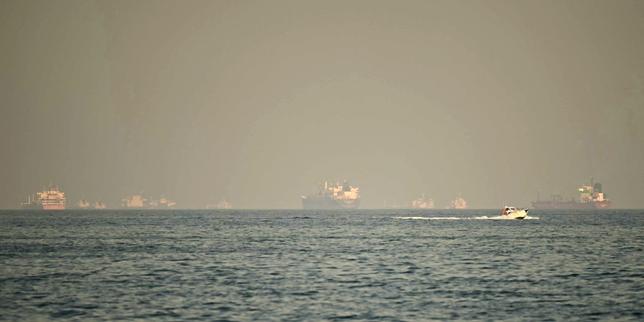
- Supply Chain Contagion: Any instability in Tehran threatens the Strait of Hormuz, through which approximately 30% of India’s oil imports pass.
- The Price Ceiling: New Delhi’s fiscal math is highly sensitive to Brent crude prices. A $10 increase per barrel can widen India’s current account deficit by approximately 0.5% of GDP.
- Neutrality as Insurance: By remaining silent, India avoids becoming a target for Iranian proxies (the "Axis of Resistance") that have demonstrated the capability to disrupt shipping via drone and missile strikes in the Arabian Sea.
2. The Chabahar Port and International North-South Transport Corridor (INSTC)
India’s investment in the Chabahar Port is the only viable mechanism for bypassing Pakistan to reach Afghanistan and Central Asia. The legal and operational framework of this port is a bilateral agreement with the Iranian state, not a specific regime or individual.
The removal of Khamenei introduces "Succession Risk." If India were to align with Western celebratory rhetoric, it risks a nationalist backlash from the successor regime—whether that be a hardline IRGC-led military junta or a reformist faction seeking to exert leverage. The INSTC functions as a logistical hedge against the Suez Canal; any disruption to the Iranian segment of this rail-and-sea link renders billions of dollars in Indian infrastructure investment stranded.
3. The Diaspora and Remittance Safety Net
Approximately 9 million Indians live and work in the Gulf Cooperation Council (GCC) countries. While Iran is not a primary destination for Indian labor, its ability to destabilize its neighbors—Saudi Arabia, the UAE, and Qatar—directly threatens the safety of this diaspora and the $80 billion in annual remittances they provide. India’s silence is a signaling mechanism to Tehran’s proxy networks that India is a non-combatant, thereby insulating its citizens in the wider region from retaliatory targeting.
The Logic of Strategic Autonomy vs. Western Alignment
Western analysts often misinterpret India’s silence as a lack of resolve. In reality, it is an exercise in "Strategic Autonomy." India distinguishes between the tactical benefit of removing a disruptive actor and the strategic cost of a chaotic transition.
The Power Vacuum Paradox
From a security perspective, India benefits from a weakened Iran that cannot export radicalism. However, a total collapse of the Iranian state would create a power vacuum likely to be filled by:
- Increased Chinese Hegemony: China is Iran’s largest trading partner and has signed a 25-year strategic cooperation agreement. A weakened Tehran may lean further into Beijing’s orbit, granting China a permanent naval presence in the Gulf of Oman, effectively completing the "String of Pearls" encirclement of India.
- Sunni Extremism: The collapse of a Shia powerhouse could embolden radical Sunni factions in the neighborhood, potentially spilling over into India’s immediate periphery.
India’s silence is a tool to maintain "Optionality." By not committing to a side, New Delhi ensures it has a seat at the table with whoever emerges as the next sovereign authority in Tehran.
Operational Realities of the India-Israel-Iran Triangle
India’s relationship with Israel is now a "Comprehensive Strategic Partnership" centered on defense technology and intelligence sharing. However, India refuses to let this relationship dictate its Persian Gulf policy.
The MEA utilizes a "Modular Diplomacy" approach. Each bilateral relationship is treated as a separate module. The Israel module handles anti-terror technology and agriculture, while the Iran module handles continental access and energy transit. These modules are intentionally kept disconnected. If India were to comment on the Khamenei killing, it would effectively "solder" these modules together, forcing a binary choice that New Delhi is economically unprepared to make.
Intelligence Gathering vs. Public Posturing
While the public face of the Indian government is silent, the intelligence apparatus (R&AW) is likely engaged in deep-channel communication with both Israeli and Iranian counterparts. The goal here is "De-escalation Management." India’s primary concern is preventing a regional war that would force a maritime blockade. In such a scenario, the Indian Navy would be forced to divert resources from the Eastern Front (monitoring Chinese incursions in the Indian Ocean) to the Western Front to escort tankers. Silence preserves the diplomatic bandwidth required to mediate or, at the very least, remain a neutral observer.
The Failure of "Values-Based" Analysis
Common media narratives attempt to frame India’s reaction as a struggle between democratic values and autocratic ties. This is a category error. India’s foreign policy is governed by Realpolitik, where the primary variables are:
- The Cost of Entry: What does India gain by speaking? (Minimal Western approval).
- The Cost of Exit: What does India lose if the relationship with Iran severs? (Chabahar, INSTC, and regional shipping security).
The "Cost-Benefit Ratio" of silence is overwhelmingly positive. It preserves the status quo while the dust settles in Tehran.
Structural Bottlenecks in the Post-Khamenei Era
The transition period in Iran presents three specific bottlenecks for Indian strategy:
- Contractual Ambiguity: Many of India’s trade agreements are with the Iranian government. If the IRGC seizes total control, New Delhi must determine if those contracts remain enforceable or if "force majeure" clauses will be triggered.
- Sanctions Escalation: If a post-Khamenei Iran becomes more aggressive, the US may implement secondary sanctions. India’s silence now prevents it from being seen as an early adopter of any new Western-led regime change efforts, allowing it more room to negotiate sanctions waivers later.
- The "Middle Way" Fatigue: There is a risk that both the US and the new Iranian leadership will grow tired of India’s neutrality. However, India’s size and its role as a massive consumer of global commodities make it a "Systemically Important Actor" that neither side can afford to alienate completely.
The Strategic Path Forward
India will continue to monitor the Internal Security Forces (ISF) in Iran to gauge the longevity of the transition. The tactical play for New Delhi is to wait for the first "Post-Khamenei Budget" and "Post-Khamenei Foreign Policy Statement" from Tehran.
Until a clear successor emerges, the Indian government will maintain its "Strategic Muteness." This is not a sign of indecision, but a sophisticated defense mechanism designed to protect Indian economic interests from the fallout of a regional tectonic shift. The move is to double down on the diversification of energy sources—specifically increasing imports from the US and Guyana—while simultaneously sending high-level, non-political trade delegations to Tehran to signal that for India, the business of the state transcends the person of the Leader. Any pivot from this silence would only occur if the Iranian state began to fragment into a civil war, at which point India would transition from "Strategic Silence" to "Active Evacuation and Asset Protection."