The myth of Pakistan’s strategic depth has finally been buried under the weight of three simultaneous border crises. While Islamabad has historically viewed its neighbors through the narrow lens of the "Kashmir first" doctrine, the reality of 2026 is far more punishing. The state is currently trapped in a violent pincer movement, forced to manage a volatile, unpredictable conflict with Iran to the west while engaging in a deteriorating low-intensity war with the Taliban-led Afghanistan to the north. This is no longer a simple diplomatic balancing act. It is a desperate struggle for internal stability in a country whose military and economic foundations are visibly cracking.
The core of the problem lies in a fundamental miscalculation by the Pakistani security establishment. For decades, the Rawalpindi headquarters operated on the assumption that a friendly, Islamist government in Kabul would provide a secure "backyard," allowing the military to focus entirely on the Indian border. That assumption didn't just fail; it inverted. Today, the Taliban government in Kabul and the Iranian regime in Tehran represent two distinct but equally lethal threats to Pakistani sovereignty.
The Iranian Missile Gambit and the Death of the Buffer Zone
In early 2024, the world watched as Iran and Pakistan exchanged missile strikes, a move that shattered the long-standing, if tense, peace between the two Islamic republics. Tehran’s decision to strike inside Pakistani territory, targeting the militant group Jaish al-Adl, was a signal that the Iranian Revolutionary Guard Corps (IRGC) no longer respects Pakistan’s territorial integrity when it comes to "border security."
Iran is currently fighting a multi-front shadow war. Between the fallout of the Gaza conflict and its ongoing tension with Western powers, Tehran cannot afford a porous and hostile eastern border. By striking Pakistan, Iran sent a message that it would take unilateral action if Islamabad failed to neutralize Sunni militants operating from the Balochistan province. Pakistan’s retaliatory strikes were a necessity for domestic optics—the military could not afford to look weak—but they did nothing to solve the underlying friction.
The Balochistan region is the physical manifestation of this failure. It is a vast, under-governed expanse where ethnic Baloch insurgents fight the Pakistani state for independence, while Sunni extremists use the terrain to launch raids into Iran. This creates a feedback loop of violence. When Pakistan cracks down on the Baloch Raji Ajoi Sangar (BRAS) to satisfy its own security needs, it often inadvertently shifts the pressure toward the Iranian border. Conversely, when Iran strikes, it fuels the narrative of Pakistani state impotence.
The economic stakes are equally high. The stalled Iran-Pakistan gas pipeline remains a massive point of contention. Under pressure from US sanctions, Islamabad has hesitated to complete its portion of the project. Tehran, facing its own economic strangulation, sees this as a betrayal. This isn't just about energy; it is about whether Pakistan can function as an independent regional player or if its foreign policy is permanently outsourced to the highest bidder in Washington or Riyadh.
The Afghan Betrayal and the TTP Resurgence
If the situation with Iran is a cold war turned hot, the relationship with Afghanistan is a full-scale domestic nightmare. The return of the Taliban to Kabul was celebrated by many in Pakistan’s leadership as a "victory for the Ummah." They were wrong. Instead of a compliant proxy, Pakistan found itself facing an emboldened, nationalistic Afghan government that refuses to recognize the Durand Line—the 2,640-kilometer border established during the British colonial era.
The primary beneficiary of this border dispute is the Tehreek-e-Taliban Pakistan (TTP). This group, which shares an ideological DNA with the Afghan Taliban, has found a safe haven in the mountains of eastern Afghanistan. From there, they have launched a relentless campaign of suicide bombings and ambushes against Pakistani police and soldiers.
The statistics are grim. Since the 2021 withdrawal of US forces from Kabul, terror attacks in Pakistan’s Khyber Pakhtunkhwa province have surged by over 70%. The TTP is no longer a fractured group of mountain rebels; they are a well-armed, coordinated insurgency using high-tech equipment left behind by NATO forces. They are effectively waging a war of attrition against the Pakistani state, and Kabul is doing nothing to stop them. In fact, every time Islamabad demands that the Afghan Taliban reign in the TTP, the response from Kabul is a shrug and a counter-accusation about Pakistan’s failure to secure its own side of the fence.
The Breakdown of Modern Border Control
The physical border is becoming a flashpoint for regular artillery duels. Pakistan has spent billions of dollars and years of effort fencing the Afghan border, a project that the Taliban regularly tear down with tractors and small arms. This is a symbolic rejection of the modern nation-state. To the Taliban, the border is an artificial Western imposition that divides the Pashtun tribes. To Pakistan, the fence is the only thing preventing a total collapse of internal security.
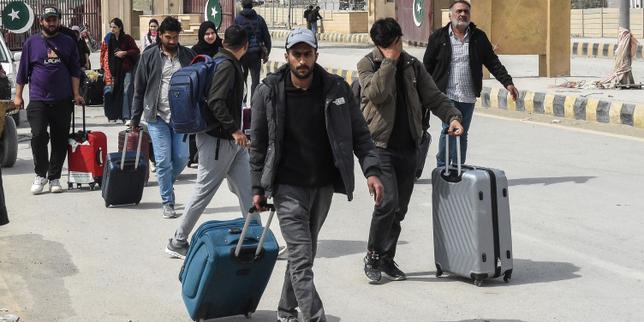
The humanitarian cost is staggering. The forced deportation of hundreds of thousands of undocumented Afghans from Pakistan—a move intended to pressure Kabul—has backfired. Instead of making Pakistan safer, it has created a massive pool of radicalized, displaced people who feel betrayed by Islamabad. This provides a fertile recruiting ground for the TTP and other extremist factions.
The Economic Ghost in the Machine
It is impossible to discuss Pakistan’s regional security without acknowledging its looming bankruptcy. You cannot fight a multi-front border war when you are begging the IMF for your 24th bailout package. Defense spending already consumes a massive portion of the national budget, leaving little for the infrastructure or social services that might actually counter the appeal of extremism in the borderlands.
The China-Pakistan Economic Corridor (CPEC), once hailed as a miracle for the economy, is under siege. Chinese engineers and workers have been targeted by both Baloch insurgents and TTP militants. Beijing is losing patience. For the first time, there are whispers that China may seek to bring in its own security firms to protect its investments, a move that would be a humiliating blow to the Pakistani military's claim of being the country’s sole protector.
If the military is forced to divert more resources to the western and northern borders, the eastern front with India becomes more vulnerable. This is the ultimate nightmare for Rawalpindi. They are being stretched thin, physically and financially. The internal political instability, characterized by the crackdown on the PTI and the imprisonment of popular leaders, only adds fuel to the fire. A divided nation cannot hold a volatile border.
The Geopolitical Pincer
Pakistan’s traditional allies are also shifting their priorities. The Gulf monarchies, particularly Saudi Arabia and the UAE, are increasingly focused on their own economic diversification and regional de-escalation. They have little interest in funding a Pakistani military that seems unable to contain its own internal threats. Meanwhile, the United States has pivoted toward India as its primary strategic partner in South Asia, leaving Pakistan in a geopolitical limbo.
The "balancing act" described by casual observers is actually a desperate scramble. Islamabad is trying to maintain a relationship with the US for military hardware and IMF support, while leaning on China for infrastructure and trying not to provoke Iran into further missile strikes. All of this is happening while the Afghan Taliban systematically erodes Pakistan’s northern security.
Tactical Failures and Strategic Dead Ends
The military’s reliance on "non-state actors" as tools of foreign policy has finally come home to roost. For years, the strategy of supporting certain militant groups while fighting others was seen as a clever way to punch above Pakistan’s weight. That strategy is now in ruins. The groups that were once considered "good" militants have either turned their guns on the state or are providing cover for those who do.
The Pakistani state is now facing the consequences of a policy that prioritized regional influence over domestic stability. The borders are no longer buffers; they are conduits for chaos. The Iranian strikes proved that Pakistan’s nuclear deterrent is irrelevant in the face of cross-border counter-terrorism operations. The Afghan clashes prove that ideological alignment is no substitute for national interest.
A Nation Without an Exit Strategy
There is no easy way out of this trap. To secure the Afghan border, Pakistan would need to launch a massive, sustained military operation in terrain that has swallowed empires. To secure the Iranian border, it would need to offer Tehran a level of security cooperation that would inevitably alienate its Western and Arab benefactors.
The current strategy appears to be one of "muddling through"—reacting to crises as they emerge rather than addressing the structural rot. But the pace of the firestorm is accelerating. The TTP is moving deeper into the Pakistani heartland, and the Iranian leadership is increasingly willing to ignore diplomatic norms.
The real question is not whether Pakistan can balance its neighbors, but whether the Pakistani state can maintain its own coherence as the borders close in. The historical reliance on a dominant military to hold the country together is being tested as never before. When the military fails to provide security, the very justification for its outsized role in the state begins to evaporate.
The survival of Pakistan as a stable regional power depends on a total pivot. It requires moving away from the "security state" model and toward a "development state" model. However, such a shift is nearly impossible while the country is under active fire from two of its three land borders. The window for a peaceful, diplomatic resolution to these tensions is closing. If Islamabad cannot find a way to decouple its domestic security from the whims of Kabul and Tehran, it risks becoming a permanent casualty of the very regional instability it once sought to manage.
The time for balancing is over. The time for a hard, painful internal reckoning has arrived. Pakistan must decide if it wants to be a nation-state with defined borders or a theater for a never-ending regional war that it can no longer afford to fight.
Demand a transparent review of the National Action Plan and a public accounting of the security failures on the Durand Line.