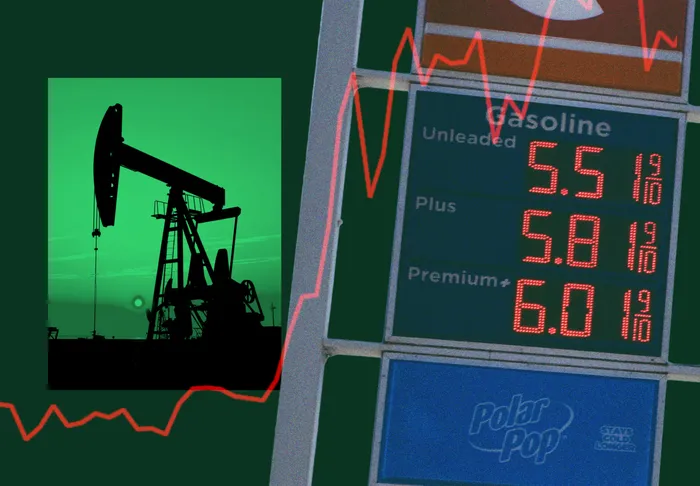
Donald Trump is moving to suspend the federal gas tax as a primary shield against fuel prices that have shattered $4.50 per gallon across much of the United States. The proposal, aimed at neutralizing the political fallout from a 40% year-over-year price surge, attempts to strip the 18.4 cent federal levy from every gallon sold. While the promise of immediate relief resonates with a public currently being bled by 11 weeks of conflict in the Middle East, the actual mechanics of the plan suggest it is more of a temporary sedative than a cure.
A suspension would require an act of Congress, where the math of the Highway Trust Fund creates a massive hurdle. By removing the 18.4 cent tax on gasoline and the 24.4 cent tax on diesel, the federal government stands to lose roughly $3 billion every month. Over a five-month span, that creates a $12 billion to $17 billion hole in infrastructure funding, just as the Highway Trust Fund approaches a projected insolvency in 2027.
The Capture of the Eighteen Cents
There is a fundamental misunderstanding about where your money goes when you swipe your card at the pump. The federal gas tax is an excise tax collected at the terminal, not at the register. When the tax is suspended, there is no legal requirement for a gas station owner or a regional distributor to lower the price by the exact amount of the tax.
History shows that price relief rarely reaches the consumer in full. During state-level gas tax holidays in 2022, retailers and suppliers pocketed between 15% and 40% of the intended savings to shore up their own margins against volatile wholesale costs. In the current market, where global oil prices hover near $110 a barrel due to the ongoing blockage in the Strait of Hormuz, a 13-cent price drop is a rounding error. It is a minor vibration in a market defined by massive swings.
A household filling a 15-gallon tank once a week would save roughly $2.76 per trip. Over the course of a four-month "holiday," that totals about $44. While every dollar matters to a family on a tight budget, the trade-off is a crippled federal ability to maintain the very roads that family is driving on.
The Highway Trust Fund Trap
The federal gas tax has not been raised since 1993. In the decades since, inflation has eroded its purchasing power by more than 80%, while vehicle fuel efficiency has reduced the volume of tax collected per mile driven. We are essentially trying to maintain a 21st-century infrastructure with 1990s pocket change.
Suspending the tax now is a gamble on the "user-pay" model that has governed American roads for nearly a century. When the tax disappears, the funding for bridges, transit systems, and interstate repairs has to come from somewhere else. Usually, this means more federal debt or a "raid" on the general fund.
- Projected Revenue Loss: $11.5 billion to $17 billion depending on the duration.
- Consumer Pass-through: Estimated at 60% to 70%.
- Infrastructure Impact: Delayed maintenance on roughly 20% of federal projects.
Critics of the move, including the American Society of Civil Engineers, argue that the long-term cost of deferred maintenance far outweighs the pennies saved today. A pothole that isn't fixed this summer becomes a chassis-snapping crater by next spring, costing the average driver significantly more in repairs than the $40 they saved at the pump.
Why Prices Are Actually Soaring
The political theatre surrounding the 18.4 cent tax often obscures the real culprit: the cost of crude oil. Crude accounts for over 50% of what you pay at the pump. With the U.S.-Iran conflict enters its third month, the maritime bottleneck in the Middle East has removed a significant portion of global supply from the market.
Refinery capacity in the United States is also stretched to its limit. Even if the tax is removed, if refineries cannot keep up with the summer driving demand, prices will naturally rise to choke off that demand. A tax holiday can actually stimulate demand at a time when supply is constrained, which ironically pushes the base price of the fuel higher, neutralizing the tax cut entirely.
The move by the administration is a tacit admission that the levers available to control global energy markets are few and far between. By focusing on the gas tax, the government is pulling the only lever it has left, even if that lever isn't connected to the actual engine of the crisis. It is a localized response to a global supply-chain fracture.
The State Level Precedent
Several states have already moved ahead of the federal government. Georgia and Indiana have implemented their own pauses, providing a real-time laboratory for the policy. In these states, prices did dip initially, but they began to creep back up within weeks as global crude prices continued their ascent.
| State | Tax Suspended | Average Savings at Pump | Duration |
|---|---|---|---|
| Georgia | 31.2 cents | ~22 cents | 60 days |
| Indiana | 18 cents (Excise) | ~14 cents | Ongoing |
| Utah | 36.4 cents | Pending | Starts July 1 |
The data from these states suggests that a gas tax holiday works best as a psychological relief valve rather than an economic stabilizer. It signals to the voter that the government is "doing something," even if that something is mathematically insufficient to offset the broader inflationary trend.
For the average American, the federal gas tax holiday will feel like a brief pause in a long storm. You might see the price on the marquee drop from $4.55 to $4.42 for a few weeks. But as long as tankers are blocked and refineries are redlined, the structural reality of expensive fuel remains unchanged. The 18 cent gamble is a high-stakes play for political capital that leaves the nation's infrastructure holding the bill.
The true test of this policy won't be found in the applause at a campaign rally, but in the ledger of the Highway Trust Fund three years from now when the money for the next bridge repair simply isn't there.