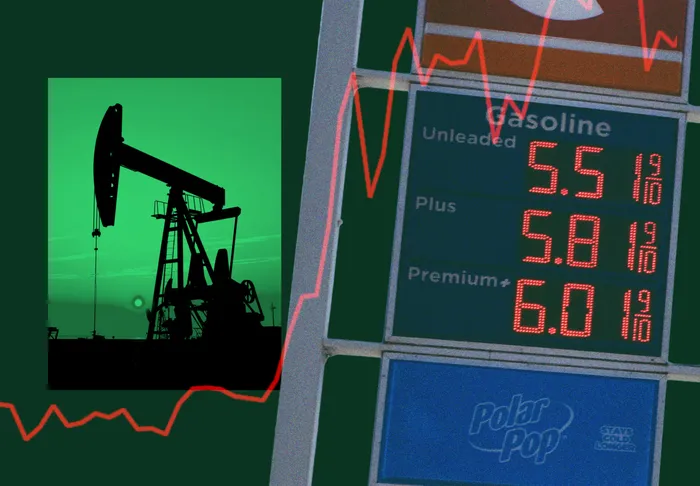
The United States is currently the largest producer of crude oil on the planet, pumping out more than 13 million barrels every single day. Yet, the price at the local corner station remains stubbornly high, often disconnected from the record-breaking output occurring in the Permian Basin or the Gulf of Mexico. This disconnect creates a frantic political finger-pointing match, but the reality is dictated by a rigid, globalized machinery that cares very little for national borders or the plight of the American commuter. We are producing more, exporting more, and yet paying prices that suggest a scarcity that simply does not exist on paper.
The simple answer is that crude oil is a global commodity, and domestic production does not belong to the American public; it belongs to private corporations that sell to the highest bidder on a world stage. Even if we flooded the market with every drop of Texas tea, domestic prices would still track with the Brent Crude benchmark set in London. Furthermore, the U.S. refinery system is an aging, specialized beast designed for an era that no longer exists, creating a massive logistical bottleneck that keeps pump prices high while oil companies post record profits. For a more detailed analysis into similar topics, we recommend: this related article.
The Global Price Floor
When people see headlines about record U.S. production, they often assume it functions like a local farmers' market where an abundance of apples leads to a fire sale. Oil is different. Because it is easily transported and globally demanded, a barrel of West Texas Intermediate (WTI) is linked by an invisible chain to prices in Dubai and the North Sea. If a refinery in South Korea is willing to pay $85 a barrel, an American producer has no financial incentive to sell it to a domestic refinery for $70.
This global arbitrage ensures that American consumers are constantly bidding against the rest of the world. Wars in Eastern Europe, shipping threats in the Red Sea, or production cuts by the OPEC+ cartel in Vienna immediately vibrate through the entire system. We have achieved "energy independence" in a mathematical sense—meaning we produce more than we consume—but we have zero "price independence." As long as our domestic oil is part of a global pool, our prices will be dictated by global events. For additional information on this development, detailed analysis is available on Financial Times.
The Wrong Kind of Oil
There is a massive technical irony at the heart of this crisis. Most of the new oil being pulled from American shale is "light, sweet" crude. However, the multi-billion dollar refinery complexes along the Gulf Coast were built decades ago to process "heavy, sour" crude—the thick, sulfurous sludge typically imported from Venezuela, Canada, or the Middle East.
Changing a refinery's diet is not as simple as flipping a switch. It requires billions in capital investment and years of construction. Consequently, we export our high-quality light crude because our own refineries aren't optimized for it, and then we import the heavy stuff we actually need to make gasoline and diesel. This two-way street of imports and exports adds transportation costs, middleman fees, and logistical complexity, all of which are baked into the price you see on the rolling digits of the gas pump.
The Ghost of Refineries Past
Physical capacity is the silent killer of low gas prices. Since the early 1980s, the number of operable refineries in the United States has plummeted. While the remaining facilities have become more efficient, we are operating at nearly 95% capacity most of the year. There is no margin for error.
When a single refinery in Louisiana goes offline for "planned maintenance" or a hurricane sweeps through the Gulf, the supply of finished gasoline drops instantly. Because we lack spare capacity, these minor hiccups cause massive price spikes. Investors are hesitant to build new refineries because the political and economic trend is moving toward electric vehicles and renewable energy. No board of directors wants to approve a 40-year, $10 billion project for a product that might see declining demand in two decades. We are essentially running a marathon on an old pair of sneakers that are falling apart, and we refuse to buy a new pair because we plan on retiring soon.
The Profit Over Volume Strategy
Following the shale bust of 2014-2016 and the absolute collapse of prices during the 2020 lockdowns, the mindset of American oil executives shifted fundamentally. They moved away from "drill, baby, drill" and toward "capital discipline." In the past, companies would take every cent of profit and plow it back into the ground to find more oil. Today, they are under intense pressure from Wall Street to pay out dividends and engage in stock buybacks.
Investors no longer reward growth; they reward cash flow. This means that even when prices are high, oil companies are not rushing to flood the market and crash the price. They are keeping production steady, enjoying the high margins, and keeping their shareholders happy. It is a rational business decision that happens to be an expensive reality for anyone driving a truck in the Midwest.
The Ghost in the Machine
The final piece of the puzzle is the role of speculators and the futures market. A significant portion of the "price" of oil isn't based on physical barrels being traded today, but on bets about what might happen six months from now. Commodity traders, hedge funds, and institutional investors trade millions of "paper barrels" every day.
When tensions rise in the Middle East, these traders buy up futures, driving the price up long before a single drop of supply is actually lost. This "fear premium" can add $10 to $20 to the price of a barrel based entirely on sentiment. The American consumer is essentially paying a tax on global anxiety, a cost that record domestic production does nothing to alleviate.
Breaking the Link
Policy discussions often center on opening more federal land for drilling, but as we have seen, more supply does not automatically equal lower prices if that supply is shipped overseas or if refineries can't handle it. True relief would require a fundamental restructuring of how we handle domestic resources—either through export restrictions, which would likely violate trade agreements and anger allies, or through massive, taxpayer-subsidized upgrades to the refinery fleet.
Neither of these options is particularly palatable to the current political establishment. Instead, the U.S. remains a victim of its own success: a titan of production that is still a slave to a market it cannot control. We are pumping more than ever, yet we are still checking the price of Brent Crude to see if we can afford a road trip. The infrastructure is aged, the crude is the wrong grade, and the investors want their checks.
Stop looking at the drilling rigs for answers; the real story is written in the boardrooms of Wall Street and the trading floors of London.