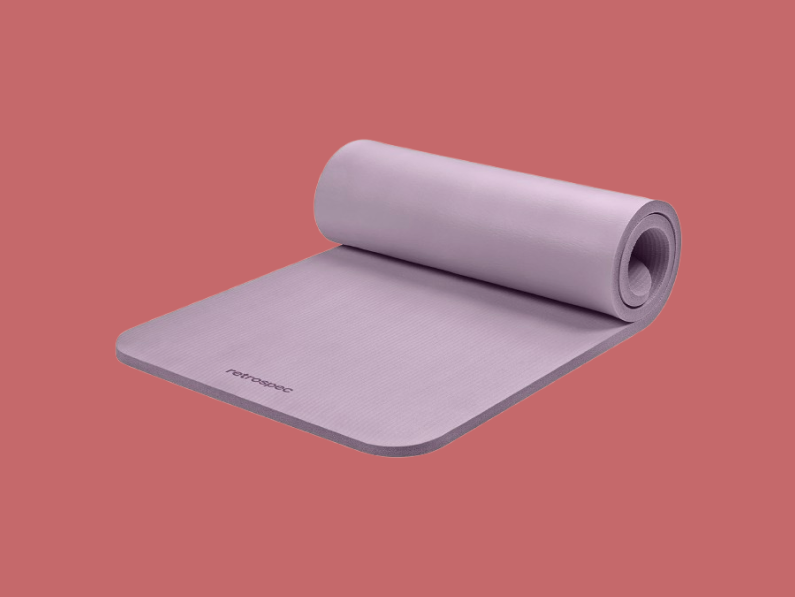
Most yoga mats are slippery, overpriced rectangles of foam that end up in a landfill after six months. You've probably been there. You're in a downward dog, your palms start to get a little damp, and suddenly your hands are sliding toward the front of the mat like they're on ice. It ruins your focus. It's dangerous for your shoulders. Worse, it's a waste of your time.
Choosing the right yoga mat isn't about finding the prettiest color or the brand with the most followers on Instagram. It's about physics. It’s about how much open-cell versus closed-cell material can handle your specific body chemistry and the type of movement you do. If you're doing restorative yin, you need a different surface than someone dripping through a 95-degree Power Vinyasa flow.
I’ve spent years testing these surfaces. I’ve slipped on cheap PVC and stuck to natural rubber like glue. Here is the truth about what works and what’s just marketing fluff.
Stop Buying Cheap Foam Mats From Big Box Stores
If you're buying a $15 mat from a grocery store or a generic sporting goods aisle, you're buying a sponge. These are usually made of low-grade PVC (Polyvinyl Chloride). While they feel soft for about five minutes, they have zero "bite." Once a single drop of sweat hits that surface, the surface tension disappears.
Cheap mats also lack density. If you can pinch the mat and feel your fingers meet through the material, your knees will feel the floor. That's not "cushion." That’s a failure of engineering. High-quality mats use high-density construction to protect your joints without making the surface feel like a marshmallow. You want stability, not a bouncy castle.
The Grip Reality Check
There are two main ways a mat handles grip. You need to know which one you're buying.
Closed-Cell Construction
Think of this like a sealed raincoat. Sweat sits on top. Most Manduka PRO mats use this. The benefit? They're incredibly hygienic because bacteria can't sink into the mat. The downside? If you don't use a towel, you will slide once you sweat. These are the "lifetime" mats. They’re nearly indestructible, but they require a "break-in" period where you essentially have to scrub off a factory film with sea salt.
Open-Cell Construction
This is like a vacuum. It sucks the moisture away from the surface and into the core of the mat. This is why the Lululemon The Mat or the Alo Warrior mat feels so sticky even when you're soaking wet. The grip is legendary. However, because it absorbs sweat, it also absorbs skin cells and oils. These mats have a shorter lifespan. They’ll eventually lose their "stick" and might start to smell if you don't clean them religiously.
Natural Rubber vs Synthetic
Rubber mats like those from Jade Yoga offer the best natural traction. It’s an earthy, tactile feel. But be warned: if you have a latex allergy, stay away. Also, natural rubber has a distinct "new tire" smell that can take weeks to dissipate. If you practice in a small, unventilated room, that scent will be your only companion during Savasana.
Density Matters More Than Thickness
A common mistake is thinking a thicker mat is always better for bad knees. Wrong. A 6mm mat made of cheap, airy foam will bottom out. You’re better off with a 4mm or 5mm mat that has high density.
Look for "high-density" or "heavyweight" specs. A heavy mat is a good sign. If your mat weighs six or seven pounds, it’s going to stay flat on the floor. It won't curl up at the edges and trip you during a transition. It provides a solid foundation for balancing poses. Trying to do a Tree Pose on a soft, squishy mat is like trying to stand on a pillow. It’s unnecessarily hard.
What You Need for Specific Workouts
Not every mat is a "yoga" mat. If you're doing HIIT or jump squats, you'll shred a soft yoga mat in a week.
Hot Yoga and Power Flows
You need polyurethane (PU) or a microfiber top layer. Brands like Liforme have pioneered the PU top layer that stays grippy even in a swampy room. If you prefer a towel feel, look for "cork" mats. Cork contains suberin, a waxy substance that actually becomes grippier when wet. It's a miracle for people who don't want to carry a separate yoga towel.
Restorative and Yin
Since you aren't sweating much, comfort is king. You can go for the thicker, closed-cell mats here. You want something that retains heat so you don't get cold lying on the floor for ten minutes. This is where those heavy Manduka PRO mats shine. They feel like furniture for your body.
Travel and Commuting
Most people buy a "travel" mat and hate it. They're usually 1mm to 2mm thin. That’s basically a piece of paper on the floor. Only buy these if you plan to lay them over a studio's rental mat for hygiene. If you're using it on a hardwood hotel floor, your joints will protest.
The Sustainability Lie
Many brands claim to be "eco-friendly" while selling TPE (Thermoplastic Elastomer) mats. While TPE is better than standard PVC because it's recyclable, it's still a plastic product. If you actually care about the planet, go for natural rubber, cork, or jute.
Jute mats are fascinating. They weave organic vegetable fibers into the mat. It’s a bit scratchy—honestly, it feels a bit like practicing on a burlap sack—but the traction is incredible and it’s about as sustainable as it gets.
Maintaining Your Grip
You just dropped $100 on a professional mat. Don't ruin it by spraying it with harsh chemicals.
- Avoid Essential Oils: They smell great but oils are the enemy of grip. They’ll coat the surface and turn your mat into a slip-and-slide.
- Dish Soap is Your Friend: A tiny drop of blue Dawn in a lot of water is usually the best cleaner for PU mats.
- Sunlight Kills Rubber: Never leave a natural rubber mat in a hot car or in direct sunlight. It will oxidize and start to crumble like an old rubber band.
Stop Guessing and Choose
Identify your primary struggle. If it’s slipping, buy a polyurethane or cork mat. If it’s joint pain, buy a high-density rubber or 6mm closed-cell mat. If you want a mat that lasts ten years, buy a Manduka PRO. If you want the best grip out of the box with no break-in time, get a Liforme or a Jade.
Go to a local studio. Ask to touch the mats in their retail section. Feel the weight. Check the "squish" factor. Your practice is only as good as your foundation, so stop settling for gear that moves under you. Buy the right tool once. Use it until it wears out.
Start by checking your current mat's material. If it's a lightweight PVC sponge, it's time to upgrade to a high-density rubber or PU surface. Your wrists and your focus will thank you immediately.