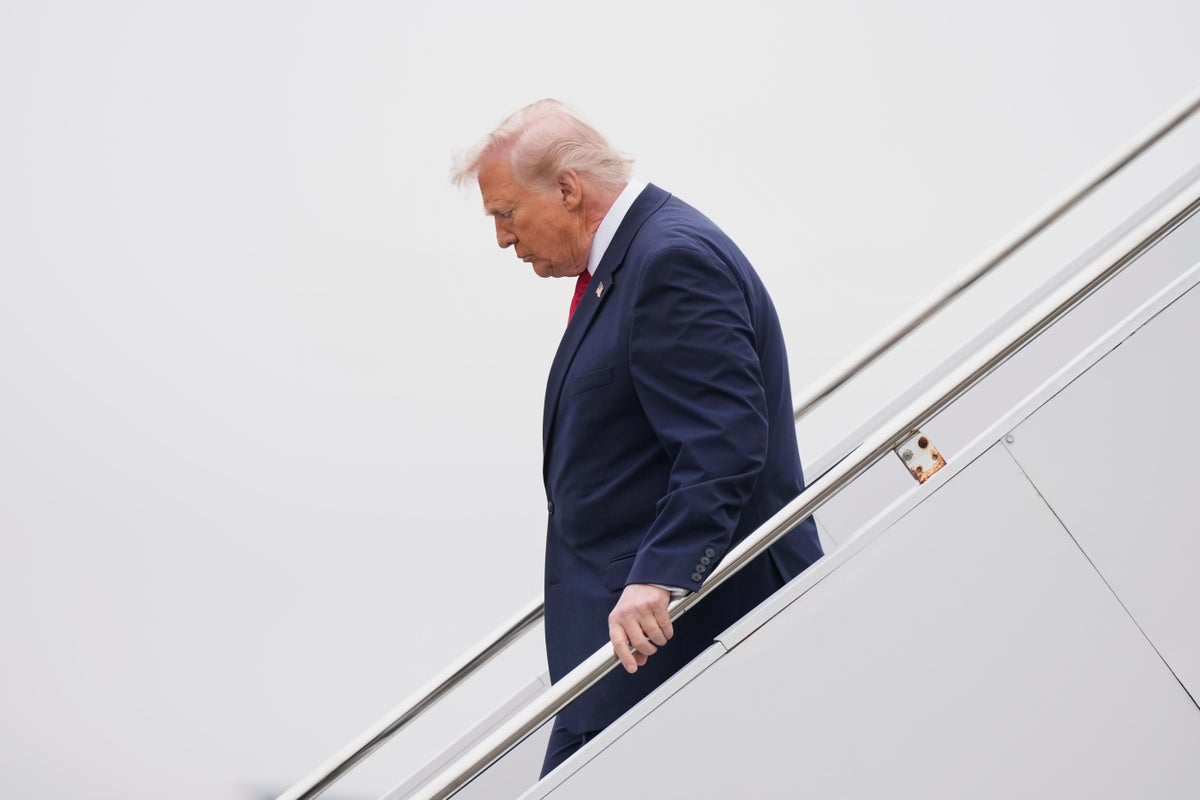
Jennifer Siebel Newsom just played a very old, very tired card. When Donald Trump mocked her husband, California Governor Gavin Newsom, by mimicking his struggle with dyslexia, the First Partner of California took to social media to "torch" him. She called it a "vile" attack on the millions of children who struggle with learning disabilities.
It was a perfect moment for the outrage machine. It was also a massive distraction from a much more uncomfortable truth.
Politicians don’t care about your learning disability. They care about how that disability can be used as a human shield to deflect from policy failures. By framing every personal slight as a broad-spectrum attack on a vulnerable community, we aren't protecting children. We are turning cognitive differences into political currency. It is time to stop pretending that a playground insult from a septuagenarian candidate is a systemic threat to neurodivergent progress.
The real threat is the patronizing "advocacy" that treats dyslexia as a tragedy rather than a different way of processing information.
The Shield of Vulnerability
We have entered an era where any critique of a public official’s performance is immediately redirected toward their personal "journey" with a protected characteristic. Gavin Newsom has been open about his dyslexia for years. He uses it to explain his preference for charts over long memos and his reliance on audio briefings. That is his reality, and in a vacuum, it’s an impressive story of adaptation.
But look at the mechanics of the "torch" strategy. When Trump mocks Newsom’s delivery or his cognitive processing, the Newsom camp doesn't respond with a defense of his record on homelessness, high taxes, or the energy grid. They respond with a moralizing lecture on behalf of "the children."
This is a classic rhetorical pivot. By making the insult about every person with a learning disability, they make any further criticism of the Governor feel like an act of bigotry. It’s a brilliant way to shut down a conversation, but it’s intellectually dishonest.
I have seen CEOs use this exact tactic. When a board of directors starts asking hard questions about Q3 losses, suddenly the CEO mentions their struggle with ADHD or their "neurospicy" management style. It’s a play for empathy to avoid accountability. In the cutthroat world of high-stakes politics, "vulnerability" is often just a sophisticated armor.
Dyslexia is Not a Disability of Character
The "lazy consensus" in the media is that Trump’s mockery is damaging to the self-esteem of neurodivergent youth.
Let's dismantle that.
Children are far more resilient than the professional grievance industry gives them credit for. What actually damages a child with dyslexia is the "soft bigotry of low expectations"—the idea that they are fragile beings who need a First Partner to defend them from a television screen.
Dyslexia is a mechanical issue in the brain’s wiring. Specifically, it involves the phonological processing of language. Research by Dr. Sally Shaywitz at the Yale Center for Dyslexia & Creativity has shown that while the "word form" area of the brain may be less active, the areas responsible for reasoning, concept formation, and "big picture" thinking are often highly developed.
When we scream "vile!" at a joke, we are reinforcing the idea that dyslexia is a shameful weakness that must be shielded. We are telling kids that their brain structure is a "wound" that can be salted by a politician in Florida.
Imagine a scenario where we treated dyslexia like a different operating system—Linux in a Windows world—rather than a broken computer. If we actually believed that, we wouldn't need to "torch" anyone for noticing the glitches. We would just point to the output.
The Empathy Trap
The media loves a hero-villain arc. Trump is the bully; Newsom is the brave survivor. It’s a clean narrative that sells ads and drives engagement.
But this binary ignores the reality of how neurodiversity works in the workplace and the voting booth. The "Empathy Trap" occurs when we prioritize the feeling of being offended over the functionality of the person in question.
If a pilot has a visual impairment, we don't care if someone mocks their glasses; we care if they can land the plane. If a Governor has dyslexia, we shouldn't care if a rival mocks his reading speed; we should care if his policies are solvent.
By centering the conversation on "mean words," Siebel Newsom and her supporters are lowering the bar for political discourse. They are inviting us to vote based on who has the most relatable struggle rather than who has the most effective solutions. This is the "Tapestry of Trauma" approach to governance, and it is failing us.
Stop Institutionalizing Fragility
The current trend in advocacy is to demand "safe spaces" from the reality of human behavior. People are mean. Opponents are ruthless. If you are in the arena, you will be mocked for your hair, your voice, your gait, and your brain.
When the Newsom camp frames this as a "national teachable moment," they are really advocating for a world where no one’s feelings are ever hurt. That world doesn't exist. More importantly, that world is a terrible training ground for neurodivergent people who need to develop the grit to navigate a world that wasn't built for them.
The most successful dyslexics I know—entrepreneurs, surgeons, engineers—didn't get there because people were polite to them. They got there because they developed workarounds that made them sharper than the people who had it easy. They don't want your pity, and they certainly don't want to be used as a political prop.
The High Cost of Virtue Signaling
Every time we have a national meltdown over a joke, we lose the thread on what actually matters for the neurodivergent community.
- Funding for specialized literacy programs: Most public schools are still failing to use evidence-based "Science of Reading" approaches (like Orton-Gillingham) that actually help dyslexic brains.
- Workplace accommodations: We need actual tools—like text-to-speech software and flexible reporting structures—not "awareness months."
- The School-to-Prison Pipeline: A disproportionate number of incarcerated individuals have undiagnosed learning disabilities.
Where is the "torching" of the educational system that allows these kids to fall through the cracks? Where is the outrage over the fact that a child's zip code determines whether their dyslexia is treated as a "gift" or a "failure"?
It’s much easier to tweet about a "vile" comment than it is to fix a broken Department of Education. Siebel Newsom is attacking the symptom while her husband presides over the cause. California’s literacy rates are a disaster. According to data from the National Assessment of Educational Progress (NAEP), California consistently ranks in the bottom tier for fourth-grade reading levels.
If you want to talk about "torching" children’s futures, start with the state's inability to teach 60% of its students to read at grade level. That is a far more "vile" reality than anything said at a rally in Bedminster.
The Contrarian’s Path Forward
If we want to actually support neurodiversity, we have to stop treating it as a political football.
- Separate the Person from the Policy. If you hate Trump, hate him for his trade deals or his judicial appointments. If you like Newsom, like him for his environmental stances. Stop using their medical histories as a shortcut for moral superiority.
- Demand Results, Not Sensitivity. A leader’s job is to lead. If dyslexia makes that harder, they need to find a way to do it anyway. We should judge them on the outcome, not the effort.
- Reject the Victim Narrative. Stop telling kids that they are being "attacked" by proxy every time a public figure is insulted. Teach them that their value is independent of the opinions of strangers.
The Newsom-Trump spat isn't a "clash of values." It’s a theater of the absurd where both sides use the same tired scripts to rally their bases. One side uses mockery to signal strength; the other uses offense to signal virtue. Neither side is actually helping the kid sitting in a classroom right now, staring at a page of letters that won't stay still.
Stop falling for the bait. The next time a politician "torches" an opponent for mocking a disability, ask yourself: "What are they trying to make me forget?"
Usually, it's their own record.
Politics is a game of optics. Neurodiversity is a biological reality. When you mix the two, the reality is always the first casualty. We don't need more "outraged" First Partners. We need better schools, more honest leaders, and a lot less sensitivity toward the noise of the campaign trail.
If a joke from a politician is enough to "shatter" the progress of the neurodivergent community, then that progress wasn't very solid to begin with. Build something stronger than a social media trend. Build a record that can't be mocked.
Stop protecting the "vulnerable" and start empowering the capable. Show the world that a different brain isn't a liability that needs a PR team—it’s an asset that doesn't need an apology.