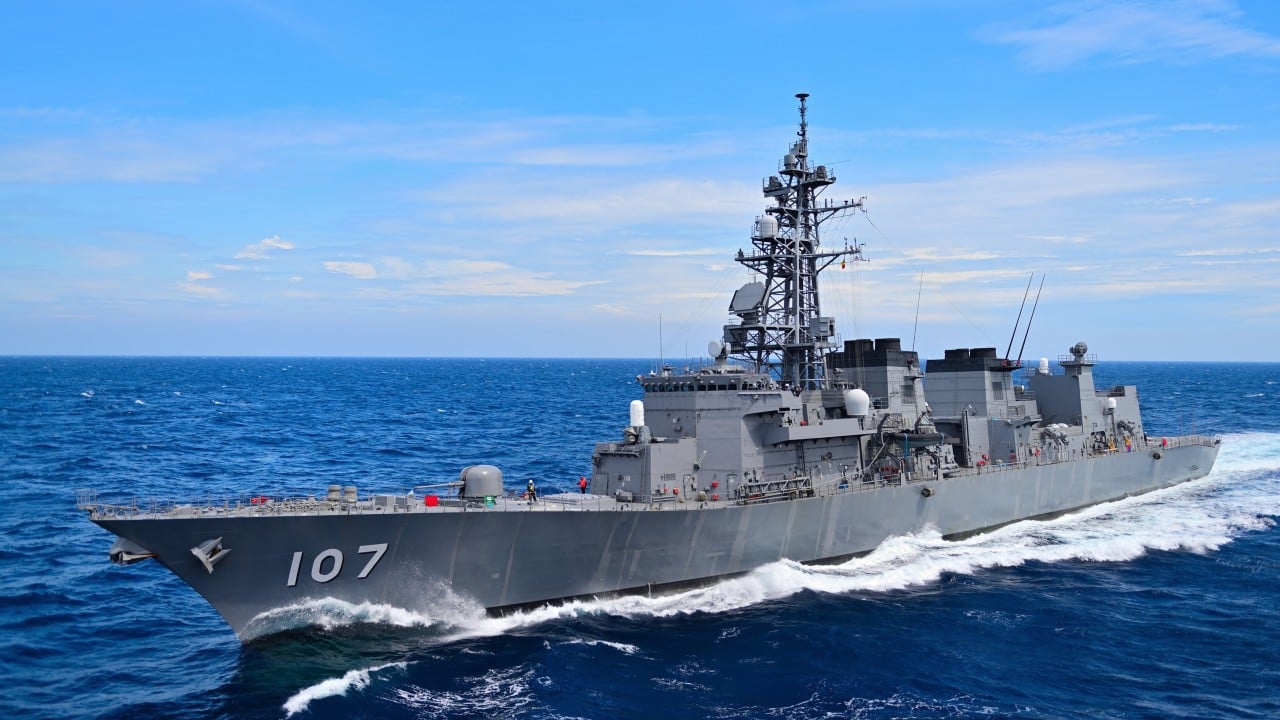
The steel of a destroyer does not just cut through water; it slices through decades of unspoken rules.
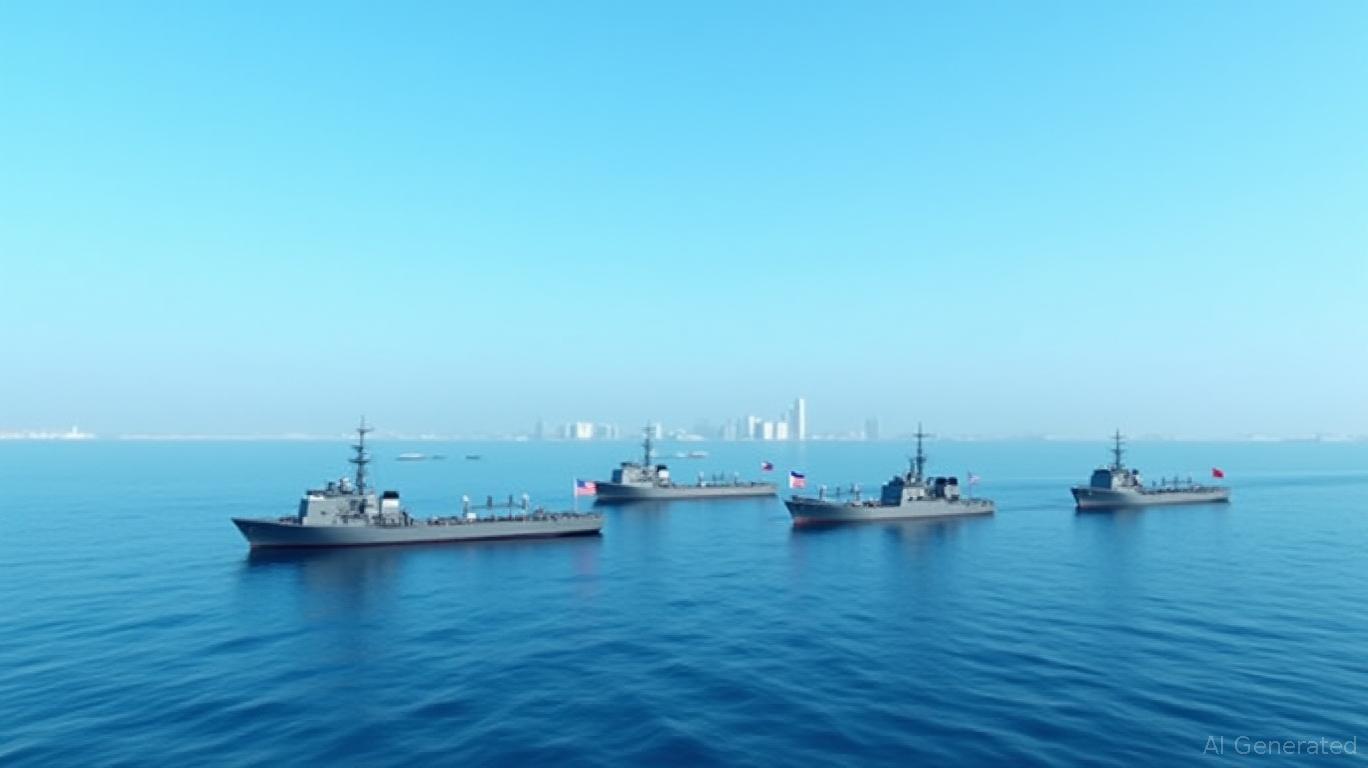
When the JS Sazanami turned its bow toward the Taiwan Strait, the air on the bridge likely tasted of salt and something far more metallic. For the first time since the end of the Second World War, a Japanese warship was venturing into the narrow, volatile strip of ocean that separates mainland China from the island of Taiwan. It was a move eighty years in the making. It was a single day of sailing that fundamentally altered the physics of the Indo-Pacific.
To understand why this matters, you have to look past the grey paint and the vertical launch systems. You have to look at the ghosts.
For generations, Tokyo followed a doctrine of profound restraint. The Japanese maritime self-defense forces were a shield, never a sword, and certainly never a provocation. The Taiwan Strait was a "no-go" zone for Japanese hulls, an unwritten agreement meant to keep the simmering tensions with Beijing from boiling over. But the Sazanami changed the math.
The Silence of the Strait
The Taiwan Strait is only about 180 kilometers wide at its narrowest point. On a map, it looks like a simple blue throat. In reality, it is the most stressed piece of water on the planet.
Imagine a young sailor standing on the deck of the Sazanami. Let’s call him Hiro. Hiro has spent his career practicing drills for disasters—earthquakes, tsunamis, perhaps the occasional intercept of a North Korean missile test. But as the Sazanami entered the Strait, Hiro wasn't just patrolling. He was a messenger. Every knot of speed recorded on the ship’s instruments was a word in a sentence directed at Beijing: We are no longer watching from the sidelines.
China views the Taiwan Strait as its "internal waters." The United States, Australia, and Canada have long disagreed, frequently sailing their own warships through the passage to assert that these are international waters. Japan, however, always stayed home. By joining this transit alongside Australian and New Zealand vessels, Japan didn't just support its allies. It shed its historical skin.
This wasn't a sudden whim. It was a calculated response to a summer of mounting pressure. Just weeks prior, a Chinese Y-9 electronic warfare aircraft breached Japanese airspace for the first time. Days later, a Chinese aircraft carrier, the Liaoning, sailed between two Japanese islands.
Pressure creates heat. Eventually, something has to expand.
The Invisible Stakes
Why should someone sitting in a coffee shop in Osaka or a boardroom in New York care about a single ship’s coordinates?
The answer is found in the belly of the cargo ships that follow in the Sazanami’s wake. The Taiwan Strait is a primary artery for global trade. Nearly half of the world's container fleet and eighty-eight percent of the world's largest ships by tonnage pass through this corridor. If the Strait becomes a closed lake, the global economy suffers a heart attack.
But for Japan, the stakes are existential. There is a saying in Tokyo’s defense circles: "A Taiwan contingency is a Japan contingency." If conflict breaks out over Taiwan, the proximity to Japan’s southernmost islands makes it impossible for Tokyo to remain a spectator. The Sazanami’s transit was a way of saying that Japan recognizes its destiny is tethered to the stability of that water.
It is a terrifying realization. To step into the Strait is to acknowledge that the era of "passive peace" is over. For decades, Japan relied on the "Peace Constitution" to navigate the world. It was a comfortable blanket. But the blanket is fraying. The world is getting colder, and Japan is realizing it needs armor.
A Dance of Giants
The reaction from Beijing was swift and predictable. Foreign Ministry spokespeople spoke of "high vigilance" and "resolute opposition." In the world of diplomacy, these are the standard scripts. But beneath the rhetoric, there is a genuine shift in the power dynamic.
Beijing has long used a strategy of "salami slicing"—making small, incremental moves that aren't quite enough to trigger a war, but which slowly change the reality on the ground. A drone here, a fishing fleet there, an aircraft carrier excursion between islands. They have been testing the walls of the room, looking for soft spots.
When the Sazanami sailed through, it found a hard spot.
It is a high-stakes game of chicken played with thousands of tons of steel. The danger isn't just a deliberate attack; it’s a mistake. A stray signal, a miscalculated turn, or a hot-headed commander on either side could spark a fire that no one knows how to put out. We often think of war as a conscious choice, but history suggests it is more often a series of unintended escalations.
Japan knows this better than most. Their history is a long, painful lesson in the consequences of maritime hubris. This is why the decision to send the Sazanami was not made lightly. It was likely debated in the highest halls of the Kantei, weighed against the risks of economic retaliation and the memories of a militaristic past.
The Weight of the Past
For the people of Japan, this isn't just about geopolitics. It’s about identity.
There is a deep-seated pacifism in the Japanese soul, born from the ashes of 1945. Many citizens view any projection of military power with skepticism, if not outright fear. They worry that by acting like a "normal" nation with a "normal" military, Japan is inviting the very chaos it has spent eighty years avoiding.
But there is another side to that coin. A younger generation of leaders and citizens looks at the changing map and sees a different reality. They see a China that is no longer the impoverished neighbor of the 1980s, but a superpower with a navy that rivals the United States. They see a Russia that is willing to redraw borders by force. They see a world where being "peace-loving" is not enough to guarantee peace.
The Sazanami is the physical manifestation of this internal struggle. It represents a nation caught between its pacifist ideals and its survival instincts.
The Ripple Effect
The Sazanami has long since completed its transit. It has likely returned to port, its crew reunited with their families, the salt washed from its decks. But the ripples it left behind are still moving.
They moved toward Canberra and Wellington, signaling that Japan is ready to be a true partner in regional security. They moved toward Washington, proving that the lynchpin of the U.S. alliance in the Pacific is willing to take on more of the burden. And most importantly, they moved toward Beijing, challenging the narrative of an inevitable Chinese lake.
We are entering a period of profound uncertainty. The old rules—the ones that kept the Pacific "peaceful" for nearly a century—are being rewritten in real-time. We can no longer assume that the status quo will hold simply because it is convenient.
The Sazanami’s journey was only 180 kilometers long, but in terms of history, it traveled much further. It moved Japan from the shadow of the past into the blinding light of a new, contested future.
Whether this move leads to a more stable balance of power or serves as a precursor to something darker is a question that remains unanswered. For now, all we have is the image of a lone destroyer, white foam at its bow, cutting through the most dangerous water in the world, proving that even the most deeply held traditions can be washed away by the tide of necessity.
The sea is never truly still. Neither is the history we write upon it.