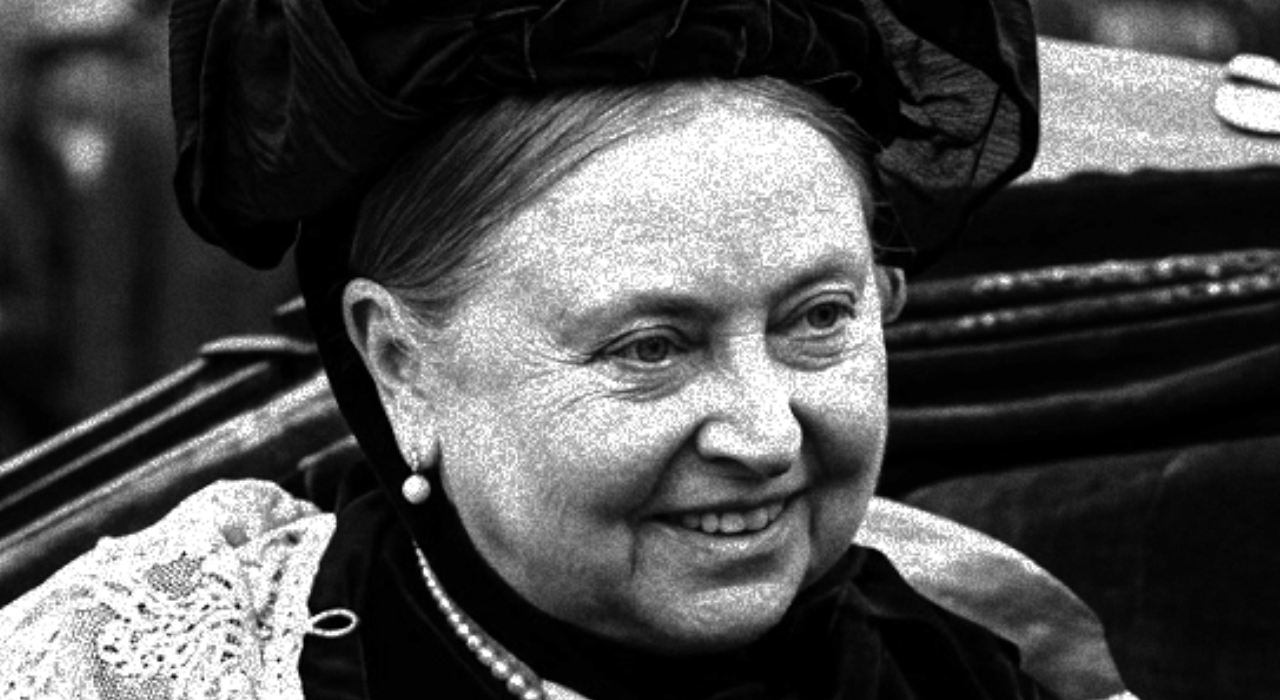
The modern obsession with "unmasking" historical figures has reached a point of historical illiteracy. We see a headline about Queen Victoria’s medicine cabinet and we immediately try to retrofit her into a 21st-century narrative of hypocrisy and substance abuse. It’s a lazy attempt to humanize a monarch by dragging her down to the level of a modern-day tabloid scandal.
The "drug paradox" doesn't exist. It is a manufactured tension created by people who don’t understand 19th-century pharmacology or the cold, hard mechanics of imperial economics. Claiming Victoria "loved" drugs while her empire sold opium is like claiming a modern CEO "loves" electricity while their company invests in power grids. One is a matter of personal medical necessity in a pre-aspirin world; the other is a geopolitical macro-strategy. To conflate them is to miss the entire point of how the Victorian era actually functioned.
The Myth of the Imperial Junkie
Current discourse loves to lean on the "shocking" revelation that Victoria used laudanum, opium, and eventually cocaine and cannabis. Critics point to the 1860s and 70s—the height of the British Raj—and scream "hypocrisy."
They are wrong.
In the mid-1800s, these substances weren't "drugs" in the sense of counter-culture or illicit highs. They were the frontline of the pharmacopeia. If you had a toothache, you took cocaine. If you had menstrual cramps (as the Queen famously did), you were prescribed cannabis tincture by Sir John Russell Reynolds. If you couldn't sleep after your husband died and left you to manage a global superpower, you took laudanum.
There was no "addict" identity because the medical establishment viewed these as tools, not toxins. Victoria wasn't chasing a high; she was managing the crushing physical and psychological load of a woman who birthed nine children and survived seven assassination attempts. To call her a drug lover is as intellectually dishonest as calling a dialysis patient a "liquid enthusiast."
Opium was Never About the High
The second half of this supposed paradox—the sale of opium worldwide—is where the "hypocrisy" argument really falls apart. The British Empire didn't sell opium because they were "pro-drug." They sold it because it was the only commodity the Chinese market actually wanted in exchange for tea and silk.
The Opium Wars weren't fought to protect the "right to party." They were fought to protect the principle of "free trade" (as the British defined it) and to balance a catastrophic trade deficit. The Empire was a machine. It cared about silver flow and maritime dominance. The moral character of the product was irrelevant to the ledger.
When you look at the archives of the East India Company, you don't find a group of mustache-twirling villains trying to get the world hooked. You find accountants. You find bureaucrats. They treated opium exactly how they treated salt or timber. The fact that the Queen was using a refined version of the same plant for her nerves had zero bearing on the tactical decision to flood the Canton markets.
The Dangerous Lure of Modern Projection
We suffer from a chronological arrogance. We look back at 1890 and think, "How could they be so blind?"
We assume our current categories of "medicine" versus "narcotics" are eternal truths. They aren't. The Harrison Narcotics Act didn't even exist until 1914. Before that, the distinction was purely one of class and dosage. A poor man in the East End using opium to numbing the hunger of poverty was a "social problem." A Queen using it to treat "melancholy" under the guidance of the Royal Physician was "treatment."
This isn't hypocrisy. It's hierarchy.
The Victorian era was built on the idea that certain rules applied to the masses to keep the gears of industry turning, while the elite operated under a different set of biological and social expectations. If you want to critique Victoria, critique the class structure that allowed her access to pure, regulated tinctures while the working class died of adulterated "street" scrapings. Don't waste time on the "drug paradox" that ignores how medicine actually worked.
Pain Management as a State Secret
Imagine a scenario where the head of state of the world's most powerful nation is expected to remain stoic and visible for sixty-plus years without the benefit of modern mental health support.
The real story isn't that Victoria used cannabis; it's that she managed to remain functional enough to oversee the expansion of the British Empire while using it. In an age before SSRIs, beta-blockers, or even safe anesthesia, these substances were the only thing keeping the ruling class from a collective nervous breakdown.
Sir James Young Simpson, who pioneered the use of chloroform, did so with the Queen's blessing during the birth of Prince Leopold. People at the time called it a sin; they said women were meant to suffer in childbirth. Victoria essentially told the religious establishment to be quiet and took the gas. That wasn't an "addiction." It was an early adoption of medical technology.
The False Narrative of the "Rebel" Queen
The latest books want to paint Victoria as some sort of proto-bohemian who secretly enjoyed the "forbidden." This is the most egregious error of all.
Victoria was the embodiment of duty. Every record we have suggests she hated the feeling of being "diminished" or losing control. She used these substances with a grim, utilitarian persistence. She took her "drops" so she could get back to her red boxes and her correspondence.
If you want to understand the Victorian mind, you have to stop looking for rebels and start looking for pragmatists. They were the most pragmatic generation in history. They saw a problem (pain, trade deficits, rebellion) and they applied a chemical or a naval solution.
Stop Asking the Wrong Questions
People often ask: "Did Queen Victoria know the harm opium was causing in China?"
That is a flawed question. It assumes she viewed the Chinese population through the same humanitarian lens we use today. She didn't. She viewed them as a market. To a 19th-century monarch, the health of the Chinese citizenry was a matter for the Chinese Emperor. Her concern was the solvency of the British Exchequer.
They also ask: "Was she an addict?"
The term is meaningless in her context. If you take a prescribed substance every day to function, and that substance is legal and socially encouraged for your rank, are you an addict or are you just a patient?
The Industry Truth
I've seen historians spend years trying to find "proof" that Victoria was high during meetings with Disraeli. They want the "gotcha" moment. They want to prove the grandmother of Europe was a "user."
They’re missing the forest for the trees. The real "scandal" isn't that the Queen used drugs. It's that the entire global economy of the 19th century was lubricated by them. From the tea that fueled the British factories to the opium that paid for it, the era was a giant chemical exchange. Victoria wasn't an outlier; she was the personification of the system.
She wasn't a hypocrite. She was the system's most loyal servant.
Quit trying to make her a rock star or a victim. She was a CEO who took her meds so she could run the world.
Stop applying 2026 ethics to 1860 economics.
History isn't a mirror for your modern sensibilities; it's a map of how we got here. And we got here on the back of a global trade that made no distinction between a medicine and a commodity. Victoria knew that. It’s time you did too.
Get your head out of the tabloid version of history. Read the medical journals of the 1880s. Look at the trade balance sheets of the British East India Company. You won't find a paradox. You'll find a terrifyingly consistent logic of power.
If you're still looking for a "drug-loving" Queen, you're not looking for history—you're looking for a distraction.
The Empire wasn't built on a paradox. It was built on a prescription.