The global financial press is currently obsessed with a "mystery." They’ve looked at the trade data between China and South Africa and found a US$17 billion hole. Beijing says it exported one thing; Pretoria says it received something entirely different. The analysts are wringing their hands, calling for "harmonization" and better "transparency."
They are asking the wrong question.
This isn't a bookkeeping error. It isn't a glitch in the customs software. That US$17 billion gap is the most honest metric we have for how global trade actually functions in the 21st century. If you want to understand the real flow of capital, stop looking for the missing money and start looking at why the system requires it to stay invisible.
The Lazy Consensus of Data Harmonization
The standard narrative, pushed by the likes of the UN Comtrade database and various academic think tanks, is that this discrepancy is a "problem" to be solved. They blame "mirror trade" inconsistencies on timing differences, exchange rate fluctuations, or the perennial scapegoat: "statistical capacity."
That is a sanitized, academic fantasy.
In the real world, trade data doesn't align because the actors involved—from the billionaire commodity traders in Zug to the logistics fixers in Durban—have every incentive to ensure it never does. When South Africa reports a massive deficit and China reports a massive surplus, we aren't seeing a mistake. We are seeing the residue of a global tax-avoidance and capital-flight machine.
The Invisible Bridge Through Mauritius and Singapore
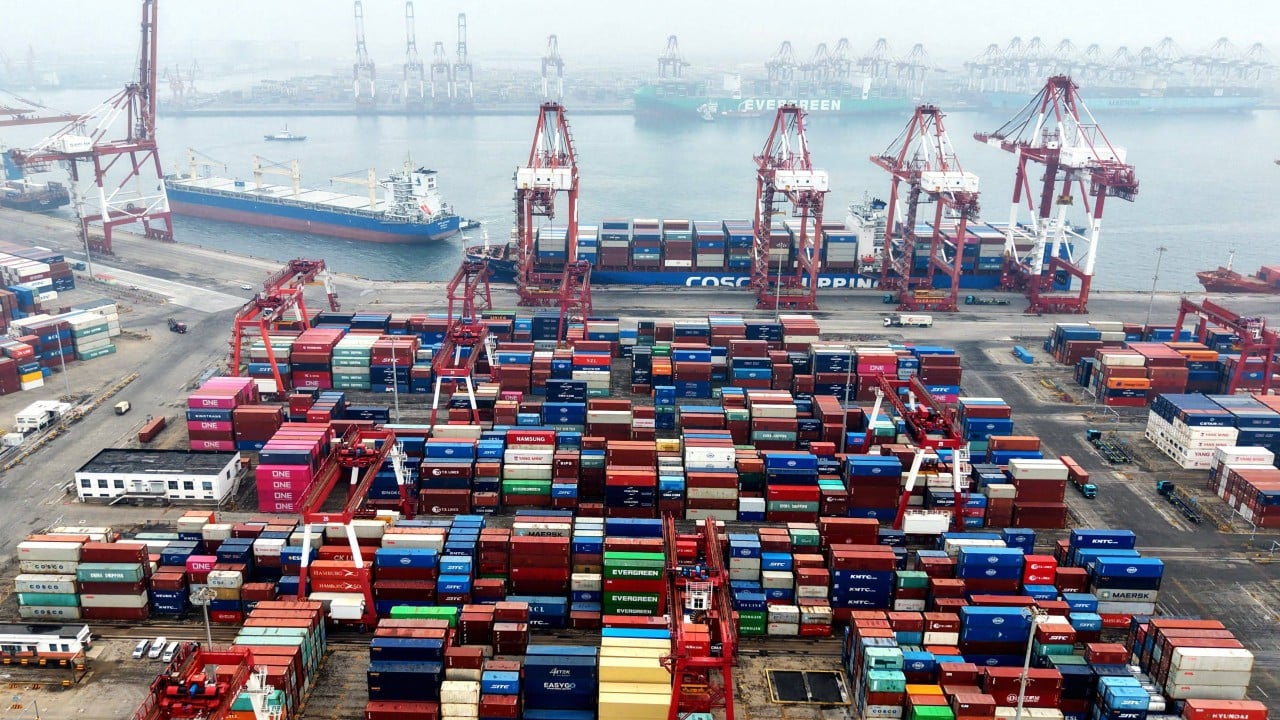
One of the primary reasons for the US$17 billion gap is the ghost-routing of commodities. When a bulk carrier of South African iron ore leaves Richards Bay, it isn't necessarily headed for a Chinese port on paper—not yet.
It's sold to a shell or a trading house in a low-tax jurisdiction like Mauritius or Singapore. That middleman then "re-exports" the cargo to China, often while the ship is still in the middle of the Indian Ocean.
- South Africa records: An export to Mauritius.
- China records: An import from South Africa (based on the original certificate of origin).
- The Discrepancy: Born instantly.
This isn't an "accounting error." It’s a deliberate strategy to leave the profit in a jurisdiction where the taxman can't touch it. If the South African Revenue Service (SARS) and the Chinese General Administration of Customs (GAC) ever actually "harmonized" their data, this multibillion-dollar arbitrage would evaporate. Do you really think the lobbyists for the world's largest mining firms want that? Of course not.
Mis-Invoicing is the New Black Market
There is a polite way to describe what's happening, and then there's the truth. The polite term is "trade mis-invoicing." The truth is that it's a massive, state-tolerated mechanism for moving money out of South Africa and hiding it in Chinese manufacturing or offshore accounts.
Imagine a Scenario: A South African importer wants to move $1 million out of the country to bypass exchange controls. They order $500,000 worth of electronics from a supplier in Shenzhen. They ask the supplier to invoice them for $1 million. They pay the full $1 million out of their South African bank account. The supplier keeps the $500,000 for the goods and kicks back the other $500,000 into a private account in Hong Kong for the South African importer.
On the books:
- South Africa shows a $1 million import.
- China shows a $500,000 export.
- The Result: A $500,000 "mystery gap" that some analyst at a think tank will blame on "exchange rate volatility."
Multiply this by thousands of transactions across textiles, machinery, and minerals, and you get the US$17 billion ghost. It isn't a "gap." It's the price of doing business in a world where capital wants to be free, but governments want to tax it.
The Myth of China’s "Data Supremacy"
There is a persistent belief that China’s data is more "accurate" than South Africa’s. This is the "lazy consensus" at its most dangerous.
China’s export data is heavily influenced by domestic tax rebates. If a Chinese factory can show a higher export value, they can claim a larger Value-Added Tax (VAT) refund from the central government. This creates a massive incentive for "over-invoicing" exports.
Meanwhile, in South Africa, the incentive is the exact opposite. Importers want to "under-invoice" to pay lower customs duties and VAT at the border.
You have two opposing forces:
- Chinese exporters inflating numbers for tax rebates.
- South African importers deflating numbers to dodge duties.
When you smash these two conflicting sets of incentives together, of course the data doesn't match. It’s a tug-of-war where both sides are lying to their respective governments.
The Brutal Reality of South Africa's Ports
If you’ve spent any time on the ground in Durban or Coega, you know that "data harmonization" is a pipe dream when the physical infrastructure is a bottleneck.
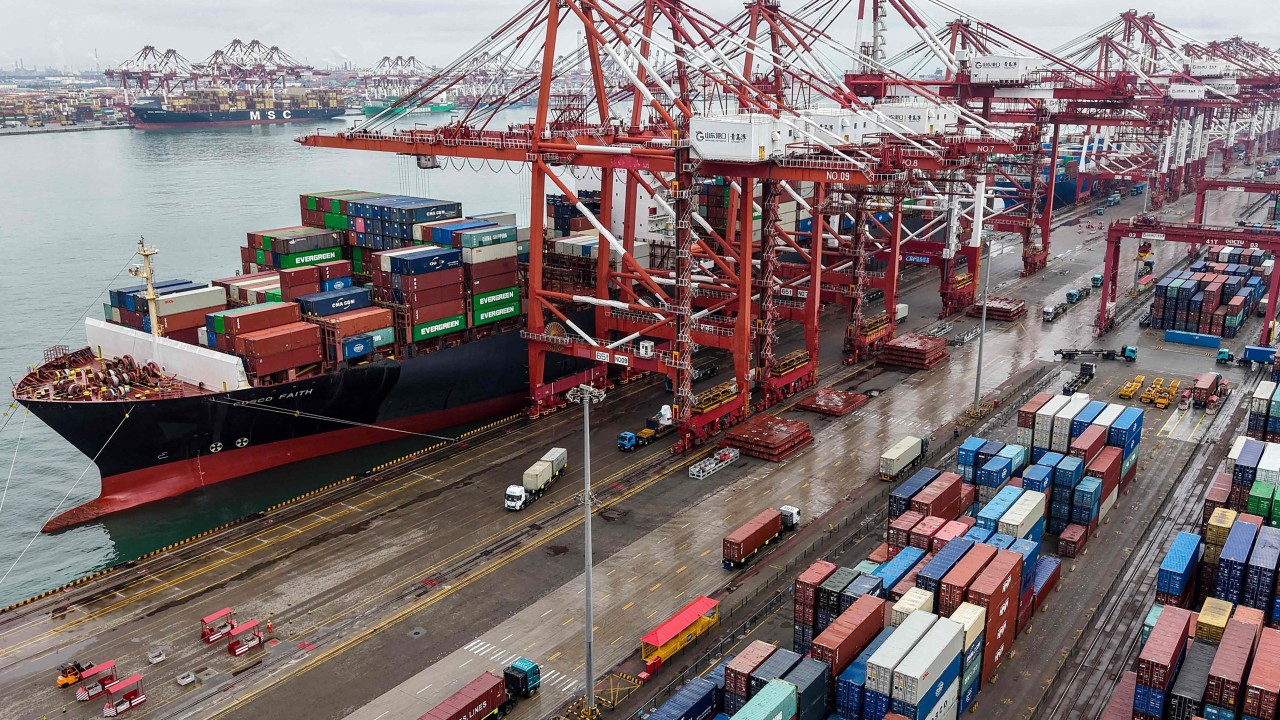
The inefficiency of South Africa's state-owned logistics firm, Transnet, doesn't just slow down trade; it obfuscates it. When goods sit in a container terminal for three weeks because of a broken crane or a "cyberattack," they miss the reporting window.
By the time the shipment is cleared, the Chinese customs data from the previous month has already been finalized. These "timing differences" aren't just a few days; they are systemic delays that make real-time trade monitoring impossible.
But there’s a darker side. These delays provide the perfect cover for "round-tripping." Goods are shipped out, reported as exports, and then brought back in under a different classification to claim incentives. It’s a shell game played with 40-foot containers.
Why Fixing the Gap is a Bad Idea for Business
Here is the part no one wants to hear: Most of the businesses currently screaming about "trade imbalances" would be the first to suffer if the data were actually fixed.
If South Africa and China ever achieved 100% data transparency, the cost of doing business would skyrocket. The "flexibility" that allows companies to manage their global tax burden and navigate currency fluctuations would vanish.
The current US$17 billion gap acts as a pressure valve. It allows capital to flow where it’s most efficient, even if that flow is technically "off the books."
The "People Also Ask" Trap
People often ask: "Is the China-South Africa trade gap a sign of corruption?"
The answer is: Yes, but not in the way you think. It's not just "brown envelope" corruption at the docks. It's "institutionalized" corruption—a global system of accounting loopholes and jurisdictional arbitrage that is perfectly legal until it isn't.
Another common question: "Does the trade gap hurt South Africa's economy?"
Brutally honest answer: It hurts the South African Treasury's ability to collect tax, yes. But for the private sector, that "missing" $17 billion represents liquidity that is likely being reinvested in ways that the government would probably waste anyway.
The Commodities Trap
South Africa exports raw materials (iron ore, coal, platinum). China exports finished goods (electronics, textiles, machinery).
This is the classic "Resource Curse" dynamic. But the data gap makes it look worse than it is. Because South Africa's mineral exports are often sold through third-party trading hubs, the "value add" of those minerals is captured by the middlemen, not the miners.
If you want to close the gap, you don't need better computers at customs. You need to stop selling raw rocks to Swiss traders who then flip them to Chinese steel mills. You need "beneficiation"—processing those minerals in Limpopo or the Northern Cape before they ever touch a ship.
But that’s hard. It requires electricity (which South Africa doesn't have enough of) and a stable labor market (which is a political minefield). It’s much easier to just blame the "data gap" on Beijing's lack of transparency.
Stop Chasing Ghosts
The US$17 billion gap isn't a mystery to be solved. It’s a mirror. It reflects the reality of a global economy where the nation-state is increasingly irrelevant to the flow of capital.
If you are a business owner or an investor, stop worrying about whether the official stats from Pretoria and Beijing line up. They won't. They can't.
Instead, look at what that gap tells you:
- Capital flight is rampant.
- Tax avoidance is the primary driver of logistics decisions.
- The official "trade deficit" is likely a gross oversimplification of the actual wealth transfer.
The gap is the only honest thing about the whole relationship. It’s the sound of the world's most complex economic machine grinding its gears. Trying to "fix" it is like trying to stop the tide with a bucket.
Stop looking for the missing billions. They aren't lost. They’re exactly where they were intended to be: in the private accounts and offshore hubs that keep the wheels of global commerce turning, far away from the prying eyes of the state.
Get comfortable with the ghosts. They are the only ones telling you the truth.