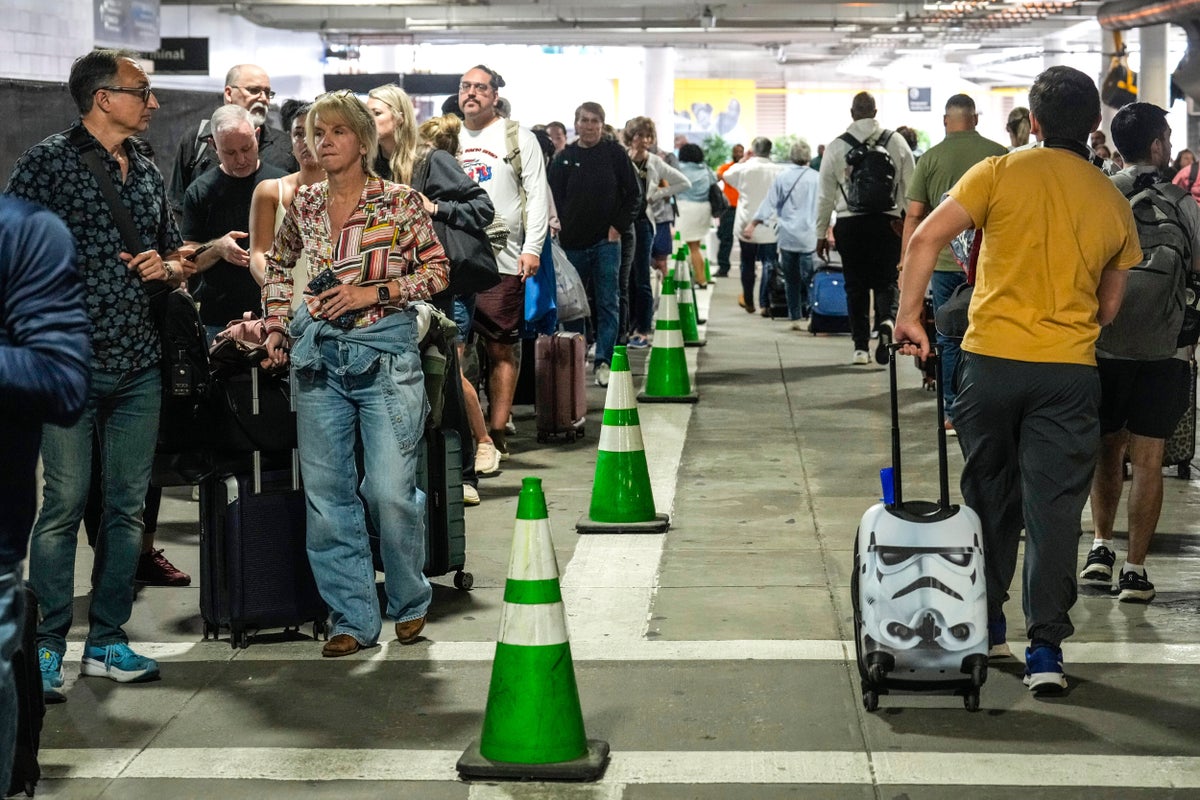
The headlines are screaming. Three hundred TSA officers have walked off the job since the shutdown began. The "travel chaos" narrative is back on a loop, fueled by images of long lines and weary families in flyover-state terminals. The consensus is lazy: we are told that fewer blue shirts at the checkpoint means a direct drop in safety and an increase in risk.
This is a lie.
The mass departure of TSA staff isn’t a crisis; it’s a long-overdue market correction for a bloated, inefficient agency that has spent two decades perfecting the art of "security theater" at the expense of actual risk management. If you are worried because the person who forces you to throw away a four-ounce bottle of shampoo quit their job, you have been conditioned to value the appearance of safety over the reality of it.
The Myth of the Essential Screener
Let’s look at the "battle scars" of anyone who has actually managed logistics or worked within the federal oversight apparatus. For years, the Department of Homeland Security’s own Inspector General has run covert tests on TSA checkpoints. The failure rates are not just bad; they are catastrophic. In some trials, undercover teams smuggled mock weapons and explosives past screeners 95% of the time.
If an agency fails 19 out of 20 times when it is fully staffed, why are we mourning a slight reduction in its workforce?
The "more is better" logic is a fallacy. Increasing the number of low-wage, under-trained personnel doesn't create a tighter net. It creates more human error. It creates more fatigue. Most importantly, it creates more distractions from the high-tech, data-driven intelligence work that actually stops threats before they reach the curb.
Security Theater vs. Risk Intelligence
The current panic centers on wait times. Travelers are upset because they have to stand in line for 45 minutes. The media conflates this inconvenience with a lapse in national security. They are not the same thing.
True aviation security happens in the background. It’s in the manifest scrubbing, the behavioral analysis, and the international intelligence sharing. The physical checkpoint is the last, and arguably least effective, line of defense.
Why the Shutdown Numbers are a Distraction
- The Pareto Principle: 80% of the "security" provided by the TSA comes from 20% of its functions—specifically the automated scanning technology and K9 units. The remaining 80% of staff are largely there to manage the queue and bark orders about belt buckles.
- Staffing Redundancy: The TSA has long been criticized for "standing around" culture. Walk through any major hub like Hartsfield-Jackson or O'Hare. You will see four officers at a single lane: one to check IDs, one to watch the bins, one to run the X-ray, and one to stand at the end and look busy.
- The Private Option: In a scenario where federal staffing collapses, airports have the legal right to opt for private screening contractors under the Screening Partnership Program (SPP). Private firms are held to higher performance standards and can be fired for incompetence—something nearly impossible to do with a federal workforce.
The Brutal Truth About "Travel Chaos"
We need to stop asking "How do we get the TSA staff back?" and start asking "Why are we still doing this in the first place?"
The "chaos" isn't caused by a lack of staff. It's caused by a rigid, centralized system that refuses to adapt. When staff levels drop, the TSA doesn't innovate; it just slows down. It uses the long lines as a political prop to demand more funding.
Imagine a scenario where an airline operated this way. If a carrier’s ground crew walked out, they wouldn't just make people wait in the rain for six hours while demanding a government bailout. They would automate, they would outsource, and they would streamline.
The TSA is the only "business" in the world where a massive failure in service is used as a justification for a bigger budget.
Dismantling the "People Also Ask" Falsehoods
"Is it safe to fly during a TSA shortage?"
Yes. In fact, it might be safer. When the TSA is short-staffed, they often lean more heavily on K9 teams and PreCheck-style expedited screening for known travelers. These methods are statistically more effective than the manual "pat-down and bag-dump" routine. A dog’s nose is more reliable than a distracted human who hasn't been paid in two weeks.
"Will wait times stay this long forever?"
Only if we keep the current model. The solution to long lines isn't 300 more federal employees; it’s the universal adoption of biometric boarding and digital ID. The technology exists to move a passenger from the curb to the gate without them ever speaking to a human. The TSA's massive payroll is the primary obstacle to that innovation.
The High Cost of the Status Quo
Let’s talk about the downside of my stance. If we lean into this "exodus" and force a leaner, more automated system, will some people lose their jobs? Yes. Will the transition be messy? Absolutely.
But the alternative is staying trapped in 2002. We are paying billions of dollars a year to maintain a system that provides the illusion of safety while actively degrading the travel experience.
The current shutdown-induced staff shortage is a stress test. It is exposing the fact that the TSA is an administrative heavyweight with glass chin. Instead of trying to patch the holes in a sinking ship, we should be cheering for the water.
Every officer who quits is a signal to the Department of Transportation that the current labor-heavy model is unsustainable. We don't need a larger army of screeners. We need a smaller, elite force of tech-integrated specialists and a complete privatization of the logistical "bin-moving" duties.
Stop apologizing for the long lines. Start demanding the total dismantling of the screening bureaucracy. If the "chaos" is what it takes to break the monopoly on our time and privacy, then let the chaos continue.
The lines aren't a sign of a failing country. They are the birth pains of a more efficient future.
Throw away the liquid bags. Fire the redundant middle managers. Automate the lanes.
The exit of 300 staff members isn't a tragedy. It’s a head start.


