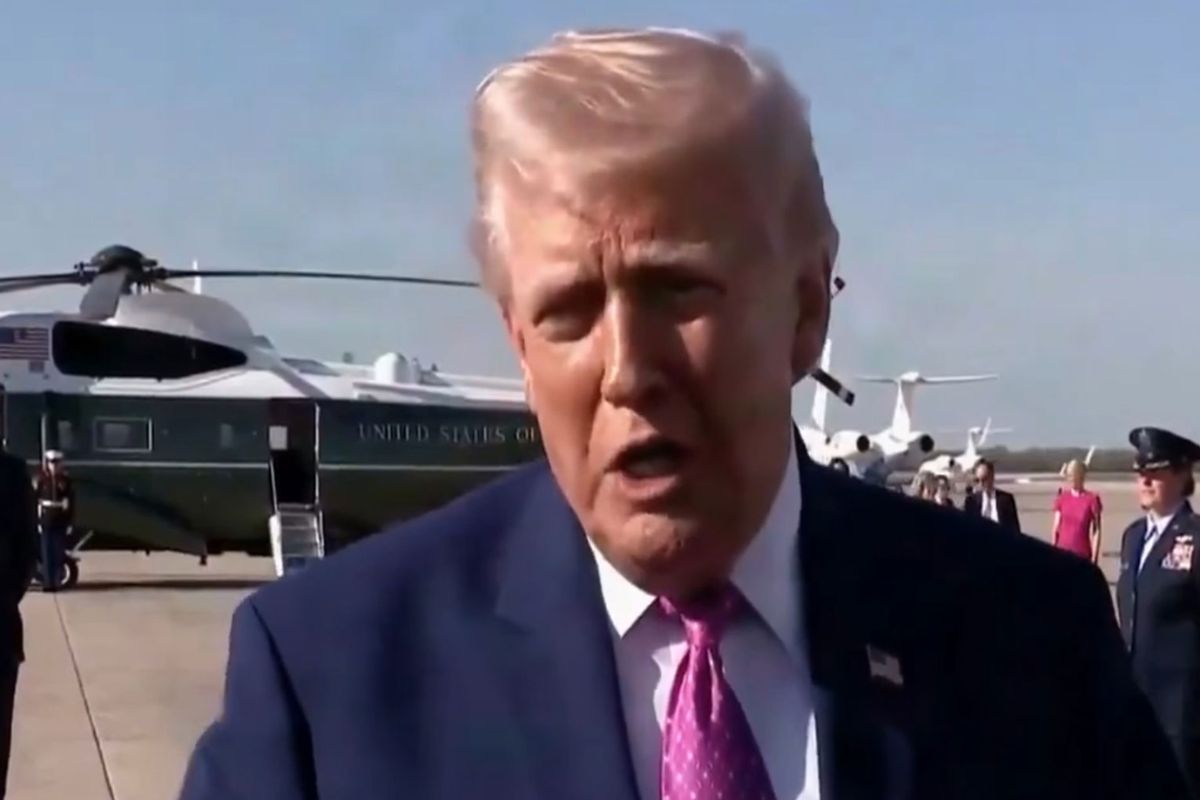
Donald Trump claims Xi Jinping is salivating at the prospect of the Strait of Hormuz "opening forever." He's wrong. Not just slightly off or politically posturing—he is fundamentally misreading the geopolitical plumbing of the Persian Gulf. The lazy consensus among pundits is that China wants a frictionless, Western-free Middle East where oil flows without a gatekeeper.
In reality, China’s greatest nightmare is a Strait of Hormuz that is "forever open" under a status quo they don't control.
Beijing doesn't want the door wide open; they want to be the ones holding the key. Trump’s rhetoric suggests that China is waiting for the U.S. to stop playing "policeman" so they can enjoy the spoils. That assumes China is ready to step into the boots of a maritime hegemon. They aren't. They are a parasitic power when it comes to energy security, and the host they are feeding on is the very American naval presence Trump threatens to withdraw.
The Chokepoint Fallacy
Everyone talks about the Strait of Hormuz as a valve. It isn't. It's a hostage situation.
Approximately 21 million barrels of oil pass through that thin strip of water daily. The "Mainstream View" says that if the U.S. exits, the "market" will solve the security issue. This is a dangerous fantasy. When Trump suggests Xi would be "happy" about an open Strait, he ignores the fact that stability in the Gulf is currently a free gift from the U.S. Fifth Fleet to the Chinese Communist Party (CCP).
If the Strait becomes a free-for-all, China doesn't get "free oil." They get a bidding war with India, Japan, and South Korea, all while trying to protect tankers with a navy that has zero combat experience in the region.
- The Reality of Dependency: China imports roughly 70% of its crude oil. A significant chunk of that comes through Hormuz.
- The Security Gap: The People's Liberation Army Navy (PLAN) can talk a big game in the South China Sea, but they cannot project sustained carrier-group power into the Gulf of Oman to secure 2,000 miles of sea lanes.
Trump is essentially offering to hand over a billion-dollar security system to his biggest rival for free, and then claiming the rival is "winning" because the system exists. It’s a logic loop that ignores how power actually functions.
Why China Prefers Friction
A "forever open" Strait of Hormuz—devoid of U.S. oversight—means total chaos.
Imagine a scenario where the U.S. pulls back entirely. Iran, no longer deterred by the threat of a carrier strike group, begins "taxing" or harassing non-aligned vessels. China then has to choose: pay the Danegeld to Tehran or build a massive, expensive, and provocative military presence in a region that eats empires for breakfast.
Xi Jinping isn't looking for an open door; he’s looking for a managed crisis.
The current tension allows China to play the "neutral arbiter." They buy Iranian oil at a discount because Iran is sanctioned by the West. They buy Saudi oil because they are the biggest customer. If the Strait becomes a peaceful, Western-standard waterway, China loses its "sanction-busting" discount. They have to pay market price like everyone else.
Trump’s assertion that Xi is "happy" about a permanent opening is a misunderstanding of how China builds its energy portfolio. They thrive in the gray zone. They want the U.S. to pay for the security while they reap the rewards of the instability that security creates.
The $200 Barrel Reality
If Trump thinks an "open" Strait under Chinese influence lowers costs for the American consumer, he’s dreaming.
The moment the U.S. cedes the Strait of Hormuz, the global insurance markets will lose their minds. The cost of shipping a barrel of crude won't be determined by supply and demand; it will be determined by "War Risk" premiums.
- Insurance Premiums: In 2019, after a few minor tanker attacks, insurance rates for Gulf transits spiked by 10x.
- The China Tax: If China becomes the "guarantor" of the Strait, every barrel of oil heading to the West will effectively carry a Chinese surcharge.
I have seen energy traders bet on stability for a decade, only to be wiped out in a week because they assumed "logic" would prevail in the Strait. There is no logic in the Gulf; there is only the credible threat of force. Trump’s "deal-making" approach treats the Strait like a real estate asset. It isn't. It’s a literal throat. You don't "open" a throat; you make sure no one is squeezing it.
The Great Strategic Blunder
The competitor’s article focuses on the "statement" as a win for diplomacy or a sign of Trump’s "strength." It’s actually a signal of strategic exhaustion.
By framing the opening of the Strait as a benefit to China, Trump is telegraphing that he no longer views the Persian Gulf as a vital American interest. This is the same mistake made in the 1970s, but with higher stakes.
China isn't laughing because they get "open" water. They are laughing because the U.S. is offering to vacate the most important strategic real estate on the planet because it’s "too expensive" to maintain.
Think about the math:
- The U.S. spends roughly $80 billion a year protecting global oil lanes.
- China is the primary beneficiary of that protection.
- Trump wants to stop spending the $80 billion.
- If he does, China doesn't just "take over." The whole system breaks.
When the system breaks, China’s industrial machine—which relies on cheap, consistent energy—stalls. Xi isn't happy about that. He’s terrified of it. He needs the U.S. to stay in the Gulf so he can keep complaining about "American Hegemony" while using the safety that hegemony provides to build his own empire.
Stop Asking if the Strait is Open
The question isn't whether the Strait of Hormuz is open or closed. The question is: who owns the peace?
Trump’s rhetoric suggests he’s willing to outsource the "peace" to China. But you cannot outsource security to a competitor and expect them to act in your interest. If China controls the flow, they control the price. If they control the price, they control the American economy.
The "forever open" Strait is a mirage. Without the U.S. Navy, the Strait becomes a series of toll booths operated by Tehran and Beijing.
To believe that Xi Jinping wants a world where he is responsible for the messy, violent, and expensive reality of Gulf politics is to fundamentally misunderstand the CCP. They want the rewards of empire without the responsibilities of leadership. Trump is offering them the chance to skip the hard part.
The competitor's article missed the point entirely. This isn't about "opening" a waterway. It's about the surrender of the global energy architecture under the guise of a "good deal."
If the Strait of Hormuz "opens" on China's terms, the American century doesn't just end—it gets auctioned off to the highest bidder in a currency we no longer control.
The U.S. doesn't stay in the Gulf to be a "policeman." We stay there because the moment we leave, the price of every plastic bottle, every gallon of gas, and every plastic-wrapped product in America is decided by a committee in Beijing.
That isn't a "big statement." It's a suicide note for American energy independence.