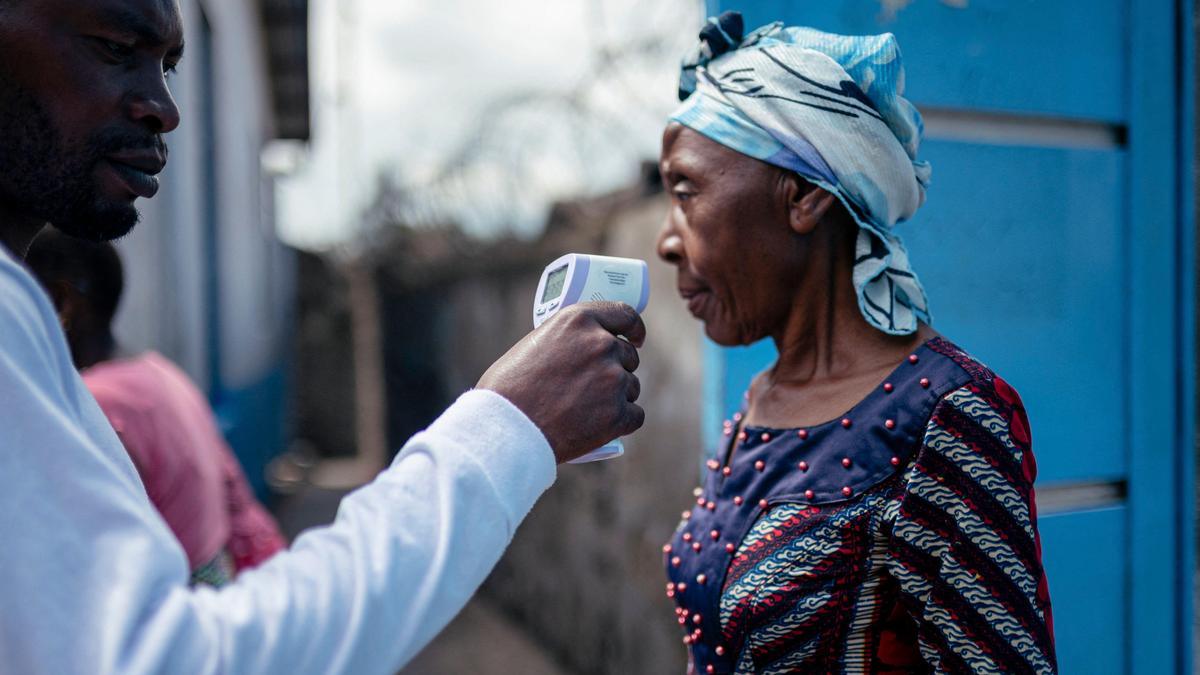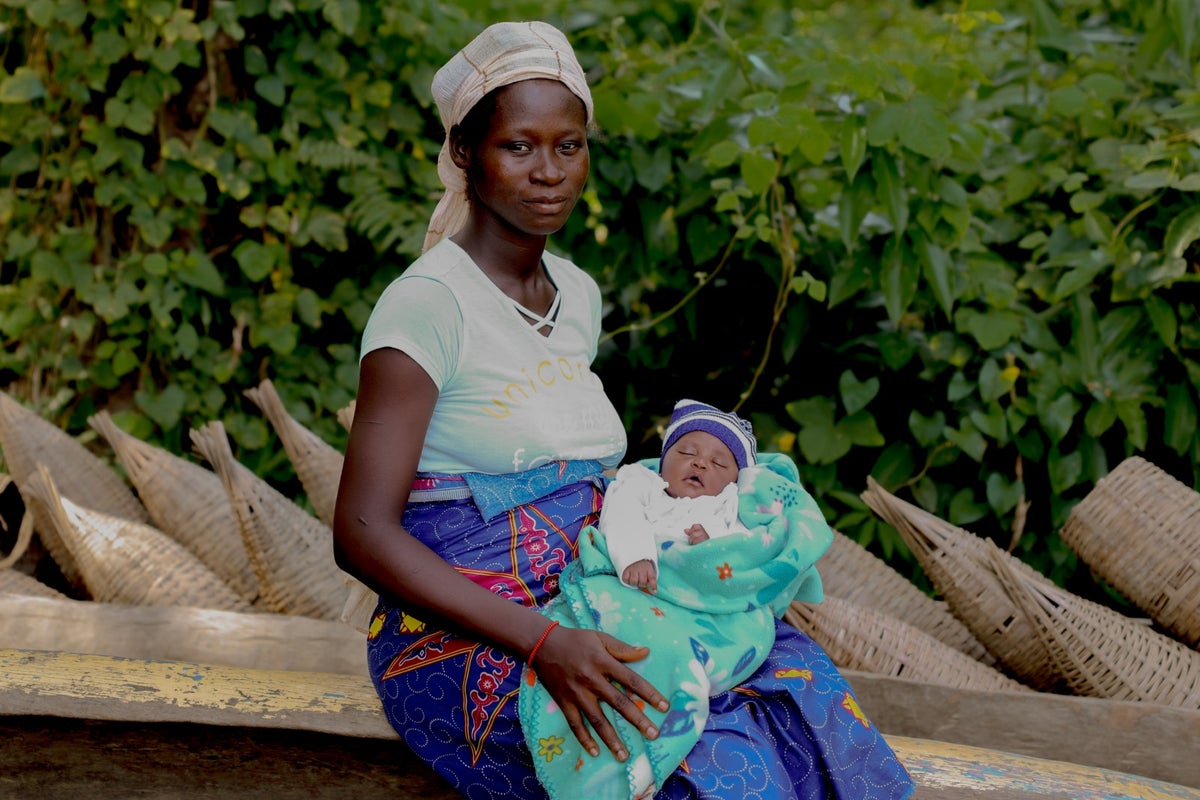
Amina is holding her breath, though she doesn't realize it. She is crouched in the dirt outside a small clinic in a village that most maps forgot to name. Inside the concrete walls, her sister is screaming. It is a sound that carries the weight of generations—the primal, jagged noise of a woman bringing new life into a world that isn't always ready to receive it.
Amina isn’t focused on the screaming. She is focused on the yellow plastic jerrycan in her right hand. It is heavy, pulling at her shoulder, filled with water she hauled from a communal well three kilometers away. She knows the water looks clear. She knows it feels cool against her skin. But she also knows that within this clear liquid, something invisible is waiting.
This is the hidden lottery of childbirth in the developing world. We often talk about medical breakthroughs, robotic surgeries, and the latest pharmaceutical wonders. Yet, for millions of women, the difference between a celebration and a funeral isn't a complex drug. It is a bucket of clean water.
The Mathematics of a Miracle
Birth is messy. It is a collision of biology and environment. In a sterile hospital in London or New York, the "environment" part of that equation is a given. You expect the floors to be scrubbed. You expect the midwife’s hands to be sanitized. You expect the water used to wash the newborn to be free of pathogens.
When those expectations vanish, the biology turns treacherous.
Sepsis is a word that sounds clinical, almost detached. In reality, it is a wildfire. When bacteria enter the bloodstream of a mother whose body has just been through the trauma of labor, or an infant whose immune system is a blank slate, the result is a systemic shutdown. Statistics tell us that nearly one million deaths occur annually due to infections related to unhygienic birthing conditions. That’s a number so large it becomes a blur.
Think of it instead as a single room. Think of Amina’s sister.
Without clean water to wash the birth canal, to clean the floor, or to sanitize the blades used to cut the umbilical cord, that room becomes a laboratory for infection. The tragedy isn't that we don't know how to stop it. The tragedy is that the solution is the most basic substance on earth.
The Invisible Infrastructure
We have a habit of prioritizing the shiny over the functional. A donor might feel a rush of pride funding a new ultrasound machine, and rightfully so. It’s a tangible piece of technology. But that machine is useless if the person operating it hasn't washed their hands because the clinic’s well has run dry.
Clean water is the invisible infrastructure of healthcare. It is the silent partner in every successful surgery and every healthy delivery. When a campaign launches to provide "clean water pledges," it sounds like a corporate PR exercise. In the dirt, under the heat of a midday sun, it is a life support system.
Consider the logistics of a typical rural clinic. If there is no piped water, the staff must rely on what is brought in. This means rationing. It means choosing between washing a floor covered in blood or washing the linens for the next patient. It means the "clean" water is often stored in open containers where dust and flies settle.
The stakes are binary. Clean water leads to life; contaminated water leads to the grave. There is no middle ground, no "almost sterile" when it comes to a newborn’s first breath.
The Psychology of Risk
There is a specific kind of bravery required to walk into a clinic when you know the risks. For many women in these regions, the hospital is not a sanctuary. It is a place where they have seen friends go and never return. This creates a cycle of fear that drives women to give birth at home, often in even less hygienic conditions, away from the skilled birth attendants who could save them from hemorrhages or obstructed labor.
By fixing the water problem, we aren't just killing bacteria. We are building trust.
When a community sees that a clinic has running water, a functional toilet, and a place to wash, the clinic becomes a landmark of safety. The "Clean Water Pledge" isn't just about pipes and filters; it’s about restoring the dignity of the mother. It’s about ensuring that her first memory of her child isn't the smell of a stagnant pond, but the scent of a clean start.
The Cost of Silence
Economic textbooks like to talk about "human capital." It’s a cold way of saying that when a mother dies, a family collapses. When a baby dies, a piece of the future is erased.
The cost of providing basic water, sanitation, and hygiene (WASH) services in healthcare facilities is remarkably low when compared to the cost of treating an outbreak of cholera or the lifetime economic loss of maternal mortality. We are talking about dollars per person to prevent a catastrophe that costs billions.
But the logic of the spreadsheet rarely moves the heart.
We must look back at Amina. She is now standing in the doorway of the clinic. The screaming has stopped, replaced by a thin, tentative wail. She carries her jerrycan inside. The nurse takes it, pours it into a basin, and begins the work of cleaning.
In this moment, that water is more precious than gold. It is the barrier between this new family and the statistics we read about in morning briefings.
Beyond the Pledge
A pledge is a beginning, not an end. It is a promise made in a boardroom that must be kept in the bush.
The reality of global health is that it is often boring. It’s about maintenance. It’s about making sure the solar pump doesn't break in its third year. It’s about training local staff to test for E. coli. It’s about the unglamorous, repetitive work of keeping the water flowing.
We like to imagine that the world’s problems require complex, futuristic solutions. We want to believe that a new app or a high-tech drone will save the day. Sometimes, they do. But more often, the solution is much older and much simpler.
It is the liquid in Amina’s bucket.
The true measure of our progress as a global society isn't found in the height of our skyscrapers or the speed of our processors. It is found in the delivery room of a nameless village, where a mother can wash her face with water that won't kill her, and a baby can be welcomed into a world that finally, mercifully, decided to keep it clean.
The water is poured. The child is washed. Amina finally exhales.
Somewhere, a pipe is being laid. A filter is being installed. A promise is being kept. And for the first time in a long time, the invisible killer is being forced to wait outside.
The jerrycan sits empty on the floor, its job done, while the room fills with the sound of a life that was allowed to stay.