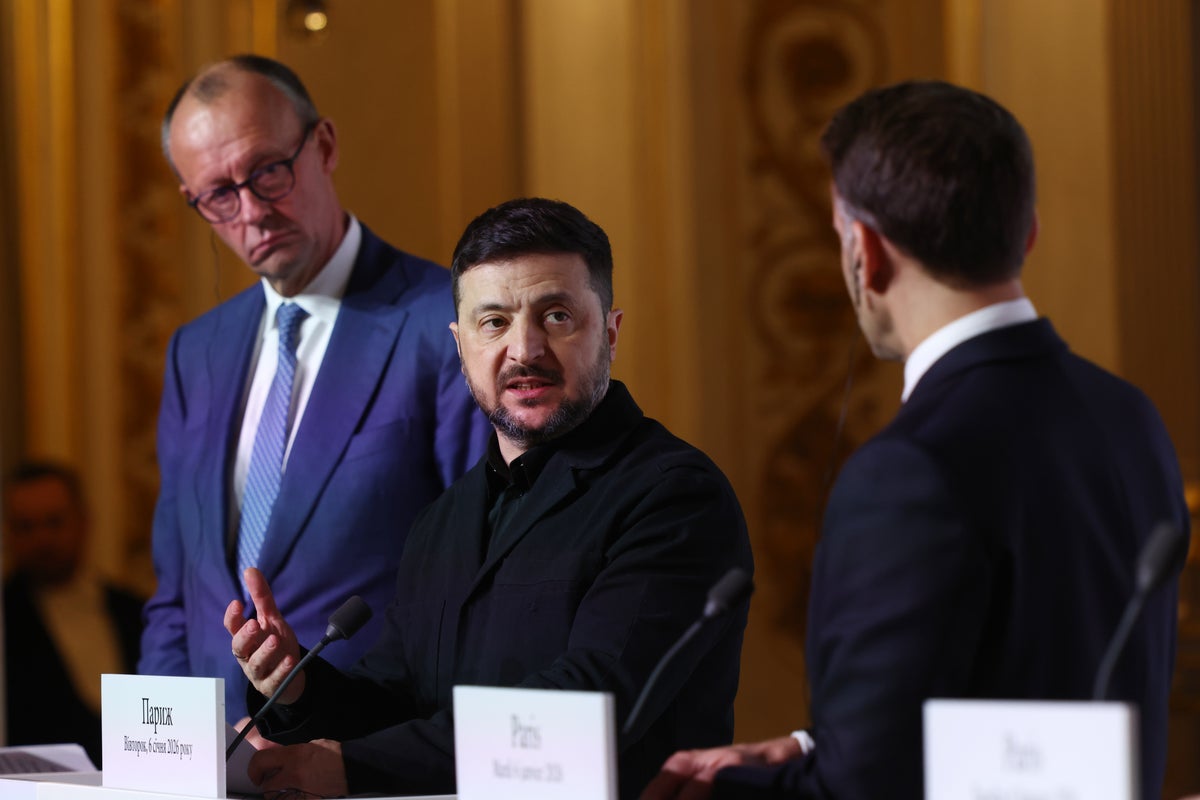
The reality of the war in Ukraine just hit a cold, hard wall of German pragmatism. For years, the official line from Berlin and Brussels was "nothing about Ukraine without Ukraine," a mantra suggesting Kyiv would dictate the terms of its own victory. But on April 27, 2026, German Chancellor Friedrich Merz broke that unspoken pact. Speaking to students in Marsberg, Merz did more than just suggest a ceasefire. He explicitly linked Ukraine's survival and its European future to a loss of sovereign land.
It's a brutal trade-off. Merz essentially told the world that for Ukraine to gain the security of the European Union, it must first accept the permanence of Russian boots on its soil. This isn't just a shift in rhetoric; it’s a fundamental recalibration of Western support.
The German ultimatum on territorial reality
The Chancellor’s comments weren't a slip of the tongue. Merz argued that a future peace treaty might mean "part of Ukraine’s territory is no longer Ukrainian." He’s pushing President Volodymyr Zelensky to prepare the Ukrainian public for a choice they’ve spent over four years fighting to avoid.
His logic is simple and devastating. To get a majority in a referendum for a peace deal that cedes land, Zelensky has to offer a massive prize. That prize is EU membership. Merz’s exact words were that Zelensky must be able to tell his people, "I have opened the way to Europe for you."
But there's a catch. Even if Kyiv agrees to this "land for membership" swap, the door isn't swinging open tomorrow. Merz was quick to kill any hopes of a 2027 or 2028 entry date. He called those timelines "not realistic." Instead, he's floating intermediate steps like "observer roles" in EU institutions. It’s a carrot on a very long, very unstable stick.
Why the EU entry timeline is shifting
The European Union doesn't like loose ends. Traditionally, the bloc refuses to import active territorial disputes. If Ukraine joins while the 2026 frontlines are still contested, the EU effectively inherits a direct border conflict with a nuclear-armed Russia.
- Rule of Law: Ukraine has made strides, but the "strict criteria" Merz mentioned regarding corruption still loom large.
- The War Barrier: You can't join the club while the house is on fire. A formal ceasefire is a non-negotiable prerequisite for the accession process to move past "observer" status.
- The 90 Billion Euro Question: The EU recently approved a massive loan to keep Ukraine afloat through 2027. This money buys time, but it also gives the donors significant leverage over Kyiv’s negotiating stance.
The internal politics of the trade-off
Zelensky finds himself in an impossible position. On one side, he has a population that has sacrificed everything for territorial integrity. On the other, he has a Western coalition that is visibly tiring of a multi-year war of attrition.
The recent defeat of Viktor Orban in Hungary removed a major roadblock to Ukraine's EU path, but it didn't solve the fundamental problem. The "Orban hurdle" was political; the "territory hurdle" is existential. If Zelensky holds a referendum today on ceding the Donbas or Crimea for an EU passport, the result is far from certain. Merz knows this, which is why he's framing the land loss not as a defeat, but as the price of admission to the West.
Security guarantees versus paper promises
We've seen this movie before. The 1994 Budapest Memorandum promised Ukraine security in exchange for its nuclear arsenal. We know how that ended. For Kyiv to even consider Merz’s suggestion, the EU membership offer can't just be a "pathway." It has to be a concrete security guarantee that rivals NATO’s Article 5.
The Russian Federation, meanwhile, isn't just sitting back. Moscow has already dismissed "pseudo-negotiation tactics" and continues to demand that Ukraine voluntarily withdraw from even more regions as a precondition for talks. Merz is trying to find a middle ground in a landscape where the middle ground has been bombed into oblivion.
What happens if Kyiv says no
If Ukraine refuses the territorial compromise, the flow of Western aid faces an uncertain future. While Norway recently pledged billions for drone production and Germany remains a top donor, the tone in Berlin is shifting toward "management" rather than "victory."
If you're watching this from Kyiv, Merz’s comments feel like a betrayal. If you're watching from Berlin, they feel like the only way to prevent an "indefinite exercise in attrition."
Practical steps for the coming months
The diplomatic machinery is moving, whether or not the public is ready for it. Here is what to watch for as this strategy unfolds:
- The Referendum Framework: Look for Zelensky’s government to start testing the waters on "territorial status" polling. They won't call it "ceding land" yet; they'll call it "temporary administrative arrangements."
- Observer Status Details: Watch the EU summit results for specific dates on when Ukrainian officials get their seats—without votes—in Brussels.
- Frontline Stabilization: Any peace-for-membership deal requires a frozen front. If Russia makes major gains in the coming weeks, the "cede territory" argument becomes moot because the territory will already be gone.
The era of "as long as it takes" is being replaced by "as much as is feasible." Merz has said the quiet part out loud, and now the clock is ticking on how much land Ukraine is willing to trade for its seat at the European table.