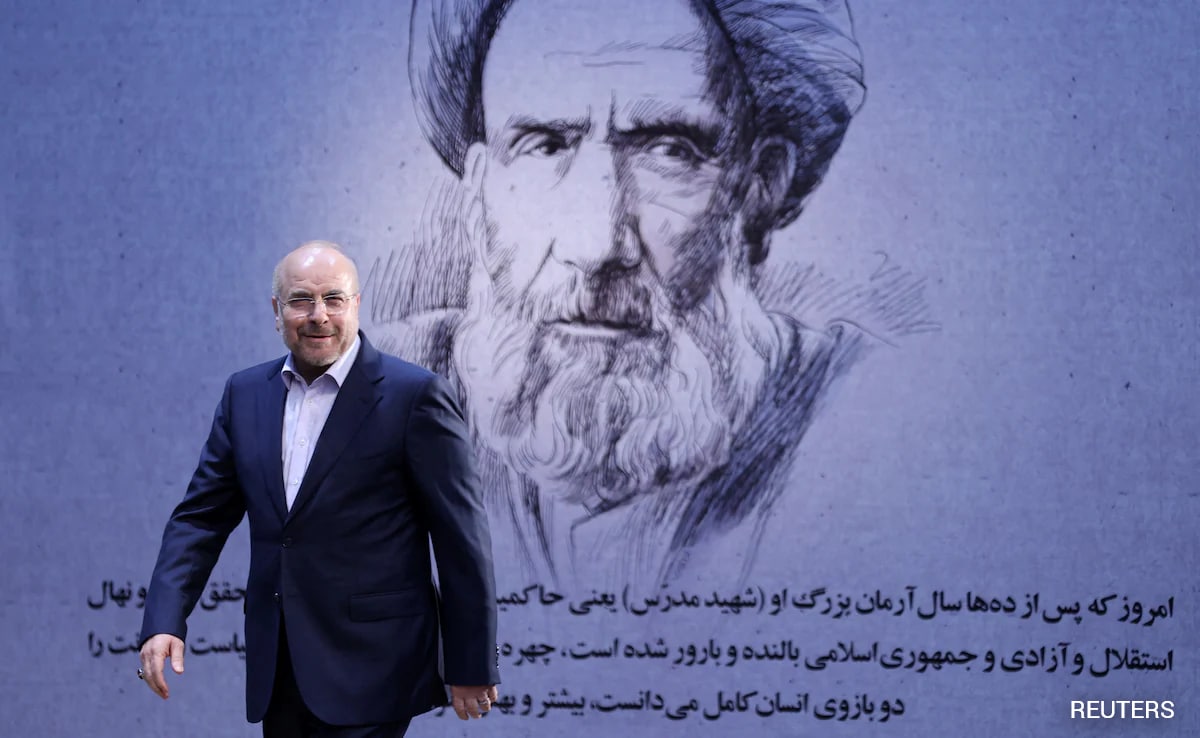
The Iranian legislative leadership’s recent refusal to engage in bilateral negotiations with the United States—contingent upon a Lebanese ceasefire and the release of frozen assets—is not a mere diplomatic snub but a calculated application of coercive bargaining theory. By conditioning diplomatic visibility on these specific variables, Tehran is attempting to re-index the cost of US regional policy. This strategy operates on the premise that the Biden administration’s desire for regional stability in an election cycle (or a transition period) can be monetized into immediate liquidity and kinetic relief for its proxies.
The logic of the Iranian position rests on three structural pillars: the restoration of financial liquidity, the preservation of forward-operating deterrence (Hezbollah), and the neutralization of the US "maximum pressure" residual effects.
The Liquidity Constraint and Asset Repatriation
Iran’s demand for the release of frozen assets is a response to a specific macroeconomic bottleneck. Despite increases in oil exports to shadow markets, the Iranian economy faces a persistent foreign exchange deficit that fuels domestic inflation and limits the state’s ability to fund its social contract and defense apparatus.
The assets in question—primarily held in South Korean, Iraqi, and European financial institutions—represent trapped capital that cannot be accessed due to the US Treasury’s secondary sanctions. From a structural perspective, Iran views these funds not as a bargaining chip to be traded for concessions, but as "stolen property" that must be returned as a prerequisite for any conversation.
The cost of these sanctions is not merely the loss of the principal amount. It includes:
- Currency Volatility Control: The inability to intervene in the Rial's depreciation against the USD.
- Infrastructure Underinvestment: A multi-year gap in the maintenance of oil and gas extraction facilities, leading to long-term yield degradation.
- Inflationary Feedback Loops: A fiscal environment where the supply of goods is constrained by import barriers while the money supply expands to meet public sector payrolls.
By demanding the release of assets before talks, Tehran seeks to bypass the "compliance-for-relief" cycle that defined the 2015 JCPOA. They are moving toward a "relief-for-presence" model, where the mere act of sitting at the table has a defined price tag.
The Lebanese Ceasefire as a Deterrence Preservation Mechanism
The insistence on a Lebanese ceasefire is a strategic move to insulate Hezbollah—Tehran’s most critical asymmetric asset—from existential degradation. In the current conflict hierarchy, Lebanon serves as the primary "shield" for the Iranian mainland. If the Israel-Hezbollah conflict escalates to a full-scale ground invasion or the decapitation of Hezbollah’s command structure, Iran loses its most effective lever for preventing a direct strike on its nuclear facilities.
The Asymmetric Cost Function
For Iran, the value of Hezbollah is defined by its ability to impose a high marginal cost on Israeli security.
- Tactical Value: Forcing Israel to divert significant IDF resources to its northern border.
- Strategic Value: Maintaining a credible threat of a multi-front war that complicates US and Israeli decision-making.
A ceasefire in Lebanon, brokered or permitted by the US, would achieve two Iranian objectives. First, it halts the attrition of Hezbollah’s mid-to-senior level leadership. Second, it creates a "de-escalation trap" where any subsequent Israeli action is viewed as a violation of a US-backed arrangement, thereby driving a wedge between Washington and Jerusalem.
The Failure of the Dual-Track Diplomacy Framework
The US has historically attempted a "dual-track" approach: increasing economic pressure while offering an "off-ramp" via diplomacy. The Iranian Speaker’s recent statements indicate that the Islamic Republic has identified a fatal flaw in this framework—the credibility gap.
From Tehran’s perspective, the US cannot credibly commit to long-term sanctions relief because of the domestic political volatility in Washington. The unilateral withdrawal from the JCPOA in 2018 proved that a treaty with one administration can be dismantled by the next. Consequently, Iran has shifted its logic from strategic patience to transactional immediacy.
They are no longer interested in a comprehensive deal that promises future benefits. Instead, they are demanding "spot-market" diplomacy:
- Action: US enforces a ceasefire and releases funds.
- Reaction: Iran permits diplomatic dialogue.
This removes the risk of "concession front-loading," where Iran would have to reduce its enrichment levels or curb proxy support before receiving tangible economic benefits.
The Internal Political Calculus of the Iranian Majlis
The Speaker of the Iranian Parliament (Majlis), Mohammad Baqer Qalibaf, represents a faction that prioritizes "Revolutionary Pragmatism." This faction acknowledges the necessity of ending economic isolation but refuses to do so from a position of perceived weakness.
The internal power struggle in Tehran between the "reformists" under President Masoud Pezeshkian and the "hardliners" in the legislative and security branches creates a competitive environment for leverage. By setting high-bar preconditions, the legislative branch ensures that the executive branch cannot enter negotiations without a guaranteed "win" that satisfies the security establishment (IRGC).
This internal alignment creates a negotiation floor. Below this floor—defined by the release of assets and a halt to the war in Lebanon—the political risk for any Iranian official to engage with the US is too high. The Speaker is effectively signaling to Washington that the "moderate" face of the Iranian presidency does not have a mandate for unconditional surrender.
Structural Impediments to the Iranian Strategy
While Tehran’s logic is internally consistent, it faces three external bottlenecks that may render this strategy ineffective.
- The Israeli Autonomy Variable: The US does not have total control over Israeli military decision-making in Lebanon. Even if Washington desired a ceasefire to facilitate talks with Iran, the Israeli security cabinet views the current moment as a historic opportunity to degrade Hezbollah. Tehran’s demand assumes a level of US hegemony that may no longer exist in the Levant.
- The Financial Compliance Barrier: Releasing assets is not as simple as "flipping a switch." Global banks, wary of future US policy shifts, are often hesitant to process Iranian transactions even with Treasury waivers. This creates a "chilling effect" that delays the actual liquidity Tehran craves.
- The Nuclear Clock: While Iran focuses on regional ceasefires and asset releases, its nuclear enrichment program continues to advance. This creates a "breakout" pressure that may force the US or Israel to act kinetically before any diplomatic preconditions can be met.
The Mechanics of Proxy Interdependence
The Iranian demand links the fate of Lebanon directly to US-Iran relations, formalizing the proxy-as-sovereign doctrine. By doing this, Iran is attempting to elevate Hezbollah from a non-state actor to a protected entity under the umbrella of international diplomacy.
If the US accepts these terms, it effectively recognizes Iran’s "sphere of influence" over Lebanese internal affairs. This has profound implications for the maritime border agreements and the future of UNIFIL (United Nations Interim Force in Lebanon). It signals that the road to peace in Beirut runs through the Central Bank of Iran and the US State Department, bypassing the Lebanese government entirely.
Quantifying the Leverage Gap
To understand why Iran is taking this hardline stance, one must look at the Real Effective Exchange Rate (REER) of Iranian diplomacy.
- 2015 Leverage: High (Nuclear program was the primary concern; proxies were secondary).
- 2024/2025 Leverage: Fragmented (Nuclear program is advanced, but proxy networks are under heavy fire; economy is brittle).
Tehran is attempting to "re-bundle" its leverage. They are combining the threat of nuclear escalation with the promise of regional calm. The Speaker’s statement is a marketing pitch for this bundle. They are telling the US: "You cannot solve the Lebanese problem, the Yemeni problem, or the Iraqi problem without solving our liquidity problem."
The Geopolitical Strategic Play
The US must decide whether to validate this "precondition model." To do so would provide Iran with a blueprint for future hostage-taking of regional stability in exchange for fiscal relief. However, to ignore the offer entirely ensures the continuation of a high-intensity conflict that threatens global energy markets and US interests in the Middle East.
The strategic recommendation for Western analysts is to decouple the two Iranian demands. The release of assets should be tied strictly to verifiable nuclear de-escalation (The "Freeze-for-Freeze" model), while the Lebanese ceasefire must be negotiated as a security arrangement between Israel and the Lebanese state, with Iran sidelined.
Allowing Tehran to link these issues gives them a veto over US regional policy. The current Iranian stance is a defensive crouch disguised as a diplomatic ultimatum. The Majlis is trying to buy time for Hezbollah to regroup and for the Iranian treasury to replenish its reserves before the next wave of sanctions or military pressure arrives. Washington’s response will determine if the Middle East remains a theater of Iranian-managed "managed instability" or moves toward a framework where state actors are held accountable for the actions of their proxies without receiving a financial reward for halting the chaos they initiated.
The final strategic move is not a return to the JCPOA, but a new "Regional Security Architecture" that treats Iranian proxy funding and nuclear enrichment as a single, integrated threat. Until the US addresses the integrated cost of Iranian influence, Tehran will continue to use the Lebanese people and the global financial system as dual levers to extract concessions without offering structural behavioral changes in return.



