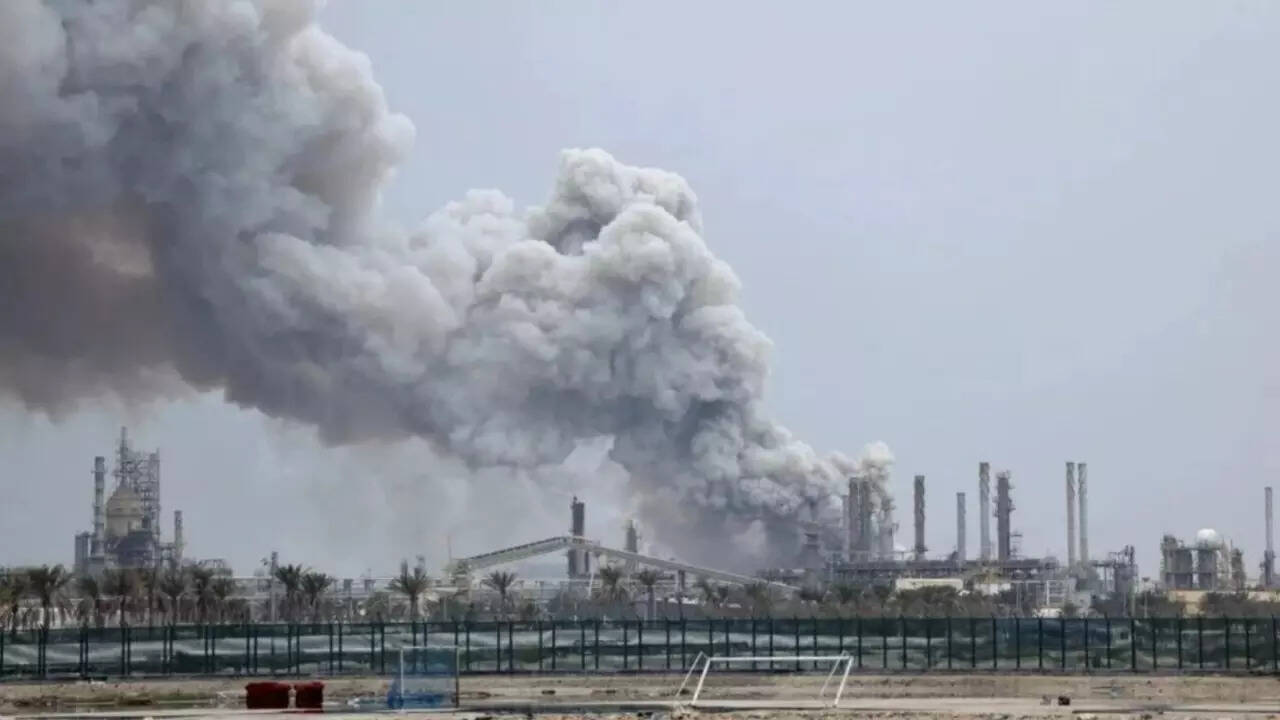
The invocation of force majeure by sovereign energy entities in the Persian Gulf is not a reactive admission of defeat, but a calculated legal and economic insulation strategy. In the context of escalating hostilities between Israel and Iran—and by extension, the security of the Strait of Hormuz—force majeure serves as the primary circuit breaker for global supply chains. When a state-owned enterprise (SOE) like Saudi Aramco or QatarEnergy signals an inability to meet contractual obligations due to "acts of God" or "acts of war," they are executing a risk-transfer maneuver designed to protect balance sheets from massive liquidated damages while maintaining the long-term sanctity of their Production Sharing Agreements (PSAs).
The Triple Constraint of Energy Contracts
Energy export frameworks rely on three distinct pillars that dictate how a crisis in the Levant or the Gulf of Oman translates into a legal filing.
- Physical Delivery Feasibility: This concerns the kinetic reality of the maritime environment. If the Strait of Hormuz is mined or under active drone swarm threat, the physical "delivery point" defined in the Incoterms (International Commercial Terms) becomes inaccessible.
- Contractual Excuse Doctrines: Under English Law—which governs the majority of international energy trades—a party is generally held to the literal performance of their contract regardless of difficulty. Force majeure is the specific contractual carve-out that overrides this rigidity.
- Sovereign Immunity Interplay: In the Gulf, the line between the state and the corporation is blurred. A government decree to halt exports for national security reasons often triggers the "Restraint of Princes" clause, a subset of force majeure that protects the exporter from being sued for following its own government's emergency orders.
Mapping the Escalation Ladder: From Kinetic Friction to Legal Nullification
The transition from "business as usual" to a force majeure event follows a predictable, quantifiable escalation ladder. Analysts often mistake rhetoric for action; however, the legal trigger points are tied to specific operational thresholds.
Phase I: The Risk Premium Compression
During initial skirmishes, such as localized sabotage or cyberattacks on offshore infrastructure, exporters maintain flow but increase the War Risk Surcharge (WRS). At this stage, force majeure is not invoked because the "impossibility" threshold has not been met. The burden of cost is shifted to the buyer via insurance premiums and freight adjustments.
Phase II: Strategic Maritime Interdiction
As the Iran-Israel conflict moves toward direct ballistic exchange, the threat to VLCCs (Very Large Crude Carriers) enters the "unreasonable risk" category. Force majeure becomes a viable tool when P&I Clubs (Protection and Indemnity insurance) withdraw coverage for the transit zone. Without insurance, a vessel cannot legally enter most international ports, creating a "constructive total loss" of the logistics chain.
Phase III: The Hard Cut-off
This is the total cessation of flow. In this scenario, Gulf states invoke force majeure to prevent a cascade of "Failure to Deliver" penalties. For a country like Kuwait or the UAE, even a 48-hour disruption without a force majeure declaration could result in billions of dollars in claims from refineries in East Asia and Europe.
The Economic Logic of "Acts of War"
The Gulf states utilize force majeure as a tool of Price Discovery and Inventory Management. By declaring a localized force majeure, a producer can legally withhold supply, thereby driving up the global Brent or Murban spot price. This offsets the volume loss with higher per-barrel margins on the remaining "free" supply that is not tied to the affected contracts.
There is a fundamental difference between Commercial Impracticability and Force Majeure.
- Commercial Impracticability: The cost of getting the oil to market has become too high (e.g., insurance is $50/barrel). Under most jurisdictions, this is NOT a valid reason to stop delivery. The seller must eat the loss.
- Force Majeure: The oil literally cannot be moved (e.g., the terminal is bombed or the strait is closed). This is a valid reason to stop delivery without penalty.
The strategic nuance lies in how Gulf nations define "interference." By broadening the force majeure language in their long-term contracts over the last decade, these nations have effectively lowered the bar for what constitutes a "hindrance" versus an "impossibility."
Supply Chain Contagion: The Downstream Effect
When a Gulf producer triggers the clause, it creates a systemic shock to the Global Just-in-Time (JIT) Refining Model. Refineries in South Korea, Japan, and India are configured for specific crude grades (e.g., Arab Light or Upper Zakum).
- Feedstock Incompatibility: A refinery cannot simply swap Saudi crude for US WTI without significant "re-tooling" and yield loss.
- The Margin Squeeze: As force majeure is declared, the price of the remaining available "like-for-like" crude sky-rockets. Refiners who did not hedge against a force majeure event face immediate insolvency risks.
- Inventory De-stocking: Strategic Petroleum Reserves (SPRs) are tapped, but these are finite. The duration of the force majeure declaration is the most critical variable. A declaration lasting more than 30 days usually triggers "Hardship Clauses" in secondary contracts, allowing buyers to terminate long-term relationships entirely.
Quantifying the Vulnerability: The Hormuz Bottleneck
Approximately 20-30% of the world's total consumption of liquid petroleum passes through the Strait of Hormuz. The mathematical reality of a force majeure event here is staggering.
| Variable | Impact Level | Duration to Criticality |
|---|---|---|
| Direct Export Loss | 18 - 21 Million bpd | Instant |
| LNG Disruption | 20% of Global Supply | 7 - 14 Days |
| Global Price Delta | +$30 to $50/barrel | 24 - 48 Hours |
The "Force Majeure Loop" occurs when the declaration by one producer (e.g., Iran) forces a counter-declaration by another (e.g., Saudi Arabia) due to shared infrastructure or the inability to safely escort tankers through the same contested waters.
The Geopolitical Leverage of Legal Clauses
Force majeure is often used as a Diplomatic Signaling Device. When a Gulf state invokes the clause citing "regional instability caused by external actors," they are placing the economic onus of the Iran-Israel conflict on the international community. It is a way of saying: "The cost of this war is now being deducted from your GDP."
This creates a powerful incentive for energy-importing superpowers (China, the EU) to intervene and de-escalate. The legal filing is the first step in a broader geopolitical negotiation. If the US or Israel contemplates a strike on Iranian energy infrastructure, the "Shadow Threat" of a total regional force majeure acts as a deterrent. No Western government wants to explain a 400% increase in gasoline prices to its electorate because of a legal clause triggered in Riyadh or Abu Dhabi.
Strategic Mitigation for Global Stakeholders
To navigate the weaponization of force majeure, energy consumers and analysts must move toward a Resilience-First Procurement Strategy.
- Diversification of Incoterms: Move from FOB (Free on Board) to CIF (Cost, Insurance, and Freight) where the seller bears more of the transit risk, although Gulf SOEs rarely accept these terms during periods of high tension.
- Grade-Agnostic Refining: Investing in "deep conversion" refineries that can process a wider variety of crudes, reducing the dependency on specific Gulf grades that are most susceptible to force majeure declarations.
- Contractual "Look-Through" Provisions: Large buyers are beginning to demand transparency on what specific "security events" trigger force majeure, attempting to narrow the definition to prevent producers from using the clause as a price-manipulation tool.
The focus must shift from predicting if a conflict will occur to auditing the Contractual Durability of the supply chain. Companies should immediately stress-test their portfolios against a 90-day force majeure event in the Persian Gulf, accounting for the reality that "Business Interruption Insurance" rarely covers acts of war unless specifically endorsed at extreme premiums. The goal is not to avoid the disruption—which is impossible—but to be the last entity in the market with a valid legal claim to the remaining supply.