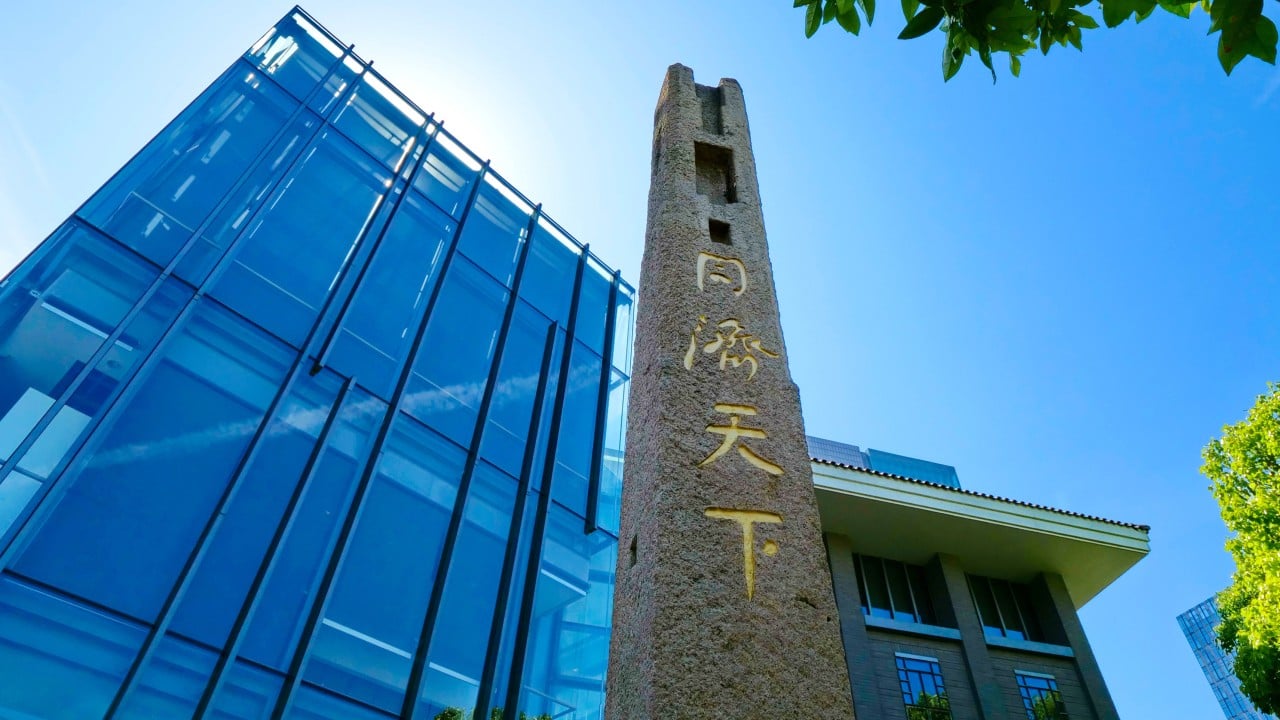
The integrity of high-stakes oncological research is not merely a matter of academic ethics but a fundamental component of the global clinical pipeline. When Tongji University—a tier-one Chinese institution—penalized Professor Wang Ping for research misconduct, the event signaled a critical failure in the internal validation protocols of one of the nation’s most prominent cancer research programs. This incident, involving the retraction of a 2018 Cancer Cell paper titled "Acetylation of PGK1 Drives Metabolic Reprogramming and Tumorigenesis," exposes a systemic vulnerability in how data-heavy biological research is audited before publication. To understand the gravity of this collapse, one must dissect the mechanisms of the fraud, the institutional response framework, and the broader economic pressures driving academic malfeasance in the Yangtze River Delta’s biotech corridor.
The Triad of Misconduct Mechanisms
The investigation into Wang Ping’s work centers on image manipulation and data fabrication, which are symptoms of a deeper structural rot in the laboratory management hierarchy. These failures typically manifest through three distinct channels:
- Splicing and Duplication of Western Blot Data: Western blotting is used to detect specific proteins in tissue homogenates. In the retracted Cancer Cell study, investigators identified "spliced" images—fragments of different experiments stitched together to present a false narrative of consistent results. This isn't a clerical error; it is a conscious effort to force-fit raw data into a preconceived theoretical model.
- The Statistical Impossibility of Homogeneity: Biological systems are inherently noisy. When data points across multiple independent trials exhibit zero variance or perfectly mirror one another in separate figures (representing different experimental conditions), the probability of authenticity approaches zero.
- Hierarchy-Driven Pressure (The Principal Investigator Paradox): In the Chinese academic model, the Principal Investigator (PI) often functions more as a fund-raiser and political figurehead than a hands-on bench scientist. This creates a disconnect where the PI demands results that align with high-impact journal requirements, while the post-doctoral researchers and PhD candidates feel compelled to "clean" data to secure their careers.
The Cost Function of Institutional Reputation
Tongji University’s decision to strip Wang Ping of his administrative titles and restrict his funding is an exercise in institutional damage control. The university operates within a competitive landscape where global rankings—and the associated government subsidies—are tethered to the "cleanliness" of their research output. The cost of this misconduct is calculated through several vectors:
- The Funding Sinkhole: Wang Ping was a recipient of significant grants from the National Natural Science Foundation of China (NSFC). When a paper is retracted for fraud, the return on investment for the state becomes negative. The capital allocated to that research was effectively stolen from legitimate projects that could have yielded actual clinical breakthroughs.
- The Citation Contamination Effect: The 2018 Cancer Cell paper was cited over 200 times before its retraction. This creates a "citation cascade" where secondary and tertiary researchers base their own hypotheses on a foundation of sand. The labor hours wasted globally by researchers attempting to replicate or build upon Wang's fabricated metabolic pathways represent a massive, unquantified loss to the global scientific community.
- Institutional Devaluation: Tongji University sits in the "Double First Class" university plan, a state-led initiative to build world-class institutions. A scandal of this magnitude triggers a reassessment by international partners (such as Harvard or the Max Planck Institute), potentially freezing collaborative exchange programs and dual-degree pipelines.
Decoding the Regulatory Response Framework
The penalties imposed on Wang Ping—removal from the "Changjiang Scholars" program and a multi-year ban on applying for new research grants—reflect the Ministry of Education’s shifting stance on academic "paper mills" and individual fraud. However, the rigor of these penalties often masks a lack of preventative infrastructure. The Chinese academic regulatory environment currently relies on "Post-Hoc Verification" rather than "Real-Time Auditability."
The Gap in Internal Peer Review
Most top-tier labs in China lack an independent "Data Integrity Officer" who exists outside the lab's hierarchy. In the Wang Ping case, the fraudulent images passed through the lab's internal review, the university’s departmental review, and the journal’s peer-review process without being flagged. This indicates that current peer-review protocols are optimized for logical consistency rather than forensic data verification.
The Problem of "Face" and Institutional Silence
There is a documented lag between the discovery of misconduct on platforms like PubPeer and official institutional action. In Wang’s case, allegations had been circulating in the scientific underground for years before the university issued a formal verdict. This delay suggests that institutions only act when the reputational risk of silence outweighs the reputational risk of a public scandal.
The Economic Drivers of Academic Malpractice
The incentives for research misconduct in China are rooted in a "Point-Based Promotion" system. At Tongji and similar institutions, career progression is tied to the Impact Factor (IF) of the journals in which a researcher publishes. Cancer Cell has an extremely high IF (often exceeding 38.0), making it a "career-maker" publication.
- Financial Bounties: Many Chinese institutions have historically offered cash bonuses—sometimes exceeding $100,000 USD—for a single paper in Nature, Science, or Cell. While the central government has officially banned these direct cash incentives, the indirect benefits (promotions, housing allowances, and increased grant-writing power) remain intact.
- The Scarcity of Permanent Positions: The "up-or-out" tenure track system has been adopted by many Chinese universities. A researcher who fails to publish in a top-tier journal within a five-year window faces immediate termination. This creates an environment where the perceived risk of getting caught for fraud is lower than the certain risk of career termination for "mediocre" (but honest) results.
Structural Vulnerabilities in Global Journal Oversight
The Cancer Cell retraction is as much a failure of the journal's editorial board as it is of Tongji University. Journals frequently outsource the verification of images to unpaid peer reviewers who may not have the specialized software required to detect sophisticated manipulations.
- AI-Generated Fraud: As generative models become more advanced, the ability to create "synthetic" Western blots or histological slides that have no precursors in the real world will make traditional forensic detection nearly impossible.
- The Profit Incentive of Publishers: High-impact journals prioritize "breakthrough" narratives. A paper that claims to have discovered a new metabolic switch in cancer cells is more likely to be fast-tracked than a paper that provides a robust but incremental improvement in our understanding of existing pathways.
The Technical Reality of PGK1 Acetylation
To ground this in the science: PGK1 (Phosphoglycerate Kinase 1) is a key enzyme in glycolysis. Wang Ping’s paper claimed that acetylation at specific residues (K323) triggered a shift that promoted tumor growth. The retraction implies that the experimental evidence for this specific biochemical transition was either falsified or so poorly handled that the conclusion is no longer tenable. For clinicians looking for drug targets, this means that PGK1 acetylation might not be the "silver bullet" it was presented to be in 2018.
The Path to Research Decoupling
If China continues to struggle with high-profile retractions, we will likely see a "Research Decoupling." Western institutions and pharmaceutical companies may begin to treat data originating from certain high-risk labs with a higher level of skepticism, requiring independent third-party validation before entering into licensing agreements. This would significantly slow the pace of drug development and increase the cost of R&D for Chinese biotech firms.
Strategic Recommendations for Institutional Reform
To move beyond the cycle of scandal and retraction, the Chinese academic system must move from a metrics-based evaluation to a process-based evaluation.
Mandatory Raw Data Repositories
All raw, unedited image files and mass spectrometry datasets should be uploaded to a centralized, university-controlled server at the time of the experiment, not at the time of publication. This allows for time-stamped auditing that prevents post-hoc "beautification" of data.
Decoupling Administrative Power from Scientific Output
The practice of appointing top scientists to heavy administrative roles (like Wang Ping’s vice-presidency) must cease. Managing a multi-billion yuan university budget is a full-time job; leading a world-class lab is also a full-time job. When one person attempts both, the oversight of the lab is the first thing to fail.
Forensic AI Integration in Peer Review
Journals and universities must deploy automated forensic tools—such as those developed by firms like Proofig—to scan every image for rotations, erasures, and duplications before a paper is even sent to reviewers.
The Wang Ping case is not an isolated incident of a "bad actor." It is a stress test that the current academic infrastructure failed. The response by Tongji University is a necessary first step, but without a fundamental shift in the incentive structures that equate "Impact Factor" with "Institutional Worth," the underlying conditions for fraud will remain. The move toward "Open Science" and the mandatory sharing of raw data are the only viable pathways to restoring the structural integrity of the global research pipeline.
The immediate priority for the Ministry of Education must be an audit of all papers published by high-ranking academic administrators over the last decade. Until the "cost" of being caught includes permanent expulsion from the scientific community and the clawback of all associated salaries and grants, the risk-reward ratio for academic fraud will continue to favor the perpetrator over the public interest.


