The humanitarian crisis in Lebanon is not merely a byproduct of kinetic conflict; it is a systemic failure of critical infrastructure, debt-burdened logistics, and the exhaustion of non-state safety nets. While standard reporting focuses on the immediate trauma of bombardment, an analytical view reveals a catastrophic intersection of three specific vectors: the physical destruction of supply chain nodes, the total evaporation of domestic fiscal liquidity, and the mass internal displacement of nearly 25% of the population into a pre-existing housing deficit.
The Triple Constraint of Lebanese Aid Delivery
The ability to sustain life in a conflict zone depends on the integrity of the "Last Mile" delivery. In Lebanon, this mechanism is currently suffering from a compounding failure across three specific pillars:
- Kinetic Interdiction of Distribution Channels: The geography of Lebanon forces logistics into specific corridors. When primary arterial roads connecting Beirut to the Bekaa Valley and the South are compromised, the cost of transport scales exponentially. Security risks translate into higher insurance premiums for NGOs and longer transit times, reducing the volume of aid delivered per dollar spent.
- The Liquidity-Humanitarian Nexus: Unlike previous conflicts, this crisis occurs within a state of total financial insolvency. Local NGOs, which historically provided the primary response layer, have no access to functional banking. This forces a transition to a "cash-only" humanitarian economy, which is inherently inefficient, prone to leakage, and difficult to scale during rapid-onset emergencies.
- The Saturation of Absorption Capacity: Most displaced persons are migrating from high-risk zones in the South and the Dahieh to Beirut and Mount Lebanon. These areas were already operating at peak density. The sudden influx creates a "Humanitarian Bottleneck" where the demand for water, sanitation, and hygiene (WASH) infrastructure exceeds the design capacity of the urban grid by 400%.
Mapping the Displacement Velocity
The speed of internal displacement in Lebanon has outpaced the bureaucratic response time of international agencies. This velocity creates a data lag that prevents accurate resource allocation.
- Phase 1: The Pre-emptive Migration: Early movers with financial means occupied the limited supply of short-term rentals, driving prices up and pricing out the most vulnerable.
- Phase 2: The Infrastructure Shock: As schools were converted into collective shelters, the educational system was sacrificed to meet the immediate need for shelter. This is a high-cost trade-off that creates long-term human capital degradation.
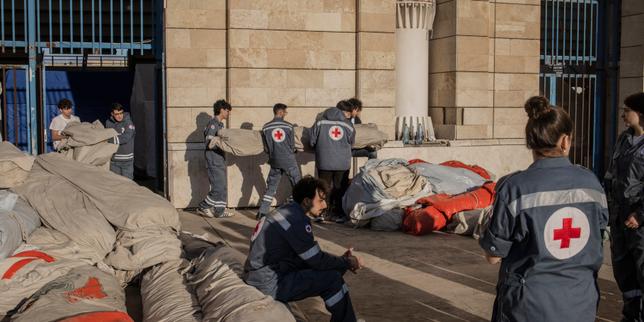
- Phase 3: The Urban Slumification: Those unable to secure spots in formal shelters are occupying public squares and abandoned buildings. This creates a high-density, low-sanitation environment ripe for the transmission of waterborne diseases, specifically when the national electricity grid cannot power water pumping stations.
The Energy-Water Feedback Loop
The survival of the displaced population is tethered to a failing energy sector. Lebanon’s reliance on private diesel generators for water extraction and filtration introduces a massive variable cost into the humanitarian equation.
The cost of 1,000 liters of potable water is now tied directly to the global price of Brent crude and the black-market exchange rate of the Lebanese Lira. When fuel deliveries are interrupted by airstrikes, the water supply fails within 12 to 24 hours. This isn't just a shortage; it's a mechanical failure of the urban life-support system. Humanitarian agencies are forced to choose between funding food rations or buying diesel to keep the pumps running. In a clinical sense, the "Energy-Water Feedback Loop" means that without a stable fuel corridor, the humanitarian response is physically incapable of preventing a public health collapse.
Medical System Attrition
The Lebanese healthcare sector was already hollowed out by a four-year brain drain of medical professionals. The current conflict is the "stress test" that has identified three fatal vulnerabilities in the medical supply chain:
- Primary Care Displacement: When health centers in the South are evacuated, the burden shifts to northern hospitals that lack the patient records or specialized equipment to manage chronic conditions (diabetes, dialysis, oncology).
- Trauma-to-Routine Ratio: Hospitals are prioritizing mass-casualty events, which effectively halts routine medical care. This leads to an "excess mortality" rate that is often undocumented in the heat of conflict.
- Cold-Chain Integrity: The storage of vaccines and insulin requires constant refrigeration. In a country with 2-hour daily state electricity and intermittent generator fuel, the cold chain is constantly at risk of breaking, rendering expensive medical shipments useless.
The Macro-Economic Cost of Neutrality
Lebanon's private sector, the traditional engine of its resilience, is being cannibalized. Small and medium enterprises (SMEs) are closing as their staff is displaced and their consumer base evaporates. This creates a permanent dependency on international aid. The longer the conflict persists, the more "Aid Dependency" becomes the only viable economic model, which is unsustainable for a middle-income country with Lebanon's debt profile.
The international community's response is currently reactive rather than structural. Funding is being funneled into "Emergency Response," which addresses caloric intake and temporary shelter but does nothing to fix the broken infrastructure that makes that aid necessary.
Strategic Reorientation for Relief Operations
To mitigate the total collapse of the humanitarian sector in Lebanon, the operational focus must shift from a "Supply-Push" model to a "Systemic-Protection" model. This requires three tactical pivots:
- De-linking Water from Centralized Power: Immediate investment must be diverted from trucking water (inefficient and dangerous) to installing solar-powered pumping systems for collective shelters and municipal wells. This removes the "Fuel Variable" from the survival equation.
- Liquidity Injection via Digital Cash: To bypass the collapsed banking system and the risks of physical cash transport, humanitarian agencies must scale the use of encrypted digital wallets for the displaced. This stimulates what remains of the local retail economy and reduces the overhead costs of physical distribution.
- Decentralized Medical Hubs: Rather than funneling all patients toward Beirut’s overstretched hospitals, agencies must deploy modular, self-sufficient trauma and primary care units in Mount Lebanon and the North. These units must operate independently of the national grid.
The Lebanese crisis is not a static event; it is a dynamic decay of a modern state’s ability to protect its citizens. The failure to address the underlying structural bottlenecks—specifically energy security and liquidity—will ensure that every dollar of aid provides only a fraction of its intended value. The objective should not be to "feed a million people," but to prevent the irreversible degradation of the systems that allow a million people to feed themselves.
The immediate strategic priority must be the establishment of "Safe Logistics Corridors" that are recognized by all kinetic actors. Without a guarantee for fuel and medical shipments, the humanitarian response is merely managing the speed of a national decline rather than halting it.