India’s potential role in de-escalating the escalating kinetic conflict between Israel and Iran is not a matter of diplomatic sentiment but a function of structural leverage. The global geopolitical architecture currently lacks a mediator that possesses both the technical-military cooperation with Jerusalem and the energy-security interdependence with Tehran. While Western powers are viewed as active participants in the conflict's escalation through the supply of munitions and intelligence, New Delhi occupies a unique "non-aligned 2.0" position. This position is defined by three distinct strategic pillars: strategic autonomy, economic infrastructure integration, and the "security of the commons" in the North Arabian Sea.
The Triad of Indian Strategic Leverage
To understand why India is being signaled as a viable mediator, one must quantify the dependencies that both Iran and Israel have on New Delhi. This is not a "peace-making" endeavor in the traditional humanitarian sense; it is a calculated management of regional stability to prevent a total disruption of the Indo-Pacific maritime trade routes.
1. The Energy-Security Symbiosis with Iran
India’s relationship with Iran is anchored by the International North-South Transport Corridor (INSTC) and the development of the Chabahar Port. For Tehran, India represents the only major democratic economy capable of providing a long-term hedge against Western sanctions without demanding the total political alignment that Beijing often requires.
The logistical bottleneck for Iran is the isolation of its economy. India provides a "safety valve" through non-dollar trade mechanisms and infrastructure investment. If Iran triggers a full-scale maritime blockade in the Strait of Hormuz, it effectively cuts off its own lifeline to the Indian market. New Delhi uses this economic reality as a silent lever in diplomatic backchannels to discourage Iranian proxies from targeting specific commercial interests.
2. The Defense-Technology Integration with Israel
Conversely, the India-Israel relationship is built on a foundation of high-end military hardware and joint technological development. India is the largest buyer of Israeli defense equipment, ranging from Phalcon AWACS to Barak-8 missile defense systems. This creates a feedback loop where Israel relies on Indian procurement volume to fund its own Research and Development (R&D) cycles.
Jerusalem views New Delhi as a "sober" partner. Unlike European nations that may condition defense ties on political concessions regarding the Palestinian territories, India has maintained a "de-hyphenated" policy. This gives Indian diplomats access to the Israeli security cabinet that most other nations lack. When India speaks about the risks of regional contagion, the Israeli defense establishment listens because their own industrial-military complex is deeply intertwined with Indian supply chains.
3. The Maritime Security Mandate
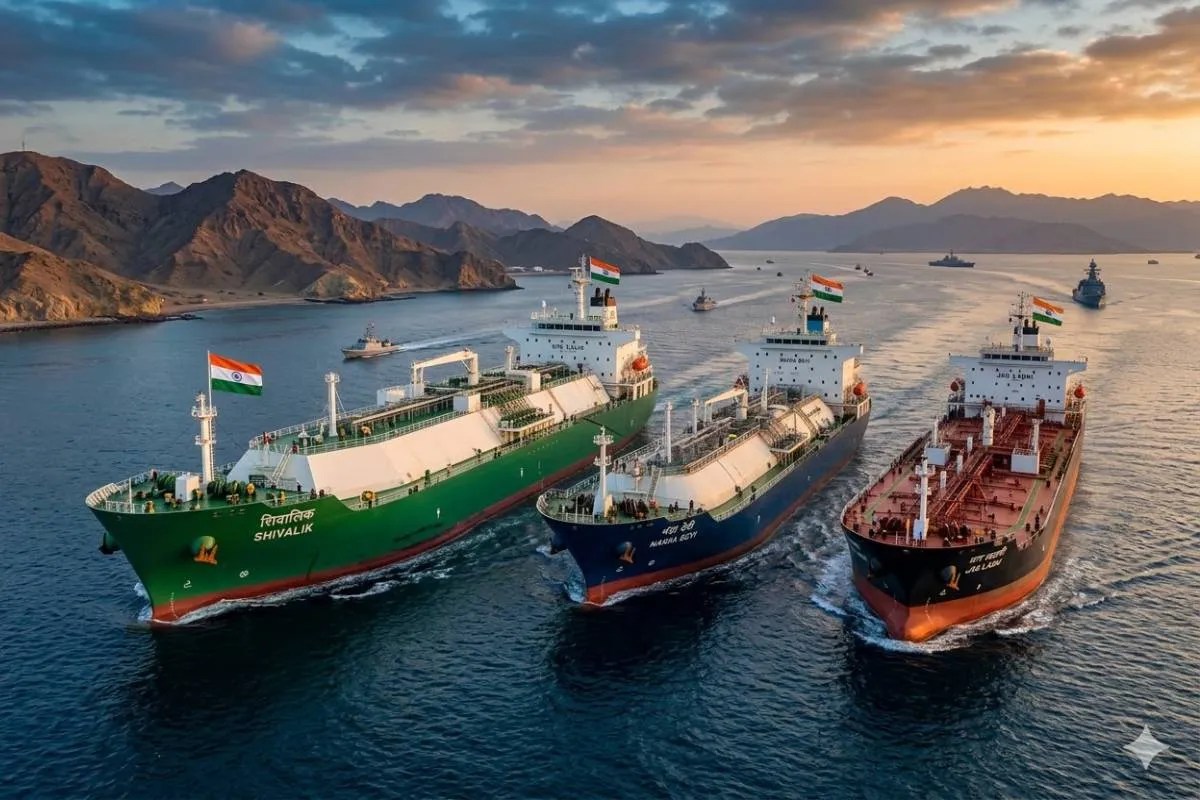
The Indian Navy has transitioned from a coastal force to a "net security provider" in the Indian Ocean Region (IOR). With the deployment of guided-missile destroyers like the INS Kolkata and INS Visakhapatnam in the Gulf of Aden and the North Arabian Sea, India has demonstrated the physical capacity to protect trade without joining U.S.-led coalitions like Operation Prosperity Guardian. This independent military presence allows India to engage with Iran without being seen as a "Western proxy," while simultaneously securing the very sea lines of communication (SLOCs) that Israel needs for its eastern trade.
The Cost Function of Regional War
A direct war between Israel and Iran creates an unacceptable "cost function" for the Indian economy. Analysts often simplify this to "oil prices," but the reality is more complex. The disruption involves a three-tier risk structure:
- Tier 1: Repatriation and Remittances. There are approximately 9 million Indian nationals working in the Gulf. A regional war necessitates a massive, state-funded evacuation effort (reminiscent of the 1990 Kuwait airlift) and the immediate cessation of billions in annual remittances.
- Tier 2: Maritime Insurance and Freight. Even if oil continues to flow, the "war risk premium" on shipping insurance through the Persian Gulf would render Indian exports uncompetitive in European markets.
- Tier 3: Strategic Distraction. A conflict in the Middle East forces India to divert naval and diplomatic assets away from its primary security concern: the Line of Actual Control (LAC) and the presence of the People’s Liberation Army (PLA) in the Indian Ocean.
Deconstructing the "Mediator" Framework
When international observers suggest India can "stop" the war, they are misidentifying the mechanism. India does not stop wars through moral suasion; it mitigates them through Interests-Based Signaling.
The Red-Line Calibration
India’s diplomatic communication follows a specific logic of "Red-Line Calibration." To Iran, the message is centered on the Chabahar-Zahedan railway and the risk of losing the only credible gateway to Central Asia. To Israel, the message focuses on the long-term sustainability of the I2U2 Group (India, Israel, UAE, USA) and the India-Middle East-Europe Economic Corridor (IMEC). Both projects are dead if a kinetic war persists.
The Limits of Influence
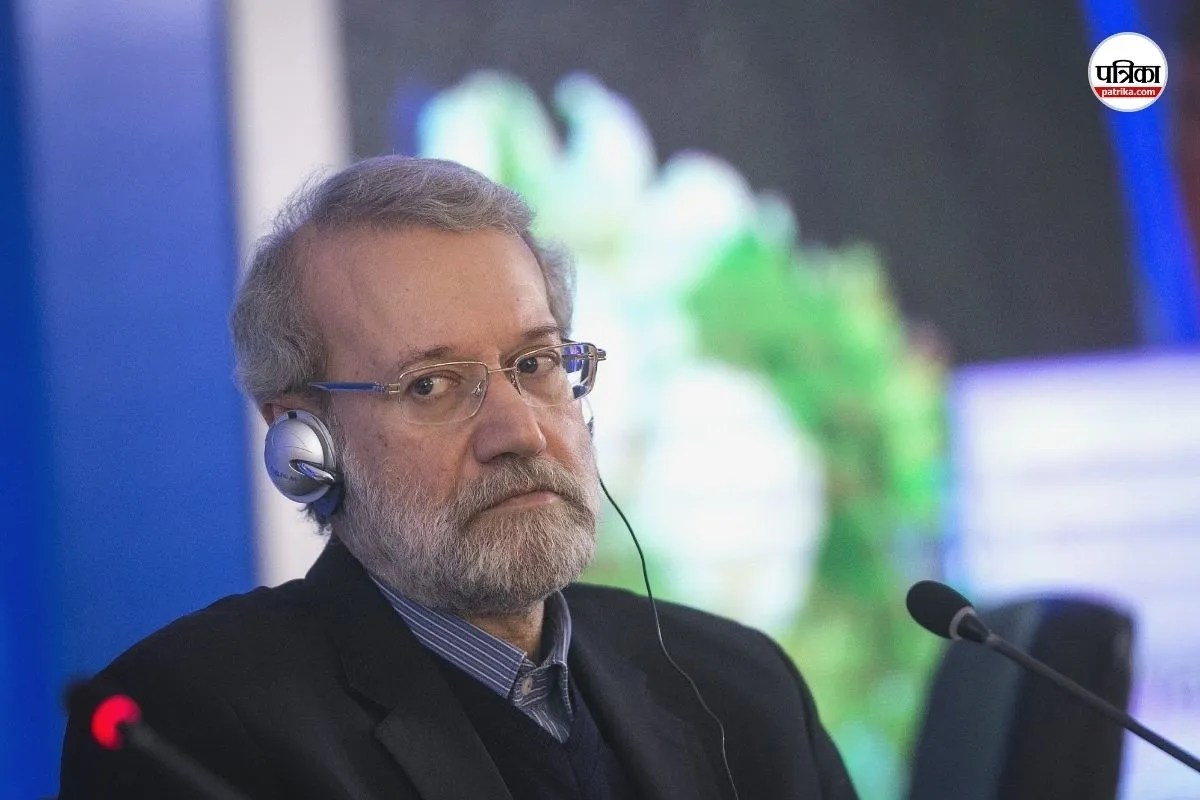
A rigorous analysis must acknowledge that India’s leverage is not absolute. New Delhi cannot control the internal ideological drivers of the Iranian Revolutionary Guard Corps (IRGC) or the domestic political pressures within the Israeli Likud party. India’s role is primarily as a "Channel of Least Resistance." When the U.S. and Iran cannot talk, and when Israel and Iran refuse to acknowledge each other's legitimacy, India serves as the credible third party that can transmit "off-ramp" conditions without the baggage of Cold War-era alliances.
The Structural Bottleneck: The "Wait and Watch" Doctrine
The primary limitation of India's strategy is its historical adherence to "Strategic Patience." While this prevents India from being dragged into unnecessary conflicts, it also slows down the "First Mover" advantage in mediation. To transition from a passive observer to an active mediator, India must overcome the internal bureaucratic inertia of the Ministry of External Affairs (MEA) which traditionally avoids "taking sides" in West Asian sectarian divides.
The second limitation is the China Factor. Beijing has already signaled its desire to be the regional peacemaker, as seen in the Saudi-Iran normalization deal. If India remains too cautious, it cedes the diplomatic space to China, which would then use its influence to prioritize Chinese-led infrastructure (Belt and Road Initiative) over Indian-led projects like IMEC.
Mapping the Strategic Forecast
The probability of India successfully brokering a formal peace treaty is low. However, the probability of India brokering a "Managed De-escalation" is high. This process will likely involve:
- Naval De-confliction: The Indian Navy acting as an informal buffer for commercial shipping, allowing both Iranian and Israeli-linked vessels to pass through contested waters under the "neutral" gaze of Indian sensors.
- Intelligence Exchanges: Using New Delhi as a secure "post office" for non-public warnings regarding red lines (e.g., targeting of specific energy infrastructure vs. military sites).
- Economic Stabilization: Providing Iran with a non-Western path for trade that is contingent on the restraint of its regional proxies, specifically those affecting the Red Sea.
The strategic play for New Delhi is to utilize the G20 "Voice of the Global South" platform to frame the Israel-Iran conflict not as a regional feud, but as a direct assault on the economic stability of developing nations. By shifting the narrative from "security" to "solvency," India forces both combatants to consider the reputational and economic costs of being seen as the architect of a global recession.
The final move involves the operationalization of the IMEC. India must aggressively push for the technical standardization of this corridor even amidst the conflict. By doing so, it creates a "sunk cost" for regional players; the more they invest in the idea of a transit route connecting India to Europe via the Middle East, the higher the psychological and financial barrier to engaging in total war that would destroy that very infrastructure. India's path to mediation is not paved with rhetoric, but with the cold, hard logic of integrated supply chains.