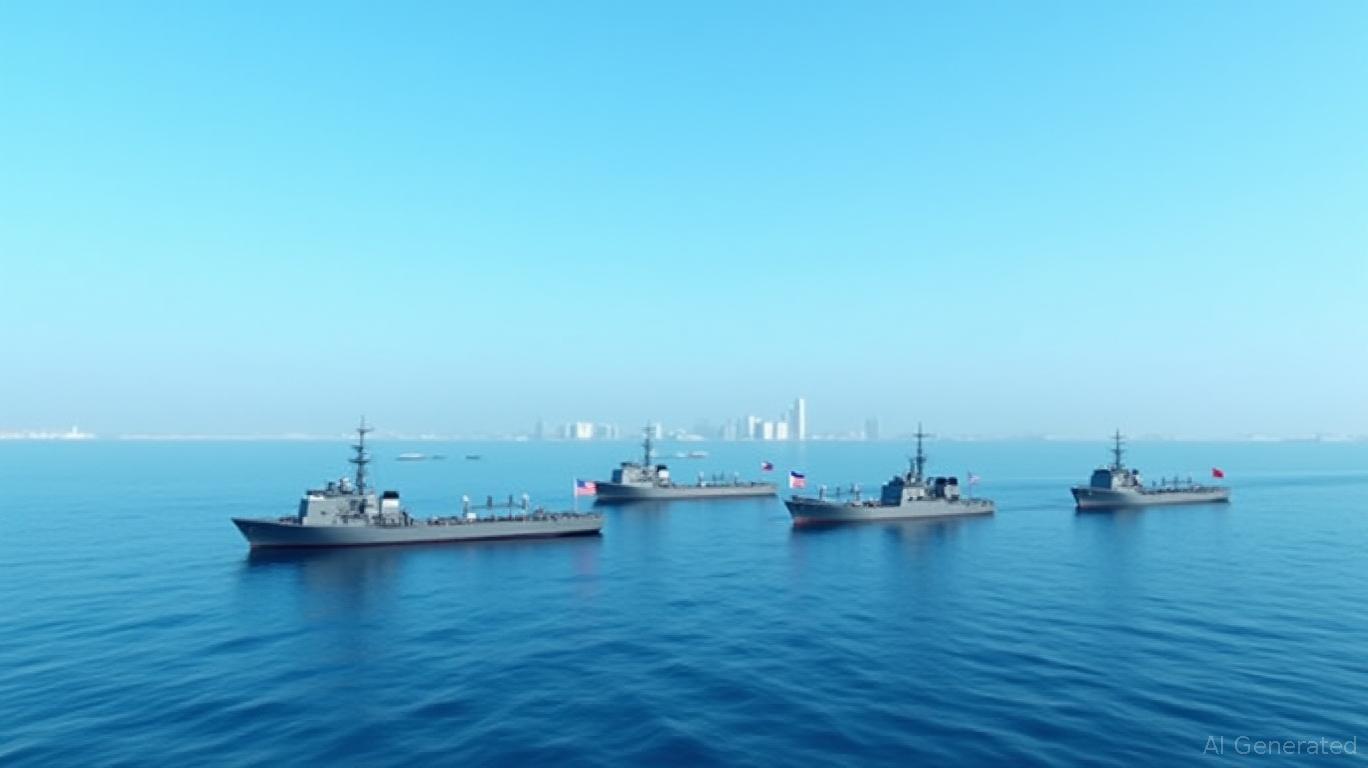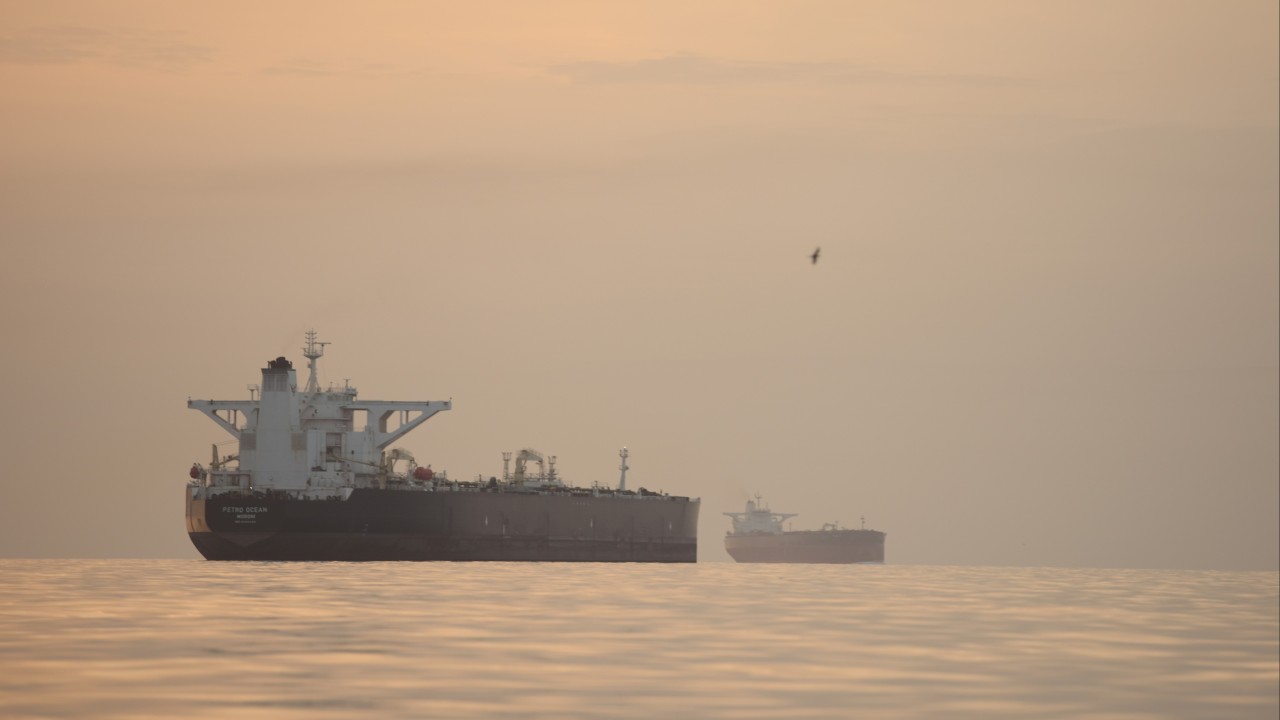
The Strait of Hormuz functions as the carotid artery of the global energy architecture, facilitating the transit of approximately 21 million barrels of oil per day. When Citic Securities analysts describe a "Hormuz moment," they are identifying a localized geopolitical flashpoint as a proxy for a broader systemic shift: the erosion of the United States’ ability to subsidize global maritime security. This is not merely a regional conflict; it is a stress test of the unipolar security model. The transition from a US-guaranteed commons to a fragmented, "pay-to-play" security environment represents a fundamental change in the cost-basis of global trade.
The Geopolitical Cost Function
The stability of the Strait of Hormuz is maintained through a massive, non-reciprocal expenditure by the US Navy. This creates a global public good where the cost of security is borne by one entity, while the benefits—stable energy prices and uninterrupted supply chains—are enjoyed by all market participants. This model becomes unsustainable when the hegemon's internal political will or economic capacity to absorb these costs diminishes.
The "Hormuz moment" is defined by three specific friction points that expose the fragility of this arrangement:
- Asymmetric Deterrence Erosion: The proliferation of low-cost anti-access/area-denial (A2/AD) technologies, such as loitering munitions and swarm-capable naval assets, has shifted the cost-exchange ratio. If a $20,000 drone can threaten a $13 billion aircraft carrier or a $200 million LNG tanker, the economic logic of traditional naval dominance collapses.
- Resource Reallocation Stress: The US Department of Defense is currently forced to balance legacy Middle Eastern commitments against the "pivot to Asia." Security is a zero-sum game in terms of hull counts and deployment days. Each destroyer stationed in the Persian Gulf is a destroyer absent from the First Island Chain in the Pacific.
- Sanctions-Neutral Trade Networks: The emergence of "dark fleets" and non-dollar denominated oil trades (notably in CNY) reduces the efficacy of the US's primary non-kinetic weapon. When a significant volume of energy flows outside the SWIFT system, the US loses the ability to police the strait via financial gatekeeping.
The Three Pillars of Maritime Fragility
To quantify the decline of dominance, we must examine the physical and logistical constraints of the Strait itself. It is a 21-mile-wide chokepoint at its narrowest, with shipping lanes only two miles wide in either direction.
The Kinetic Vulnerability Pillar
The primary risk is not a total blockade, which would be an act of war, but rather "incremental disruption." By harassing individual vessels or deploying sea mines, a regional power can spike insurance premiums (hull war risk) to a level that effectively shuts down the strait for commercial traffic without firing a shot at a sovereign warship. This creates a "Security Premium" that acts as a global tax on energy, disproportionately affecting net importers like China and the EU.
The Diplomatic De-alignment Pillar
Traditionally, the US maintained the status quo through a network of regional alliances. However, we are seeing a shift toward "strategic hedging." Middle Eastern powers are increasingly diversifying their security portfolios, engaging with the BRICS+ framework and seeking bilateral security guarantees from Beijing or Moscow. This fragmentation makes it impossible for the US to coordinate a unified response to Hormuz-based threats.
The Energy Transition Lag Pillar
Despite the global push toward renewables, the world’s industrial base remains tethered to hydrocarbons. The intermittency of green energy means that any multi-week disruption in the Strait of Hormuz creates a cascading failure in global manufacturing. The "Hormuz moment" is particularly dangerous because the world has no immediate substitute for the volume of crude and LNG passing through the Persian Gulf.
Calculating the Hegemonic Discount
The US dollar’s status as the global reserve currency is inextricably linked to the "Petrodollar" system, which relies on the US guaranteeing the safety of the oil trade. If the US can no longer guarantee that safety, the underlying rationale for holding massive USD reserves is weakened.
The decline of dominance can be measured by the "Hegemonic Discount"—the difference between the cost of securing a trade route and the economic benefit derived from that route. When the cost of security exceeds the economic benefit, the hegemon typically retrenches.
We see this retrenchment manifesting in:
- The transition from "Global Policeman" to "Coalition Leader" (e.g., Operation Prosperity Guardian), where the US seeks to offload the costs of maritime security onto its partners.
- The prioritization of "Friend-Shoring," which attempts to shorten supply chains and bypass volatile chokepoints entirely.
Strategic Divergence in Response Mechanisms
Different global actors are reacting to this friction with distinct survival strategies.
China’s Strategy: Infrastructure Circumvention
Beijing is aggressively investing in the China-Pakistan Economic Corridor (CPEC) and pipelines through Central Asia to reduce its dependence on the Strait of Hormuz and the Malacca Strait. By moving energy via land, China bypasses the US-dominated maritime sphere, effectively nullifying the "Hormuz moment" as a tool of US leverage.
The EU’s Strategy: Regulatory Insulation
The European Union is attempting to decouple its economy from fossil fuels faster than its industrial base can actually support. This creates a period of extreme vulnerability where they remain dependent on Hormuz-transited LNG while dismantling the internal political support for the military spending required to protect those shipments.
The US Strategy: Technological Retrenchment
The US is betting on energy independence through shale and the deployment of unmanned surface vessels (USVs) to patrol chokepoints. This is an attempt to lower the cost of hegemony through automation. However, technology cannot replace the psychological weight of a physical carrier strike group in deterring state-level actors.
The Mechanistic Path to Multi-Polarity
The decline of US dominance in the Strait of Hormuz does not lead to a new single hegemon, but to a state of localized entropy. In this scenario, security becomes a commodity rather than a public good.
This transition follows a specific causal chain:
- Deterrence Failure: A regional actor successfully disrupts traffic without facing overwhelming retaliation.
- Insurance Parity: Commercial shipping companies begin to view US protection as insufficient, leading them to seek private security or alternate routes.
- Bilateral Guarding: Major importers begin sending their own navies to escort their own tankers, leading to a crowded and uncoordinated maritime environment.
- Jurisdictional Shift: Regional powers begin asserting legal and physical control over the shipping lanes, demanding transit fees or political concessions in exchange for passage.
This creates a "Balkanized Ocean" where the rules of the sea are determined by the local power balance rather than international law.
Probability of Systemic Collapse vs. Managed Decline
It is a fallacy to assume that a "Hormuz moment" leads immediately to a global depression. The global economy is adaptive. However, the transition period is marked by extreme volatility. The mechanism for this volatility is the "just-in-time" supply chain, which has zero buffer for a 20% reduction in global energy throughput.
The critical variable is whether the US chooses to double down on its commitment to the Gulf or formalize its withdrawal. A "half-in, half-out" approach—maintaining bases but failing to respond to provocations—is the most dangerous path, as it invites miscalculation from adversaries and creates a vacuum that no other power is currently prepared to fill.
Strategic Reconfiguration for Global Markets
Corporations and sovereign wealth funds must transition their risk models from "Geopolitical Stability" to "Geopolitical Friction." This involves:
- Valuing Resilience Over Efficiency: Moving away from the lowest-cost shipping routes toward those with the highest security certainty.
- Energy Diversification: Not just in terms of source (solar/wind) but in terms of geography (North American or West African crude).
- Hard Asset Allocation: In a world where the US-led maritime order is fraying, physical control over resources and the means of transport becomes more valuable than digital or financial claims.
The "Hormuz moment" signals that the era of "free" security is ending. For the last 80 years, the cost of protecting the world’s most vital trade routes was externalized by the market and paid for by the US taxpayer. As that subsidy is withdrawn, the global economy must find a way to internalize the cost of its own protection. This will result in higher structural inflation, increased regionalism, and a fundamental reassessment of the value of global trade. The decline of dominance is not a singular event, but the gradual accumulation of these frictions until the old system is no longer recognizable.
The immediate strategic play for global stakeholders is the aggressive accumulation of mid-stream infrastructure that bypasses traditional chokepoints and the securing of bilateral energy agreements that do not rely on the continuity of the current maritime status quo.