The Strait of Hormuz is no longer a thoroughfare of global commerce. It has become a graveyard of international norms, a narrow strip of water where the survival of a ship now depends less on the rule of law and more on the willingness of a captain to gamble with the lives of their crew. Since the eruption of hostilities on February 28, 2026, the Islamic Revolutionary Guard Corps has effectively dismantled decades of maritime stability. By imposing a regime of "selective" passage—where only ships deemed friendly to Tehran are granted safe transit—Iran has weaponized one of the world's most critical energy arteries.
The legal arguments invoked by Tehran, claiming it is "lawfully enforcing" order, are a thin veneer for naked geopolitical coercion. Under the United Nations Convention on the Law of the Sea, international straits used for navigation require the right of transit passage, a standard that forbids coastal states from suspending or impeding the flow of shipping, even during armed conflict. Iran, which has never ratified the convention, points to its own version of security enforcement to justify inspections, detentions, and direct attacks on merchant vessels. This is a rejection of the established order, replacing neutral transit with a system of arbitrary oversight.
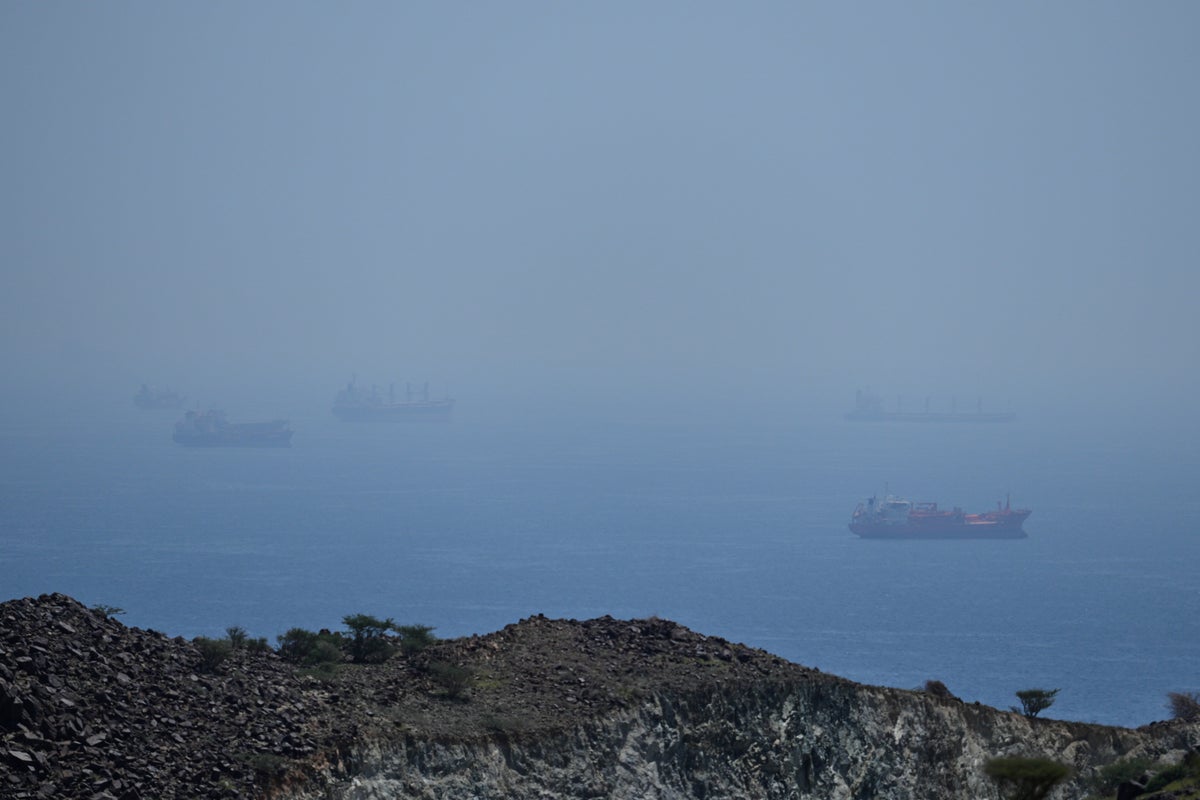
The human cost of this breakdown is hidden from the headlines of financial markets. As of mid-April 2026, at least 22 commercial vessels have been struck by projectiles, drone boats, or naval mines. The psychological toll on the 20,000 seafarers still operating in the region is immense. Crews are now forced to navigate a gauntlet where a single misidentified signal, a misinterpreted radio call, or a stray drone can lead to a fireball on the open sea. Shipping firms have responded with the only tool available to them: abandonment. Traffic through the strait has plummeted by over 90 percent compared to pre-war volumes, forcing massive diversions and driving energy prices to volatile new peaks.
This crisis exposes the fragility of global trade when the primary guarantor of maritime security decides to look the other way. For years, the United States maintained a policy of asserting freedom of navigation through regular military patrols. Today, that objective has shifted. The current administration has pivoted to a strategy of blockade, targeting vessels bound for Iranian ports to squeeze the regime’s economy. By doing so, the US has created a mirrored, if inverse, set of pressures on the waterway. When both belligerents treat a public common as a private battlefield, the merchant marine is the first casualty.
Consider the hypothetical scenario of a tanker carrying non-Iranian crude. Under normal circumstances, this vessel would transit the strait unimpeded. Today, it must decide which threat to fear more: an Iranian drone strike for lacking the required coordination with the IRGC, or an American boarding team enforcing a blockade on the opposite end of the route. This is the reality of the contemporary maritime environment. The traditional protections of civilian status in war have been stripped away, leaving ships as pawns in a high-stakes standoff.
International institutions have struggled to keep pace. The International Maritime Organization has attempted to establish evacuation corridors, but these rely entirely on the goodwill of actors who are actively gaining advantage from the current chaos. Every diplomatic appeal for safe passage is met with declarations that the strait is open to the "world" but closed to "enemies," a distinction that effectively grants Tehran a veto over global energy flows.
The strategy of "selective" passage is, in practice, a form of economic warfare disguised as maritime traffic control. By allowing specific ships to pass, Iran minimizes the risk of a total military response from external powers while still maintaining a stranglehold on the regional economy. It is an asymmetric tactic designed to prolong the crisis without triggering an all-out naval confrontation that the current Iranian state might struggle to sustain. They are betting that the world’s reliance on these few miles of water is high enough that countries will eventually negotiate for passage, one ship at a time.
This normalization of insecurity marks a profound shift. Historically, the closing of a strait was viewed as an act of war so severe it almost guaranteed an immediate and massive military intervention. Now, we are witnessing a "grey zone" conflict where the strait is partially closed, partially open, and entirely governed by fear. If this state of play persists, the precedent is clear: maritime access is no longer a right guaranteed by international consensus, but a privilege granted by the strongest local power.
The market impact has been swift. Energy firms are no longer pricing in just the risk of a regional war; they are pricing in the total collapse of the strait as a reliable channel. The insurance premiums for vessels daring to enter the Gulf are now astronomical, and many underwriters have ceased coverage entirely. Without insurance, without security, and without the certainty of law, the maritime industry is recalibrating for a future where major trade routes can be shut off on a whim.
The reality remains stark. As of late April 2026, the ceasefire negotiations remain stagnant, and the blockade on both sides of the energy bottleneck continues to harden. We have entered an era where the transit of a tanker is no longer a matter of logistics, but a negotiation with the barrel of a gun. The norms that kept the world’s oil flowing for half a century were built on the belief that the sea belonged to everyone. Those days have ended. Whatever emerges from this crisis, the freedom of the high seas has been permanently diminished. The next time a ship signals its intent to pass through these waters, it will do so knowing the rules no longer apply.