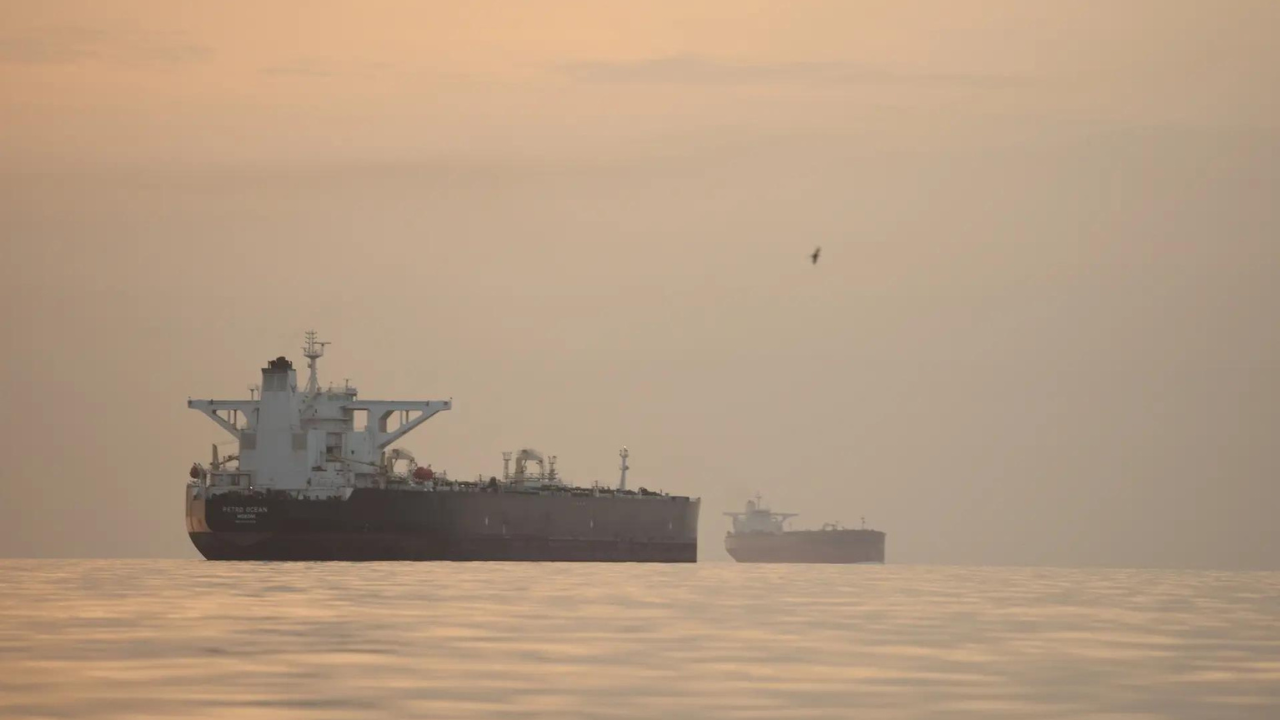
The Strait of Hormuz is not currently closed, but the operational definition of "operational" is undergoing a violent recalibration. While physical passage remains possible for the approximately 20 million barrels of oil and liquefied natural gas (LNG) flowing through the chokepoint daily, the risk premium is no longer a static insurance calculation. It is a dynamic variable influenced by the breakdown of the informal 2023 de-escalation agreement between Washington and Tehran. The recent uptick in gunfire and vessel seizures represents a shift from strategic patience to "calibrated friction," where the goal is not to stop trade, but to tax the geopolitical and economic stability of the West.
The Mechanics of Maritime Chokepoint Friction
To understand if the Strait is functional, one must define the threshold of operational failure. It is rarely a total physical blockade—an act that would trigger a conventional military response. Instead, operational failure occurs when the Cost of Transit ($C_t$) exceeds the Economic Utility of the Cargo ($U_c$).
$$C_t = I_p + O_c + R_p$$
In this function:
- $I_p$ represents Insurance Premiums (specifically War Risk Surcharges).
- $O_c$ represents Operational Costs (security details, rerouting, or delays).
- $R_p$ represents the Risk of Total Asset Loss.
When Iranian forces engage in small-arms fire or "shadowing" maneuvers, they are artificially inflating $I_p$ and $O_c$ without crossing the threshold of total war. This creates a state of Persistent Grey Zone Instability. The Strait remains open, but its efficiency is degraded by a cumulative "friction tax."
The Three Pillars of the De-escalation Collapse
The stability observed in late 2023 was built on an unwritten understanding: Iran would curb its regional proxies and enrichment levels in exchange for softened enforcement of US oil sanctions. This structure has disintegrated due to three specific systemic failures.
1. The Proxy Decoupling Paradox
The assumption that Tehran exerts "dial-turn" control over its regional partners has proven flawed. While the IRGC (Islamic Revolutionary Guard Corps) provides the kinetic means—drones, missiles, and intelligence—the local objectives of groups like the Houthis or various militias often diverge from Tehran’s immediate diplomatic needs. This creates a feedback loop where localized escalations force a centralized response, leading to the seizures we see in the Gulf of Oman and the Strait of Hormuz.
2. Enforcement Asymmetry
The US has attempted to maintain a "containment without commitment" posture. By avoiding a massive naval buildup while simultaneously attempting to seize Iranian oil tankers (such as the Suez Rajan incident), the US creates a vacuum. Iran views vessel seizures not as legal enforcement, but as "maritime tit-for-tat." This results in a cycle where every judicial action in a Western court results in a kinetic reaction in the Strait.
3. The Surveillance and Drone Saturation Gap
The proliferation of cheap, high-endurance Unmanned Aerial Vehicles (UAVs) and Unmanned Surface Vessels (USVs) has fundamentally altered the tactical landscape. The US Fifth Fleet’s "Task Force 59" attempts to counter this with its own autonomous network, but the sheer volume of low-cost Iranian ISR (Intelligence, Surveillance, and Reconnaissance) assets means that no vessel enters the Strait without being categorized, tracked, and potentially targeted. This constant "digital shadowing" creates a psychological strain on commercial crews that traditional naval escorts struggle to mitigate.
Quantifying the Seizure Logic
Vessel seizures are rarely random. They follow a specific hierarchy of selection designed to maximize leverage while minimizing the risk of a full-scale naval engagement.
- Flag State Vulnerability: Vessels registered under flags of convenience (Marshall Islands, Panama) are targeted because they lack a sovereign navy capable of immediate retaliation.
- Cargo Relevance: Seizures often target tankers carrying crude destined for US allies or vessels previously involved in "sanction-busting" for Western entities.
- Geographic Advantage: The narrowest point of the Strait—the 21-mile-wide passage between Oman and Iran—forces deep-draft tankers into Iranian-monitored waters.
This is not a disruption of global trade in the aggregate; it is a surgical application of pressure on specific supply chain nodes to extract diplomatic concessions.
The Breakdown of Technical Deterrence
The presence of the U.S. Navy’s Advanced Capability (AEGIS) and Carrier Strike Groups is designed to deter state-on-state conflict. However, these systems are ill-suited for the "swarming" tactics and small-arms harassment used by the IRGC Navy (IRGCN).
A billion-dollar destroyer is an inefficient tool for stopping a fast-attack craft armed with an RPG and a GoPro. The IRGCN utilizes the Information Environment as a weapon; footage of a "David vs. Goliath" encounter in the Strait serves as domestic propaganda and a signal of Western impotence, regardless of the actual tactical outcome. This creates a "deterrence deficit" where the superior force is constrained by the rules of engagement and the fear of escalating a minor skirmish into a regional conflagration.
The Energy Market Buffer and Its Limitations
Current global oil markets have remained surprisingly resilient to these tensions, primarily due to two factors that act as a shock absorber.
- OPEC+ Spare Capacity: The existence of significant spare production capacity outside the immediate Persian Gulf (though much of it still relies on Hormuz) provides a psychological ceiling on price spikes.
- The Eastbound Pivot: A significant portion of Hormuz-bound oil is headed for China and India. Since Iran maintains strategic energy partnerships with these nations, it is disincentivized from a total blockade that would alienate its only major economic lifelines.
However, this buffer is fragile. A single "black swan" event—such as a fatal exchange of fire between a US Navy vessel and an Iranian speedboat—would bypass these economic fundamentals and trigger a parabolic move in Brent Crude prices based on the fear of a closed-loop conflict.
The Operational Response Framework for Commercial Shipping
Shipping conglomerates are moving away from reliance on state-led naval protection toward a self-contained risk management model. This transition is characterized by:
- Electronic Warfare (EW) Hardening: Vessels are increasingly employing non-kinetic countermeasures to jam drone frequencies or spoof AIS (Automatic Identification System) signals to hide their true location from shore-based Iranian radar.
- Private Maritime Security Teams (PMST): While effective against piracy, PMSTs are legally and tactically restricted when facing state actors. Their role is shifting from "defense" to "verification"—ensuring that any boarding attempt is documented in real-time to trigger international diplomatic pressure.
- Alternative Logistics Corridors: There is a renewed, albeit slow, investment in the East-West Pipeline in Saudi Arabia and the Abu Dhabi Crude Oil Pipeline (ADCOP), which bypasses Hormuz to reach the Red Sea and the Gulf of Oman, respectively. The limitation here is throughput; these pipes currently handle less than 40% of the total volume typically transiting the Strait.
Strategic Trajectory
The "ceasefire" is no longer a functional reality; it has been replaced by a state of Dynamic Attrition. The US and its allies are trapped in a reactive cycle, responding to Iranian kinetic actions with financial sanctions that have already reached a point of diminishing returns.
The next phase of this conflict will likely involve the integration of AI-driven swarm technology by Iran to further saturate the Strait, making traditional "box-pattern" naval patrols obsolete. For the Strait to remain operational in a meaningful sense, the West must shift from a policy of "reactive escort" to one of "proactive denial," which involves neutralizing the ISR nodes that allow Iran to pick and choose its targets with such high precision.
Failure to re-establish a credible kinetic deterrent will result in the "Hormuz Premium" becoming a permanent fixture of the global economy, effectively allowing Iran to tax every barrel of oil consumed by the industrialized world. The Strait is open, but the price of entry is being rewritten by the actor on the shore, not the ships in the channel.