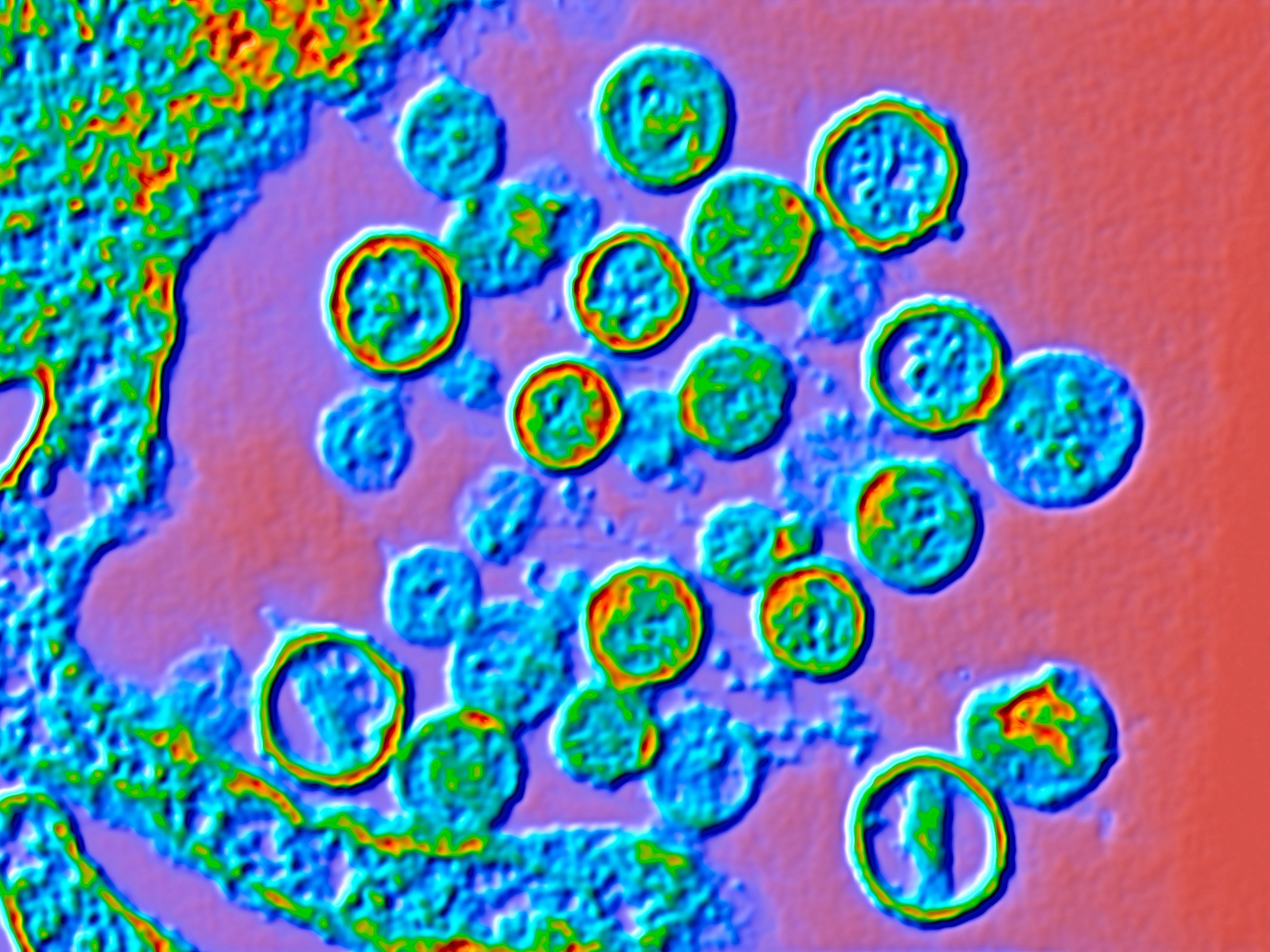
The steel hull of a cruise ship is a marvel of engineering, a floating city designed to insulate its inhabitants from the harsh realities of the open sea. Inside, the air is climate-controlled, the buffet is infinite, and the music never quite stops. But a ship is also a closed loop. It is a biological petri dish where the breath of three thousand people mingles in the ventilation ducts, and where every hand touches the same polished brass railings.
When a luxury liner docked recently, it carried more than just sun-drenched tourists and duty-free gin. It carried a ghost.
Hantavirus doesn't arrive with a cough or a feverish announcement. It waits. It is a pathogen born of the shadows, typically found in the dusty corners of rural barns or the floorboards of long-abandoned cabins. We call it a "rat disease," a crude label for a complex family of viruses that have spent millennia perfecting the art of survival inside the lungs of rodents. On this particular voyage, the virus found a way into the most unlikely of places: the high-speed, high-luxury world of international transit.
By the time the last passenger walked down the gangway, the seeds of an outbreak were already sown across thirteen different borders.
The Breath of the Hidden Guest
To understand how a virus moves from a mouse in a cargo hold to a grandmother in Berlin, you have to understand the way we breathe. Hantavirus is an invisible mist. It isn't usually passed person-to-person like the flu; instead, it is aerosolized. When rodent droppings or urine are disturbed, the viral particles take flight. They hang in the air, weightless and patient.
Imagine a traveler—let’s call him Elias. Elias is sixty-four, a retired architect who spent his life savings on a Mediterranean suite. He is meticulous. He washes his hands. He avoids the crowded elevators. But one evening, perhaps while walking through a service corridor or standing near a specific ventilation intake where a singular, infected rodent had made a nest, Elias took a deep breath.
The virus didn't strike immediately. That is the cruelty of the incubation period. Elias flew home to Sweden. Other passengers boarded trains to Germany, coaches to France, and short-haul flights to the United Kingdom. Within days, the passenger manifest of a single ship became a heat map for a potential pan-European crisis. The list of affected countries began to grow like a stain on a white tablecloth: Austria, Croatia, France, Germany, Greece, Hungary, Italy, Luxembourg, Montenegro, Serbia, Slovenia, Sweden, and the UK.
Thirteen nations. One source. Thousands of lives suddenly tethered to a microscopic sequence of RNA.
The Body Under Siege
The early symptoms of Hantavirus are a masterclass in deception. It starts with a heavy fatigue that feels like the natural byproduct of a long vacation. Then comes the muscle ache, particularly in the thighs and lower back. You tell yourself it was the walking tours in Dubrovnik or the stiff beds in the cabin.
But then the lungs begin to betray you.
In its most aggressive form, Hantavirus Pulmonary Syndrome (HPS) causes the capillaries in the lungs to leak. It isn't a blockage or a cough; it is an internal flood. The body’s own fluids begin to fill the air sacs. Patients describe it as the sensation of drowning while lying in a dry hospital bed. It is terrifying because it is so sudden. One moment you are sipping tea in a London suburb; the next, you are gasping for oxygen that your body can no longer process.
There is no "cure" in the traditional sense. No magic pill or specific antiviral that shuts the virus down instantly. The medical response is a desperate holding action: intubation, oxygen, and the hope that the patient’s immune system can win the war before the lungs give out. This is the invisible stake of the cruise ship outbreak. It isn't just about a "list of countries." It is about the specific, agonizing reality of a ventilator hum in a darkened room.
The Geography of Risk
We often think of disease as a thing that happens "over there." We associate Hantavirus with the American Southwest or the deep forests of Asia. We categorize it as a disease of the poor or the rural. This outbreak shattered that illusion. It proved that the corridors of a billion-dollar vessel are just as vulnerable as a grain silo in Montana.
The virus didn't care about the price of the ticket. It followed the infrastructure.
Consider the logistics of the modern world. We have built a planet where a pathogen can travel from a port in the Adriatic to a suburb in the UK in less time than it takes for a bruise to form. The "full list" of thirteen countries is a testament to our connectivity. We are more linked than we have ever been, which means we are more exposed than we have ever been.
The public health challenge here is immense. When a disease spreads across thirteen borders simultaneously, the bureaucracy of safety becomes a nightmare. Data must be shared. Samples must be flown across continents. Families must be tracked down. In some of these countries, Hantavirus is a known entity with established protocols. In others, it is an exotic rarity that local doctors might misdiagnose as a common pneumonia until it is too late.
The Rodent in the Machine
Why now? Why a cruise ship?
The answer lies in the friction between the wild world and our constructed one. Rodents are the ultimate opportunists. As we build larger, more complex machines—ships, planes, automated warehouses—we create new habitats. A ship is a labyrinth of wiring, insulation, and storage. It provides warmth, protection from predators, and a steady supply of food.
We try to keep them out. We use traps, poisons, and sonic deterrents. But biology is persistent. A single pregnant female sneaking aboard in a crate of oranges is all it takes to colonize a vessel. Once they are in the walls, they are part of the ship’s ecosystem. They move through the "unseen" parts of the vessel, the places passengers never go, but where the air they breathe is conditioned and pumped.
The horror of this outbreak isn't just the virus itself; it’s the realization that our most sophisticated environments are still subject to the ancient rules of the natural world. We are never as clean as we think we are. We are never as isolated as we hope.
The Silence of the Aftermath
In the wake of the news, the cruise industry scrambled. Deep cleans were commissioned. Port authorities increased inspections. But for the people in those thirteen countries, the damage was already done.
The narrative of this outbreak shouldn't be told through a map with red dots. It should be told through the quiet anxiety of a woman in Milan watching her husband sleep, wondering if his slight cough is just a cold or the beginning of the flood. It should be told through the doctor in a Belgrade clinic who is reading a medical journal at 3:00 AM, trying to remember the specific markers of a disease he only studied once in school.
We live in an age of miracles, where we can move across the globe with the ease of a bird. But we must remember that we never travel alone. We take our microbes with us, and we encounter the microbes of the places we visit. The "rat disease" isn't a relic of the past; it is a permanent neighbor.
As the ships continue to sail and the planes continue to fly, the lesson remains the same. The boundary between the pristine and the feral is thinner than a sheet of paper. We are all breathing the same air, shared across borders, across decks, and across the secret paths of the stowaways that live among us.
The next time you stand on a balcony, looking out at the vast, blue expanse of the ocean, listen to the hum of the ship. It is the sound of a thousand systems working in harmony to keep the world at bay. But somewhere, behind a steel panel or beneath a floorboard, something else is breathing, too.