The standard travel advisory is a lie of omission. When regional tensions flare in the Middle East, the legacy media treats flight disruptions like an act of God—unpredictable, tragic, and total. They show you maps with red circles over Tehran or Tel Aviv and tell you the "sky is falling."
It isn't. The sky is actually crowded, and your travel agent is just bad at math.
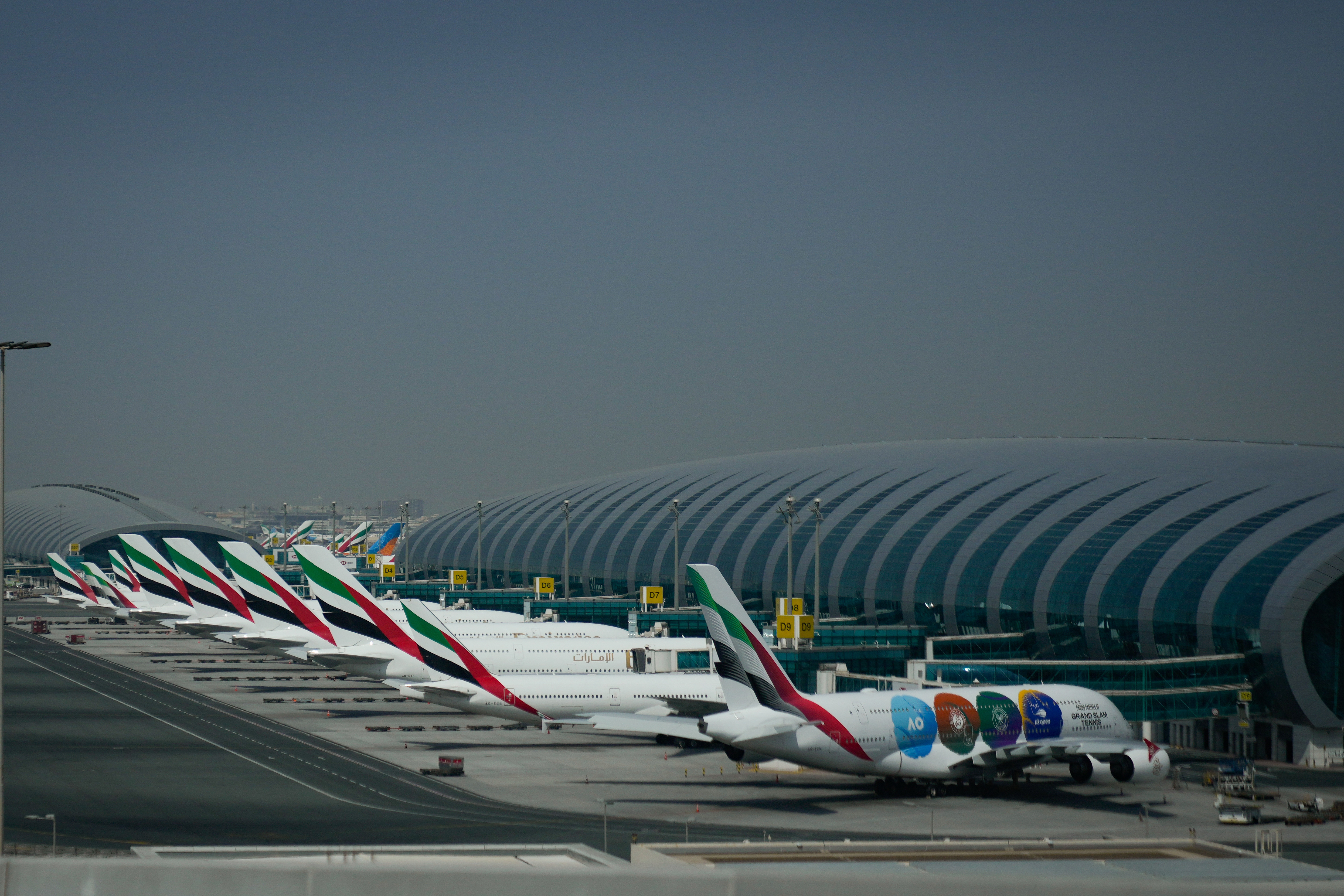
Mainstream reporting focuses on the "chaos" of rerouting. They frame it as a safety crisis. In reality, what you are witnessing is a high-stakes game of fuel hedging and bureaucratic theater. If you’re sitting in a terminal in Frankfurt fuming because your flight to Dubai was scrapped, it likely wasn’t because a missile was aimed at your Airbus A380. It was because the carrier’s profit margin on that specific tail number evaporated the moment they had to add 40 minutes of flight time to skirt a specific FIR (Flight Information Region).
The industry doesn't want to admit that passenger "safety" is often the most convenient excuse to cancel a low-yield route that suddenly became an accounting nightmare.
The Myth of the "Closed" Sky
Most travelers assume that when a conflict starts, the airspace shuts down like a locked door. That is almost never how it works. Airspace is a commodity. Even during the height of regional escalations, skies remain open for those willing to pay the insurance premiums or those with the political leverage to transit.
Take the "Iran War" narrative that dominates headlines. The reality? Airspace is rarely "closed"; it is "avoided" based on risk assessments that vary wildly from one boardroom to another. While Qantas might decide to add a fuel stop in Perth to avoid certain zones, Qatar Airways or Emirates might fly a path only a few hundred miles away.
Why the discrepancy? It’s not that one airline cares more about your life than the other. It’s about Risk Tolerance vs. Asset Utilization.
Legacy Western carriers operate on razor-thin margins with aging fleets. For them, a two-hour detour doesn't just cost fuel; it breaks the crew’s legal duty-time limits. If a pilot hits their maximum hours because of a detour, the airline has to put the whole crew in a hotel and find a replacement. That costs more than the ticket revenue of 300 people in Economy. So, they cancel the flight and blame "geopolitical instability." It sounds more prestigious than "we can’t afford the overtime."
The Logic of the Detour
To understand why your flight was upended, you have to look at the Breguet Range Equation. While we won't get into the weeds of aerodynamics, the fundamental principle is that as you add weight (fuel) to fly a longer distance (the detour), you reach a point of diminishing returns.
$$R = \frac{V}{c} \cdot \frac{L}{D} \cdot \ln\left(\frac{W_i}{W_f}\right)$$
In this equation, $R$ is the range. If the required $R$ increases because you have to fly around a conflict zone, the initial weight $W_i$ must increase significantly. But planes have a Maximum Takeoff Weight (MTOW). To carry more fuel, you have to shed "payload."
Payload means you. When an airline says they are "suspending service due to regional tension," what they are often saying is: "To fly the long way around, we’d have to kick off 50 passengers and 4 tons of cargo to stay under weight limits. At that point, the flight loses $100,000. Let's just call it a security risk and claim insurance."
The Hub-and-Spoke Fallacy
The "Big Three" Gulf carriers—Emirates, Etihad, and Qatar—have built an entire global economy on the idea that the Middle East is the world’s crossroads. The "lazy consensus" says that a war in the region destroys this model.
Actually, it reinforces their monopoly.
When conflict strikes, Western carriers (Lufthansa, Air France, United) are the first to tuck tail and run. They have other hubs. They can shift capacity to the Atlantic. But the Gulf carriers are the hub. They cannot leave. Consequently, they have the most sophisticated tactical routing departments on the planet.
I have watched operations centers in Doha and Dubai manage "dynamic rerouting" in real-time. They aren't looking at CNN; they are looking at live heat maps of signal interference and NOTAMs (Notices to Air Missions). While a US-based carrier sees a "No-Go Zone," a local carrier sees a "Tactical Corridor."
If you want to actually get to your destination during a crisis, you don't book the airline that "prioritizes safety" by staying home. You book the airline that lives in the neighborhood. They are the only ones with the literal and figurative skin in the game to find a way through.
The Insurance Racket
Here is the dirty secret of the aviation world: War Risk Insurance.
Every time a headline mentions a drone or a stray missile, insurance syndicates at Lloyd's of London hike the "per-flight" premium for transiting the region. For some carriers, this premium can jump from a few hundred dollars to $10,000 or more per departure overnight.
When a flight is canceled, it’s often because the airline’s finance department decided the insurance surcharge exceeded the expected profit from the flight’s "ancillary revenue" (those $50 bags and $15 gin and tonics).
We are taught to view these disruptions through the lens of geopolitics. We should be viewing them through the lens of actuary tables. The "tension" in the Middle East is a volatility index for insurers. If you want to know if your flight will actually take off, stop checking the news. Check the Brent Crude price and the surcharges on war-risk premiums. If they spike, your flight is dead, regardless of whether a single shot is fired.
Stop Asking "Is It Safe?"
The most common question travelers ask during regional flare-ups is fundamentally flawed. "Is it safe to fly over the Middle East?"
The answer is: It’s irrelevant.
Commercial aviation is protected by the 1944 Chicago Convention, but more practically, by the fact that shooting down a civilian airliner is a geopolitical suicide note. Even the most "rogue" actors in modern conflicts recognize that the fallout from hitting a commercial jet far outweighs any tactical gain.
The real question you should ask is: "Is my carrier's balance sheet strong enough to handle a 15% increase in operational costs for this route?"
If you are flying a budget carrier or a struggling national airline, you are at high risk of being stranded. Not because of a missile, but because of a spreadsheet. These airlines use "safety" as a PR-friendly shield to hide their inability to absorb the cost of a detour.
The Strategy of the Contrarian Traveler
If you must travel through a "war-torn" region, ignore the frantic push notifications from travel apps. Do the following instead:
- Follow the Tankers: Use flight tracking software to see where specialized fuel tankers are congregating. If airlines are staging extra fuel in places like Cyprus or Oman, they are planning to fly, not cancel.
- Ignore "Carrier Diversification": In a crisis, stick to the regional giants. They own the airspace rights and the political goodwill. A United Airlines pilot is looking for any reason to turn that plane around and go home to Chicago. A Qatar Airways pilot is just trying to get home to the hub.
- The "Dead Zone" Buffer: If you see a route being diverted by more than 25% of its original flight time, assume the airline will go bankrupt on that route within 14 days and cancel it. Book the leg before the "pivot" happens.
The "chaos" in Middle Eastern travel isn't a byproduct of war. It is a byproduct of an industry that has optimized itself so tightly for efficiency that it has zero resilience for reality. The moment a plane has to fly a curve instead of a straight line, the economic house of cards collapses.
Stop looking at the missiles. Start looking at the fuel burn.
The next time you see a headline about "Sky Closures," remember: the air is infinite. It’s the airline’s credit line that’s hitting a ceiling.
Book the carrier that treats the conflict as a Tuesday morning logistics hurdle, not the one that treats it as a PR opportunity to "pause" unprofitable service.
Would you like me to analyze the specific route profitability and diversion costs for a particular airline currently impacted by Middle East airspace restrictions?