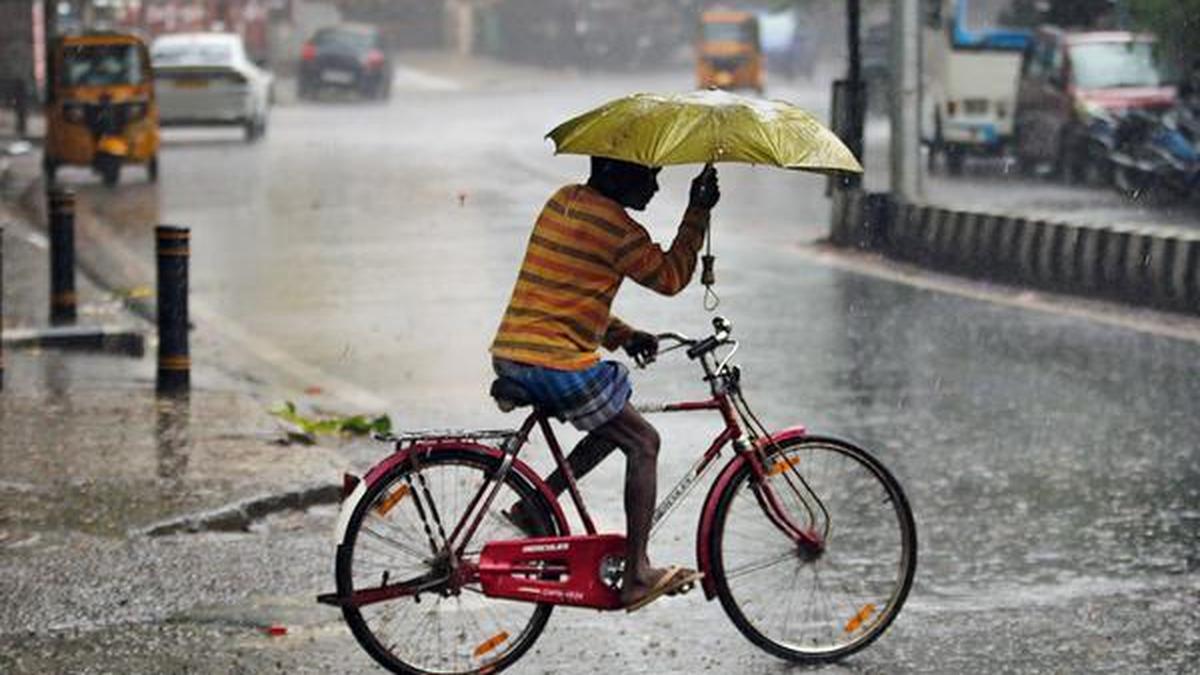
Two dead. Thousands displaced. Rivers overflowing their banks, pouring into mud-walled homes and submerging roads.
Every time a heavy downpour strikes Sri Lanka, the mainstream media rolls out the exact same script. They blame the sky. They blame the carbon footprint of industrialized nations. They treat the tragedy like an unpredictable act of God, a sudden twist of meteorological fate that no one could have seen coming.
It is a comfortable, lazy consensus. It is also entirely wrong.
Rain does not kill people. Outdated drainage networks, illegal wetland reclamation, and bureaucratic cowardice kill people. To look at the recent devastation across Sri Lanka and point fingers exclusively at changing weather patterns is to ignore the real culprit. The country is not suffering from a climate crisis; it is suffering from an acute crisis of infrastructure illiteracy.
I have spent years analyzing urban development and disaster response frameworks across South Asia. I have watched governments burn through millions of dollars in foreign aid on emergency relief while refusing to spend a fraction of that amount on basic civil engineering maintenance. The narrative that we are helpless victims of the elements is a smokescreen designed to shield incompetent planners from accountability.
The Myth of the Unprecedented Downpour
The core argument of every standard news report is that the rainfall volume was simply too massive for any system to handle. This is a logical fallacy.
Meteorological data shows that these weather events, while severe, fall within predictable cyclical bands. The Western and Sabaragamuwa provinces have faced monsoon variations for centuries. What has actually changed is not the volume of water falling from the clouds, but where that water is forced to go once it hits the ground.
Consider how a natural ecosystem handles heavy precipitation:
[Heavy Rainfall]
       │
       ▼
[Natural Wetlands] ───(Absorbs & Buffers)───► [Slow, Controlled Runoff]
Now, look at the reality engineered by decades of unregulated urban expansion:
[Heavy Rainfall]
       │
       ▼
[Concrete & Asphalt] ──(Zero Absorption)───► [Immediate Flash Flooding]
We have systematically paved over the island’s natural drainage systems. Wetlands like Muthurajawela and the marshlands surrounding Colombo were never empty, useless spaces waiting to be filled with luxury real estate or concrete commercial zones. They were the nation's primary defense mechanisms. A single acre of wetland can store up to 1.5 million gallons of floodwater. When you bulldoze that wetland, you do not erase the water. You merely redirect it into the living rooms of the working class.
Why Rebuilding Is Part of the Problem
The standard humanitarian response to these floods is to immediately announce reconstruction funds. Politicians love cutting ribbons on newly rebuilt housing schemes in the exact same low-lying areas that were submerged three months prior.
This is insanity disguised as compassion.
Rebuilding permanent structures in high-risk floodplains without altering the underlying topography is a guaranteed way to ensure future casualties. It is a cynical cycle: a disaster occurs, relief funds are distributed, temporary fixes are applied, the media moves on, and everyone waits for the next cloudburst to repeat the process.
The harsh, contrarian truth is that certain areas should never be rebuilt. We need a hard, uncompromising policy of managed retreat. If an informal settlement or a commercial district sits directly in a natural choke point of the Kelani River basin, it must be permanently cleared, and the land returned to nature.
Of course, this approach has massive downsides. It requires mass relocation, heavy political friction, and immense capital expenditure upfront. It means telling voters they cannot live where their families have lived for generations. But the alternative is continuing to treat human lives as collateral damage for political convenience.
The Disaster Management Act Is a Paper Tiger
Following major historical weather disasters, Sri Lanka enacted sophisticated legal frameworks, including the Disaster Management Act. On paper, the country possesses brilliant climate strategies and early warning protocols.
In practice, these systems are paralyzed by fragmented governance. Responsibilities are split across a dizzying array of overlapping agencies:
- The Department of Meteorology tracks the clouds.
- The Irrigation Department monitors the rivers.
- The Disaster Management Centre coordinates the rescue.
- Local municipal councils are supposed to clean the drains.
When a crisis hits, these entities function like isolated islands. Local authorities often hesitate to issue mandatory evacuation orders because they are waiting for central clearance from Colombo. In a fast-moving flash flood or landslide scenario, waiting twenty minutes for a bureaucratic green light is the difference between life and death.
Furthermore, our early warning mechanisms suffer from severe alert fatigue. Because the system lacks localized precision, citizens are bombarded with broad, generic weather warnings week after week. When every minor shower triggers an automated emergency text, people stop listening. When a genuinely catastrophic deluge arrives, the public response is a shrug—until the water is at their doorsteps.
Stop Funding Relief, Start Enforcing Engineering
If we want to stop writing obituaries for flood victims every time the monsoon intensifies, the entire funding paradigm must be inverted.
Currently, international donors and state coffers pour liquidity into post-disaster management. This is reactive, inefficient, and fundamentally broken. We must stop romanticizing the resilience of communities that survive these floods. Resilience is a poor substitute for structural safety.
The solutions are not complex, nor do they require revolutionary technology. They require basic administrative discipline:
- Zero-Tolerance Zoning: Treat the unauthorized filling of a wetland as a severe criminal offense, not a minor regulatory violation that can be settled with a bribe.
- Outdated Baseline Updates: Stop designing stormwater drains using rainfall data from thirty years ago. The infrastructure must be engineered for future peak intensities, not historical averages.
- Decentralized Command: Empower local district officers to execute evacuations and deploy regional resources instantly without waiting for a ministerial sign-off.
The next time a headline declares that heavy rains have "battered" Sri Lanka, look past the imagery of flooded streets and military rescue boats. Do not blame the monsoon. Recognize the scene for what it truly is: a monument to decades of structural neglect, political complacency, and an absolute refusal to respect basic hydrology. The water is just following the laws of physics. It is our leadership that refuses to learn.