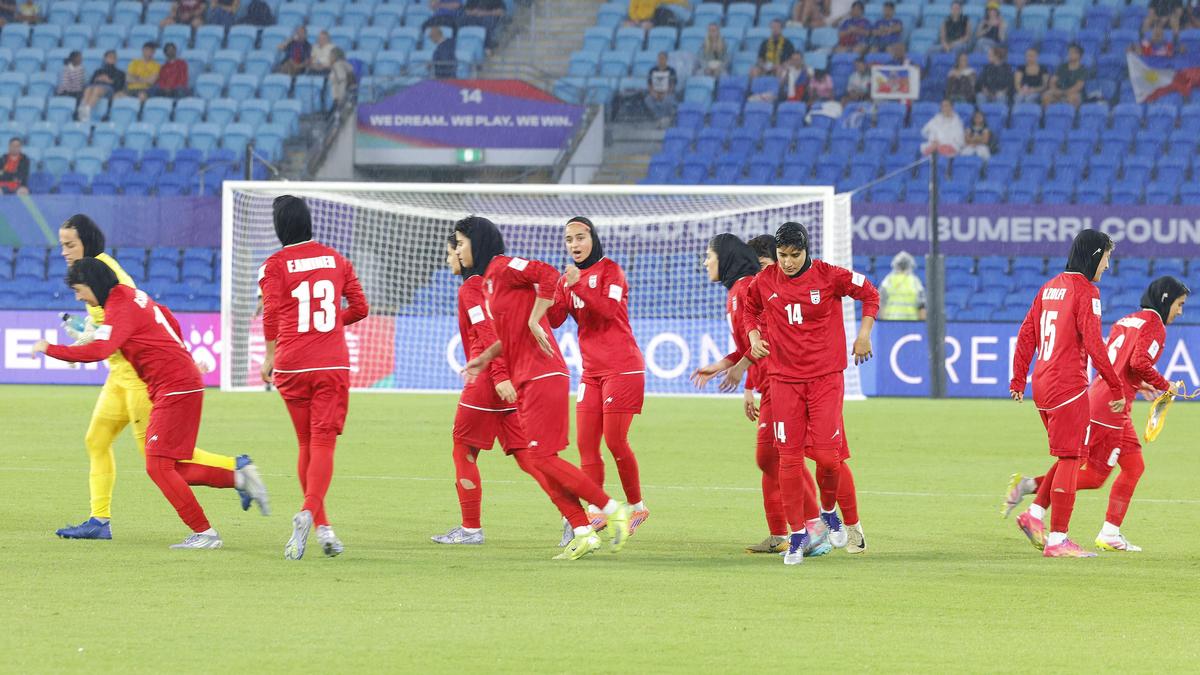
Australia just handed out visas to five Iranian women’s soccer players. The headlines are dripping with sentimentality. They paint a picture of a humanitarian "win" facilitated by a quirky alignment of sports diplomacy and a plea from a former U.S. President. The mainstream media is busy patting itself on the back for celebrating this "triumph of the human spirit."
They are wrong.
By treating the visa system like a VIP lounge for athletes with high-profile backers, we aren't "saving" anyone. We are dismantling the integrity of the migration process and turning international sport into a primary vehicle for political laundering. This isn't about human rights; it’s about optics.
The Myth of the "Special Case"
The lazy consensus suggests that because these women are athletes, their plight is somehow more urgent or valid than the thousands of other Iranian women currently suffocating under a restrictive regime. Why these five? Because they can kick a ball? Because Donald Trump—a man whose administration enacted a "travel ban" on seven Muslim-majority countries including Iran—decided to play the unlikely hero?
When you prioritize athletes based on celebrity appeal or political endorsements, you create a tiered system of human value.
- The High-Value Refugee: An athlete with a Twitter following and a billionaire or former president in their corner.
- The Invisible Refugee: The teacher, the nurse, or the student in Tehran who has no "platform" and therefore no path to safety.
If Australia’s migration policy is now dictated by who can generate the most positive PR for the Department of Home Affairs, then the system is broken. We have replaced objective criteria with "influence."
Trump’s Pivot and the Selective Outrage
The involvement of Donald Trump in this saga is the ultimate irony. The same political machine that championed restricted borders and national sovereignty is now advocating for the bypass of standard visa protocols.
It’s a classic move in the "Sports-Washing" playbook, but with a Western twist. We usually accuse Saudi Arabia or Qatar of using sports to distract from human rights records. In this instance, Australia and the U.S. are using these five women to signal a moral superiority that their own domestic policies often contradict.
The "appeal" isn't a gesture of goodwill. It’s a tool. By intervening, Trump scores points with a segment of the electorate that likes "winners" and "fighters," while the Australian government gets to look compassionate on the world stage without having to actually reform its notoriously rigid and often criticized asylum seeker processing centers.
The Erosion of Competitive Integrity
Let’s talk about the sport itself.
There is a growing trend of "national team shopping." We see it in the Olympics, and we see it in FIFA rankings. When countries start granting visas and citizenship based on an athlete's potential to bolster a national squad or provide a "feel-good" narrative, the essence of international competition dies.
If these women are being brought to Australia to play, are they being judged on their merit on the pitch, or their utility as symbols? If a better player from a stable country applied for the same visa, they’d be rejected. We are incentivizing the politicization of rosters.
I have seen sports organizations blow millions of dollars on "diversity and inclusion" initiatives that are nothing more than skin-deep marketing campaigns. This visa move is the policy equivalent of a black-and-white Instagram filter. It looks meaningful, but it changes nothing for the millions left behind.
The Logical Fallacy of "Better than Nothing"
The most common defense for this selective altruism is the "at least we saved five" argument. This is the hallmark of small-minded policy making.
Imagine a scenario where a sinking ship has 1,000 passengers. Instead of deploying lifeboats for everyone, the captain picks five people who are particularly good at singing and gives them a private helicopter ride because a famous actor called and asked for a favor.
Does that make the captain a hero? No. It makes him a narcissist.
By focusing on these "special" cases, we alleviate the collective guilt of the West. We tell ourselves we are doing our part. This "spotlight humanitarianism" actually prevents broader, systemic change because it provides a pressure valve for public outrage. As long as we have a few success stories to tweet about, we don't have to look at the thousands of visa applications gathering dust in Canberra.
The Hidden Cost to Iranian Activism
There is a darker side to this "rescue" that the sports desks won't touch. When the West cherry-picks the most visible talents from a resistance movement and relocates them, it effectively drains the "brain trust" and the "brawn" of the domestic struggle.
Every time a high-profile athlete or artist is "saved" by a Western visa, the movement back home loses a focal point. It reinforces the idea that the only way to find freedom is to leave.
- Brain Drain: The removal of influential figures who could lead from within.
- Validation of the Oppressor: The Iranian regime can easily point to these cases as "defections" orchestrated by Western powers, using them as propaganda to further crack down on those who remain.
We aren't supporting the Iranian women's movement; we are strip-mining it for its most marketable assets.
Stop Asking if They Deserve It
People keep asking: "Don't they deserve a better life?"
Of course they do. But that is the wrong question. The right question is: "Does the Australian government have the right to use its visa system as a PR agency for former foreign leaders?"
If you want to support Iranian women, don't cheer for a five-person visa exception. Demand a transparent, merit-based refugee quota that doesn't require a phone call from Mar-a-Lago to activate.
The current path leads to a world where your right to safety is determined by your "virality." That isn't progress. That is a dystopian talent show.
Stop falling for the highlight reel and start looking at the scoreboard. The system isn't working for the people who need it; it's working for the people who want to be seen "helping."
Don't celebrate the visa. Question the motive.