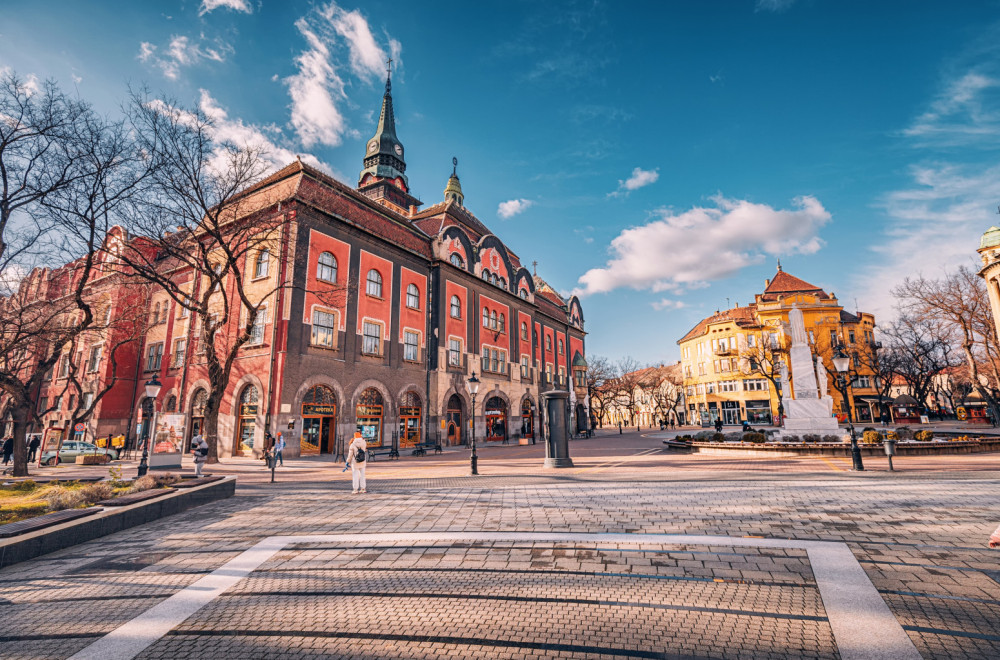
The air in Tashkent smells of dust and ripening melons, a scent that hasn't changed in a thousand years. But look closer at the horizon, and the shimmer isn't a desert mirage. It is the glint of glass-and-steel towers rising from the steppe, a reflection of a city five thousand kilometers away. In Hong Kong, the air is thick with salt and the hum of a million air conditioners, yet the people in the mahogany boardrooms of Central are looking West. Not to Europe. Not to America. They are looking at the heart of Central Asia.
Something profound is shifting in the geography of money.
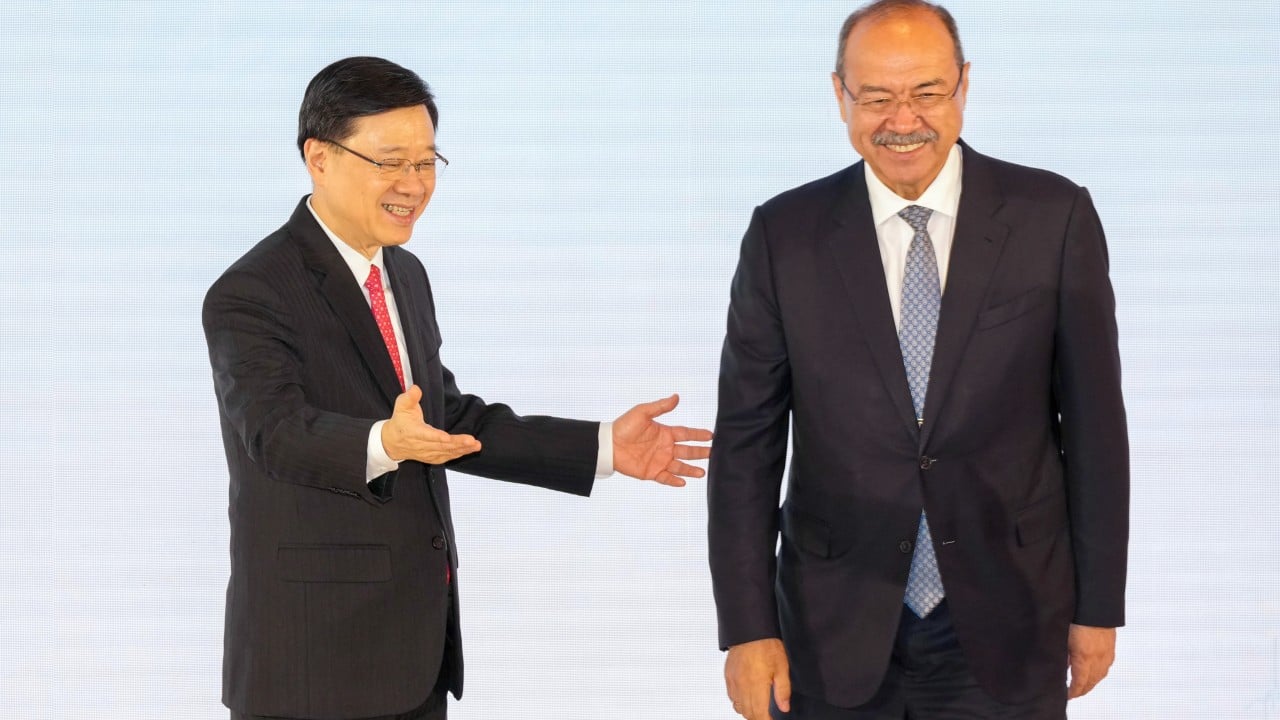
While the world’s attention remains fixed on the noisy squabbles of traditional superpowers, a quiet, tectonic alignment just took place. John Lee, Hong Kong’s Chief Executive, recently stood alongside leaders in Uzbekistan to sign a series of agreements that do more than just lower tariffs. They are stitching together two ends of a continent. This isn't about boxes of goods moving on a ship. It is about a fundamental rewrite of how wealth flows through the veins of the modern world.
The Merchant’s New Map
Consider a hypothetical woman named Adolat. She owns a mid-sized logistics firm in the Fergana Valley. For decades, her horizon was limited by the rugged terrain of the Pamir Mountains and the bureaucratic hurdles of old borders. To Adolat, Hong Kong was a glittering postcard, a place for tourists, not a partner for her fleet of trucks.
That changed this week.
When Hong Kong pledges "deeper ties" with Uzbekistan, it means Adolat’s business suddenly has a direct line to the world’s most sophisticated financial plumbing. The agreements signed between China and Uzbekistan, with Hong Kong acting as the golden gatekeeper, provide the legal and financial infrastructure for a landlocked nation to act like a maritime power.
The stakes are invisible but massive. Uzbekistan is a nation of 35 million people, the majority of whom are under thirty. They are hungry for digital infrastructure, green energy, and modern banking. Hong Kong, meanwhile, is a city looking to diversify its portfolio, seeking fresh soil where its expertise in capital markets can take root. It is a marriage of necessity and ambition.
The Mechanics of the Handshake
The dry reports call these "bilateral agreements." That phrase is a sterile mask for a high-stakes gamble. The core of the deal involves mutual cooperation in trade, investment, and—most crucially—the professional services that make a modern economy tick.
Uzbekistan sits on a goldmine of natural resources, from uranium to cotton. But resources alone make a country vulnerable to the whims of global commodity prices. To escape that trap, a nation needs more than mines; it needs a sophisticated legal framework, dispute resolution mechanisms, and a banking system that international investors actually trust.
This is where Hong Kong enters the story.
Hong Kong doesn't just offer money. It offers the "software" of global trade. By aligning their standards, Uzbekistan is effectively adopting a set of rules that the rest of the world recognizes. It is like two people who speak different languages finally finding a common dictionary. The friction of doing business begins to melt away. When the friction disappears, the speed of growth accelerates.
Imagine.
A tech startup in Tashkent can now look to the Hong Kong Stock Exchange as a viable path for an IPO. A Hong Kong venture capital firm can look at an Uzbek solar farm project and see a protected, structured investment rather than a wild west risk.
Why This Matters to You
You might think that the diplomatic maneuvering between a Central Asian republic and a Special Administrative Region of China has nothing to do with your life. You would be wrong.
The global economy has long been a story of West-to-East flow. We are now witnessing the birth of a South-to-South and East-to-West internal engine. As these "middle corridor" trade routes solidify, the cost of everything changes. The electronics in your pocket, the energy heating your home, and the stability of the global market are all tied to whether these emerging partnerships succeed.
If Uzbekistan becomes the logistical hub of Central Asia—bolstered by Hong Kong’s financial might—it creates a buffer against the volatility of traditional trade routes. It provides a third option. A bypass.
But there is a human cost to this speed. For the people of Uzbekistan, this influx of capital means the old ways of life are under pressure. The quiet tea houses are being replaced by co-working spaces. The pace of life is quickening to match the high-frequency trading of the Pearl River Delta. There is a palpable anxiety in the air: can a culture keep its soul while it invites the world to build its future?
The Invisible Infrastructure
The most important part of the agreement isn't the trade in physical goods. It is the "Memorandum of Understanding" regarding legal and dispute resolution services.
It sounds boring. It is actually revolutionary.
In the past, if a dispute arose between a foreign investor and a local company in a landlocked nation, the legal path was a nightmare of conflicting jurisdictions. By bridging with Hong Kong, Uzbekistan is tapping into a world-renowned center for international arbitration. It is a safety net. It tells the global billionaire class: "Your money is safe here, because we have agreed to play by the rules of the most established financial center in Asia."
Trust is the only currency that actually matters.
Without it, a contract is just paper. With it, a desert can become a data center.
The agreements signed this week are the bricks of a new bridge. They are the result of months of quiet negotiation, of glasses of green tea in Tashkent and espresso in Hong Kong. They represent a bet on a future where the center of gravity has moved.
The Long Game
We often talk about "China’s influence" as a monolith, but the reality is more nuanced. Using Hong Kong as the tip of the spear for these agreements allows for a specific kind of engagement. It’s a softer, more commercial approach than pure state-to-state diplomacy. It’s about building a network of cities that can function regardless of the political weather in the capitals.
The Silk Road was never just one road. It was a web.
Today, that web is being re-spun with fiber optic cables and banking protocols. The "deeper ties" promised by John Lee are the threads.
Think back to Adolat in the Fergana Valley. She isn't thinking about geopolitics tonight. She is thinking about the new contract she just signed with a distributor in Kowloon. She is thinking about the fact that her daughter is now studying Cantonese alongside English. She is thinking about the fact that, for the first time in her life, the world feels smaller.
And more accessible.
The distance between the skyscraper and the steppe hasn't changed in kilometers, but it has vanished in every other way that counts.
The melons in the market still smell the same. But the people selling them are checking the Hong Kong market rates on their phones before they set the price. The future didn't arrive with a bang; it arrived with a handshake and a signature on a piece of parchment, quietly turning a landlocked nation into the heart of a new global pulse.
The map has been redrawn. We are all just waiting for the ink to dry.