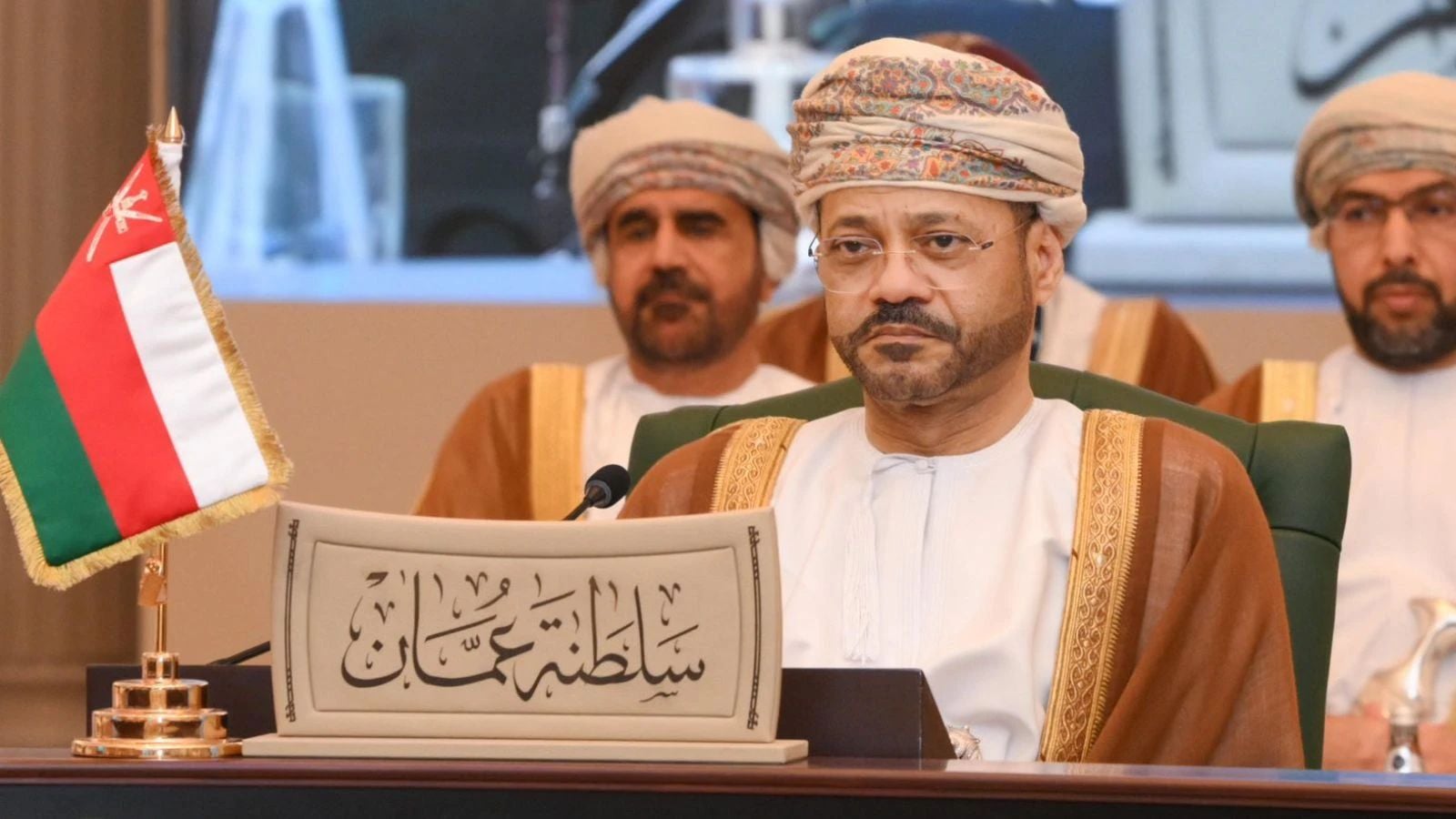
In the cool, marble-lined corridors of Muscat, the air carries a specific weight. It is the scent of frankincense and the heavy, electric stillness of a room where a single word can shift the trajectory of millions. Badr Albusaidi, the Foreign Minister of Oman, does not speak in the jagged, aggressive rhythms of modern cable news. He speaks in the language of the horizon—the place where the sea meets the sky and the sharp edges of the world seem to soften.
Oman has spent decades perfecting the art of the quiet room. While the rest of the world watches the glowing screens of escalating rhetoric between Tehran and Washington, the Omanis are watching the people. They are watching the merchant in the souq who cannot price his saffron because of currency fluctuations. They are watching the student in Isfahan who wonders if their degree will ever be recognized across a border. They are watching the sailor in the Strait of Hormuz, navigating a waterway that feels more like a tripwire than a trade route.
The recent call from Muscat for a return to the negotiating table isn't just a diplomatic formality. It is a plea for oxygen.
The Ghosts in the Room
To understand why a return to talks is the only logical path, we have to look past the flags. Imagine a family in a suburb of Tehran. Let's call them the Rahimis. They are not politicians. They are not ideologues. They are people who measure the quality of their lives by the price of medicine and the stability of their internet connection. When hostilities spike, the Rahimis don't just see headlines; they see their world shrinking.
Across the ocean, in a town like Columbus, Ohio, there is a young veteran. We can call him Mark. Mark doesn't care about the intricacies of the 2015 nuclear deal, but he carries the weight of a decade spent in a region that feels like a labyrinth with no exit. He represents the American weariness—the deep, quiet exhaustion of a superpower that has spent trillions of dollars and thousands of lives on a friction that never seems to generate anything but heat.
When Albusaidi speaks of "national interests," he is talking about the Rahimis and he is talking about Mark. He is arguing that the current state of "no war, no peace" is a tax on the soul of both nations.
The Illusion of the Status Quo
There is a dangerous myth that the current tension is sustainable. We tell ourselves that as long as there are no direct missiles flying, the system is working. But the status quo is not a flat line. It is a slow decay.
Consider the Strait of Hormuz. It is a narrow neck of water, barely twenty-one miles wide at its tightest point. Through this choke point flows a massive percentage of the world’s petroleum and liquefied natural gas. It is the jugular vein of the global economy. Every time a shadow falls over the relationship between Iran and the West, the insurance premiums on every tanker in that water spike. Those pennies add up. They become the extra dollar you pay for a gallon of milk or the reason a small business in Europe decides not to hire another employee.
Hostility has a gravity that pulls everything down. It discourages the kind of long-term investment that builds hospitals and schools. It turns borders into walls and neighbors into suspects. Oman, positioned at the edge of the Arabian Peninsula, sees this gravity more clearly than anyone. They see the lost potential of a region that should be a global hub of innovation, tethered instead to ancient grievances and modern misunderstandings.
The Mechanics of the Quiet Room
Diplomacy is often mocked as a series of expensive dinners and vague communiqués. But in the Omani model, diplomacy is more like plumbing. It is the unglamorous, essential work of making sure the pressure doesn't build up until the pipes burst.
When the Omani Foreign Minister calls for a return to talks, he is proposing a de-escalation of the ego. This is the hardest part for any nation. To sit at a table is to acknowledge that your opponent has a point of view. It is to admit that "maximum pressure" or "strategic patience" have reached their natural limits.
The "national interests" Albusaidi refers to are remarkably similar on both sides, though neither side likes to admit it.
- Economic Resilience: Both nations need a global market that isn't terrified of a sudden maritime flare-up.
- Regional Stability: Neither Washington nor Tehran benefits from a Middle East that is permanently on the verge of a nervous breakdown.
- Human Security: The ability of a parent to promise their child a future that isn't defined by the threat of sanctions or the shadow of conflict.
These are not "soft" concerns. They are the bedrock of any functioning state.
The High Cost of Silence
What happens if the call from Muscat goes unheeded? The alternative to talking isn't just staying still. It is a drift toward a confrontation that no one actually wants but everyone seems prepared to trigger.
We have seen this movie before. We have seen how small misunderstandings in the Persian Gulf can escalate into international crises in a matter of hours. We have seen how the absence of a direct line of communication forces leaders to guess at each other's intentions. And in the world of high-stakes geopolitics, guessing is a recipe for disaster.
The Omani perspective is rooted in a deep, historical pragmatism. They know that you don't have to like your neighbor to trade with them. You don't have to trust them to agree on where the fence sits. You simply have to recognize that the cost of fighting is higher than the cost of talking.
The Invisible Bridge
There is a bridge being built in the Middle East, but it isn't made of steel or concrete. It is made of these quiet invitations to the table. It is made of the realization that the "national interest" of a country is ultimately the same as the "human interest" of its people.
When we strip away the rhetoric of "great satans" and "regime change," we are left with the reality of two ancient cultures and one modern superpower trying to find a way to exist in the same century without burning the house down. Oman isn't just offering a venue; they are offering a mirror. They are asking both sides to look at what they are actually achieving through continued hostility.
The answer, quite clearly, is nothing. No one is safer. No one is richer. No one is more free.
The path back to the table is steep. It is cluttered with the debris of broken promises and decades of mistrust. It requires a level of political courage that is rare in any era. But as the sun sets over the Gulf of Oman, casting long, golden shadows over the water, the message from Muscat remains the only one that stands the test of time.
The most powerful thing a nation can do is not to pull a trigger, but to pull up a chair.
The room is ready. The incense is burning. The only thing missing is the will to walk through the door and realize that the person sitting on the other side is just as tired of the darkness as you are.
:format(webp)/nginx/o/2017/12/18/7419267t1hbf8f.jpg)