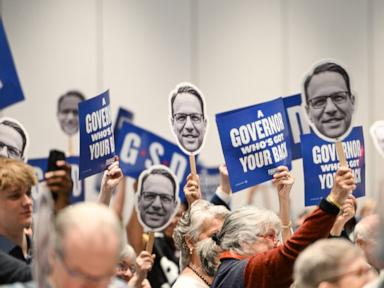
Josh Shapiro is not a typical modern Democrat. In an era where political survival usually requires retreating into the safety of a partisan base, Pennsylvania’s 48th governor has spent his first term doing something radical: ignoring the fringes.
By the time the 2026 midterm cycle began, the Shapiro formula had become a blueprint for national viability. He has maintained an approval rating hovering near 60% in a state that remains the ultimate American political knife-fight. He didn't achieve this by being a firebrand. He did it by treating state government like a mid-cap corporation that needed a turnaround specialist. The "why" behind his success isn't just about good polling; it’s about a deliberate, calculated shift toward bipartisan pragmatism that prioritizes retail politics and economic "wins" over ideological purity.
The Infrastructure of Competence
Pennsylvania’s political identity is forged in the rust and steel of its geography. To win here, you have to speak to the Philadelphia suburbs and the Erie factory floors simultaneously. Shapiro’s strategy relies on a relentless focus on operational excellence.
When a bridge collapses or a train derails, the public doesn't want a lecture on systemic inequity; they want the road open. Shapiro’s rapid response to the I-95 collapse early in his term became the definitive visual for his administration. He didn't just show up for the photo op; he stayed on the timeline. By livestreaming the repair and cutting through the bureaucratic red tape that usually strangles public works, he sent a message to the "common sense" voter: the government can actually work.
This is the core of the Shapiro brand. He has rebranded Pennsylvania as the "Great American Getaway" and funneled nearly $60 million into tourism, but the real work happens in the less glamorous corners of the budget. He secured $50 million for the 2025-26 fiscal year specifically to prep the state for major international events, treating the 250th anniversary of the Declaration of Independence not just as a party, but as a multi-billion-dollar economic development engine.
Picking Fights with the Right People
A veteran investigator knows that you judge a politician by their enemies. Shapiro has been remarkably strategic in choosing his. Rather than tilting at the windmills of culture wars, he has targeted entities that the average voter already dislikes: utility companies and grid operators.
In April 2026, Shapiro took an aggressive stance against PJM Interconnection, the regional grid operator, and PECO, the state’s largest utility. When PECO requested a 12.5% rate hike, Shapiro didn't just issue a press release. He labeled it "pure greed" and personally leaned on the CEO. Within eight days, the rate hike was withdrawn.
Tactical Aggression
- The PJM Ultimatum: Shapiro threatened to pull Pennsylvania out of the multi-state grid operator unless they overhauled their pricing and generation models.
- The Corporate Accountability Play: Leveraging his past as Attorney General, he treats utility negotiations like a courtroom settlement.
- Bipartisan Cover: By focusing on energy costs—a universal pain point—he finds himself in lockstep with Republican governors like Oklahoma’s Kevin Stitt, making it impossible for local GOP critics to paint him as a radical lefty.
The Dividends of the Middle Ground
The governor’s legislative record is a study in the art of the possible. Pennsylvania has the only divided legislature in the country, yet Shapiro has managed to pass budgets that increase education funding by billions while simultaneously padding the state’s "Rainy Day" fund.
He is comfortable with contradiction. He supports "Lifeline Scholarships"—a form of school choice that infuriates teacher unions—while simultaneously securing record-breaking investments for public schools. He moved to eliminate college degree requirements for 92% of state government jobs, a move that appeals to the working-class voters who felt abandoned by the "credentialed" wing of the Democratic party.
This isn't just "centrism." It is a cold-blooded assessment of what a swing-state electorate actually values. Shapiro understands that in a state like Pennsylvania, voters are more interested in their disposable income and the efficiency of the DMV than they are in the latest Twitter controversy.
The 2026 Pivot and Beyond
As the 2026 midterms approach, the "Shapiro Code" is being tested by a new set of challenges. The arson attack on the governor’s mansion in 2025 highlighted the rising temperature of political violence, yet Shapiro’s response was characteristically composed, focusing on law and order rather than victimhood.
The opposition has struggled to find a hook. Republican state Treasurer Stacy Garrity, a formidable opponent in her own right, faces a governor who has essentially co-opted the GOP’s best talking points: fiscal responsibility, support for law enforcement, and a "Pennsylvania first" energy policy.
Shapiro’s massive cash-on-hand advantage is a deterrent, but his real weapon is his lack of a discernible "weak spot" for the MAGA movement to exploit. He doesn't look or sound like the "coastal elite" that the Republican base has been trained to loathe. He sounds like a guy from Montgomery County who wants to make sure the lights stay on and the taxes stay low.
The reality is that Josh Shapiro has built a fortress in Harrisburg by proving that competence is the ultimate political currency. If he wins a second term by the margins current polling suggests, the national Democratic party will have to decide if they are brave enough to follow his lead—even if it means telling their loudest activists to wait in the car.
Governance is a grind. Shapiro seems to enjoy the friction. By focusing on the "how" of government rather than the "why" of ideology, he has turned a purple state into a personal stronghold. The bridge is fixed, the utility hike is dead, and the rainy day fund is full. In the brutal world of Pennsylvania politics, that is as close to a royal flush as you can get.