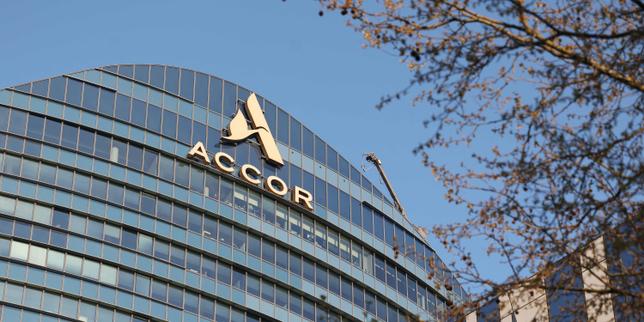
The global hospitality industry just hit a tripwire that most executives spent decades trying to bury. When Accor, the French multinational that operates brands like Fairmont, Raffles, and ibis, issued a "firm denial" regarding involvement in human trafficking, it wasn't just a PR cleanup. It was a panicked response to a tactical nuclear strike from the financial sector. A hedge fund didn't just question Accor’s margins; it went for the jugular by accusing the world’s sixth-largest hotel group of systemic failure in preventing the most heinous crimes imaginable within its properties.
This isn't a story about a few bad actors in a single hotel. It is a story about the structural rot of the "asset-light" business model and the legal firewalls that hotel giants use to distance themselves from what happens behind closed doors.
The Hedge Fund Weaponization of Ethics
For years, short-sellers focused on accounting discrepancies or inflated earnings. That has changed. We are now seeing the rise of "ethical shorting," where investment firms dig into Environmental, Social, and Governance (ESG) failures to tank a stock. In this instance, the hedge fund isn't just playing the role of a financial watchdog; it is acting as a self-appointed moral prosecutor.
Accor’s defense rests on the idea that these allegations are "unfounded and misleading." However, in the world of high-stakes investigative journalism, a denial is only as strong as the audit trail behind it. The core of the conflict lies in the distance between a corporate headquarters in Issy-les-Moulineaux and a franchised economy hotel in a transit hub. When a company moves to an asset-light model—selling off the physical real estate to focus on management and branding—it creates a massive accountability gap. They collect the fees, but the legal liability for labor practices or onsite crimes often falls on the third-party owner.
The hedge fund is betting that the public and the regulators will no longer accept this "not my backyard" defense. By linking Accor’s brand to trafficking, they aren't just looking for a dip in the share price. They are trying to force a revaluation of the entire hospitality sector's risk profile.
The Asset Light Liability Loophole
To understand how Accor found itself in this crosshair, you have to look at the plumbing of modern hotel chains. Thirty years ago, hotel companies owned their buildings. They hired the cleaners, the security, and the front desk staff directly. Today, Accor is largely a software and marketing company that happens to put its logo on buildings owned by investment trusts and private equity groups.
This transition was hailed by Wall Street as a stroke of genius. It removed heavy debt from the balance sheets and allowed for rapid global expansion. But it also fractured the chain of command. If a cleaning crew in a franchised hotel is being exploited by a sub-contracted labor provider, Accor’s central leadership can claim they had no direct knowledge.
The "firm denial" issued by the group is a legal necessity. If they admit to even a fraction of the oversight failure, they open the floodgates to class-action lawsuits and a permanent blacklisting from ESG-sensitive institutional funds. The problem is that "denying" involvement in trafficking is a low bar. The real question is whether their compliance systems are designed to catch it, or if those systems are merely "paper shields" designed to provide plausible deniability.
Why the Hospitality Sector is a Magnet for Abuse
Hotels provide the perfect infrastructure for illicit activities because they offer anonymity, high turnover, and private spaces. Investigative data shows that labor trafficking often hides in plain sight within the supply chains of these massive groups. Think about the laundry services, the deep-cleaning contractors, and the renovation crews. These are often three or four layers removed from the brand’s HR department.
The Mechanics of Oversight Failure
- Fragmented Audits: Chains often rely on self-reporting from franchisees. A checklist sent via email once a quarter is not an investigation.
- The Price War: Pressure to keep "Room RevPAR" (Revenue Per Available Room) high while keeping costs low forces franchisees to cut corners on labor.
- Shadow Staffing: Many hotels use "temp agencies" that are little more than shell companies. These entities frequently withhold passports or dock pay for "travel expenses," which is the textbook definition of forced labor.
The hedge fund's report likely focuses on these cracks. They aren't suggesting that Accor executives are sitting in boardrooms plotting crimes. They are arguing that the business model is inherently negligent. If you profit from a brand name, you must be responsible for the blood on the floorboards of the buildings carrying that name.
The French Connection and the Duty of Vigilance
Accor is particularly vulnerable because of French law. The Loi de Vigilance (Duty of Vigilance Law) mandates that large French companies must implement a "vigilance plan" to identify risks and prevent serious violations of human rights and fundamental freedoms. This includes the activities of their subsidiaries, suppliers, and subcontractors.
This law transforms a moral failing into a clear legal liability. If a hedge fund can prove that Accor’s vigilance plan was a mere formality—a "tick-the-box" exercise—the company faces massive fines and court-ordered restructuring. The "firm denial" isn't just for the press; it’s a pre-trial defense strategy.
Critics of the hotel industry argue that the current compliance audits are theater. Most auditors announce their visits weeks in advance. This gives unscrupulous site managers plenty of time to hide irregular staff or "clean up" the books. To truly combat trafficking, a hotel group would need to employ undercover investigators and conduct unannounced forensic audits of their subcontractors' bank records. That costs money. It eats into the margins that the asset-light model was supposed to protect.
The Financial Risk of Moral Contagion
The market reaction to these accusations reveals a shift in investor psychology. We are entering an era of "moral contagion," where a single verified report of abuse can lead to a mass exodus of capital. Pension funds, which hold significant stakes in Accor, have strict mandates. They cannot be seen to be profiting from entities linked to human rights abuses.
This puts Accor in a pincer movement. On one side, they have the short-selling hedge fund trying to trigger a sell-off. On the other, they have their long-term institutional investors demanding "clarity" and "transparency." A simple press release saying "we don't do that" won't suffice anymore. The market is demanding a level of radical transparency that the hospitality industry has spent a century avoiding.
The danger for Accor is that this becomes a "death by a thousand cuts." Even if the hedge fund's most sensational claims are disproven, the process of the investigation will likely unearth dozens of smaller, systemic failures. Each one of those failures is a headline. Each headline is a hit to the brand's premium status.
Beyond the Denial
If Accor wants to survive this with its reputation intact, it has to move past the defensive crouch. The industry needs a new standard of "radical accountability" where the franchisor assumes total responsibility for the labor practices of the franchisee.
This would mean:
- Ending the use of unverified third-party labor contractors.
- Implementing real-time, anonymous whistle-blowing platforms for all staff, including sub-contractors.
- Tying executive bonuses directly to the "human rights health" of the entire portfolio, not just the owned assets.
The current strategy of "firmly denying" is a relic of 20th-century crisis management. In a world where data is transparent and hedge funds have the resources of private intelligence agencies, you cannot hide behind a logo. The hotel room is no longer a private space; it is a node in a global supply chain, and every node is now under a microscope.
The hospitality giants are finding out that you can sell the building, but you can't sell the responsibility. If the walls could talk in some of these franchised properties, they wouldn't be reciting the corporate mission statement. They would be calling for help.
Accor’s next move shouldn't be another press release. It should be an exhaustive, independent audit of every single sub-contractor in its global network, published in full for the world to see. Anything less is just waiting for the next short-seller to find a new crack in the facade.
Audit your supply chain today, or wait for the market to do it for you.