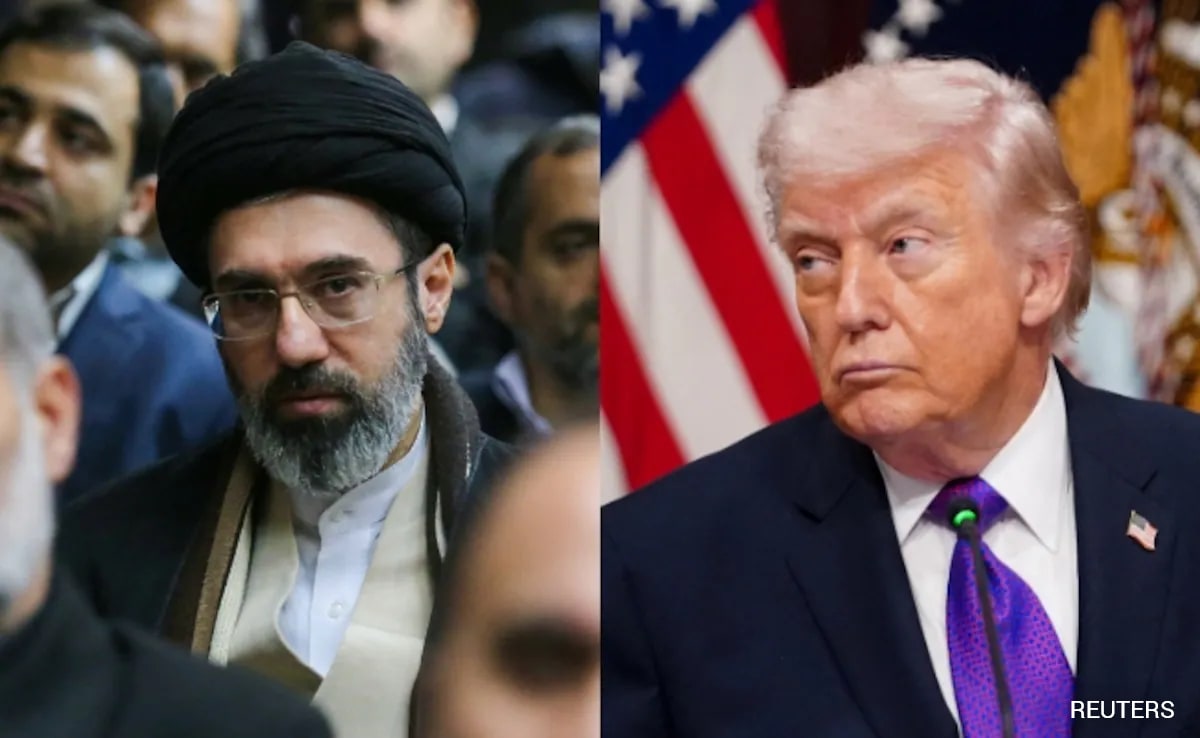
The rumors currently swirling around Tehran and Washington represent more than just wartime propaganda; they signal a terminal crisis in the Islamic Republic’s succession model. On February 28, 2026, a joint U.S.-Israeli strike leveled the central compound in Tehran, killing Supreme Leader Ali Khamenei and five family members. Within days, the Assembly of Experts hurriedly anointed his second son, Mojtaba Khamenei, as the third Supreme Leader. Yet the man whose face now looks down from giant billboards in the capital has not been seen in the flesh. Donald Trump recently stated he believes Mojtaba is alive "in some form," but the reality is likely a leader confined to a secure medical facility, grappling with severe injuries that may have cost him at least one limb.
This is the brutal truth of the "Ramadan War" succession. The Iranian regime has traded its theological legitimacy for a hereditary gamble, placing a "wounded veteran" at the helm who cannot even stand to deliver his own inaugural address.
The Invisible Ayatollah
Since his appointment on March 8, Mojtaba Khamenei has been a ghost. While state media broadcasts messages in his name, they are read by news anchors. Rumors from hospital staff at Sina University Hospital suggest a trauma ward has been sealed by Revolutionary Guard (IRGC) units. Intelligence reports indicate the new leader suffered catastrophic shrapnel damage to his legs, a ruptured liver, and may have undergone an amputation.
Tehran’s ambassador to Cyprus, Alireza Salarian, broke the silence by admitting Mojtaba was "lucky to survive" the bombardment that killed his father. He confirmed injuries to the legs, hands, and arms. This physical incapacitation is a nightmare for a regime that relies on the "Wali-ye Faqih" to project divine strength and absolute command. A leader in a coma or a wheelchair is a leader who cannot effectively mediate the cutthroat rivalries between the IRGC and the traditional clergy.
The regime has attempted to pivot this disaster into a narrative of martyrdom. They now call him a "janbaz"—a wounded veteran—of the Ramadan War. It is a desperate attempt to link his personal suffering to the broader national struggle, mirroring how his father, Ali Khamenei, used a paralyzed right arm from a 1981 assassination attempt as a badge of revolutionary honor. But there is a difference between a paralyzed arm and a leader who cannot leave a bunker.
The IRGC Kingmakers
The elevation of Mojtaba was not a spiritual consensus. It was a palace coup. Intelligence suggests IRGC commanders pressured the 88-member Assembly of Experts with "repeated contacts and psychological pressure" to bypass formal candidates like Gholam-Hossein Mohseni-Eje'i or Hassan Khomeini.
The IRGC needs Mojtaba because he is their creature. He spent decades managing the "Beyt"—the Supreme Leader’s office—serving as the bridge between the clerical establishment and the security apparatus. He is the guardian of the IRGC’s vast economic empire, which controls everything from oil exports to supermarket chains. Without a Khamenei at the top, the legal and theological framework that allows the IRGC to operate as a state-within-a-state begins to dissolve.
Donald Trump’s dismissive rhetoric—calling the choice "unacceptable" and claiming the new leader "won't last long"—reflects a U.S. strategy of decapitation. By targeting the leadership directly, the coalition has forced the regime into a corner where they must rally around a figure who may be medically incapable of exercising power.
A System Under Acute Strain
The constitutional foundation of Iran is now at an inflection point. The original 1979 doctrine required the Supreme Leader to be a "Marja"—a top-tier religious authority. Ali Khamenei was already a compromise on this front. Mojtaba, who only entered serious religious schooling in his thirties and has published no significant jurisprudence, fails even the lowered standards of the current constitution.
He is, for all intents and purposes, a Crown Prince in clerical robes.
This transition from a theocracy to a hereditary military dictatorship has not gone unnoticed by the Iranian public. During the 2025-2026 protest waves, the slogan "Mojtaba, may you die and never see leadership" became a common refrain. The regime’s decision to appoint him anyway shows they have abandoned the pursuit of popular or even religious legitimacy. They are now ruled by raw survival instinct.
The Reparations Gambit
Even from his hiding place, the "Shadow King" is attempting to project force. The first official statement attributed to him demanded the immediate closure of all U.S. bases in the region and threatened the seizure of foreign assets as "war reparations." It is a maximalist position designed to prevent any appearance of weakness.
However, the markets and the military command see through the smoke. If Mojtaba remains a voice on a tape, the internal power struggle will only intensify. There are already reports of friction within the interim council, where figures like President Masoud Pezeshkian and Speaker Mohammad Bagher Ghalibaf must manage a war while taking orders from a man they cannot see.
The IRGC’s use of AI-enhanced photos to show a healthy Mojtaba receiving the national flag from his father only underscores the deception. In a world of satellite surveillance and high-altitude drones, you can only hide a Supreme Leader for so long. Eventually, he must lead or be replaced.
The current deadlock serves nobody but the hardliners who thrive in the chaos of a "forever war." If Mojtaba Khamenei is indeed "damaged" as Trump claims, the Islamic Republic is not just fighting a war against external enemies. It is fighting a race against time to prevent the total collapse of the authority it spent 47 years building.
The bunker in Tehran is not just a shelter; it has become a tomb for the original revolutionary ideal. Whether Mojtaba emerges from it or not, the era of the traditional Ayatollah is over. What comes next is a military state with a religious facade, or a total rupture that the IRGC may not be able to suppress.
Would you like me to analyze the specific economic assets held by the Khamenei family's "Setad" empire that are now at risk of seizure by the U.S. coalition?