The air in the control room of a nuclear power plant doesn't smell like ozone or scorched earth. It smells like industrial floor wax and lukewarm coffee. It is a space of aggressive boredom. Operators watch screens that show nothing changing, and that stillness is the greatest success they can achieve.
Forty years ago, that silence broke.
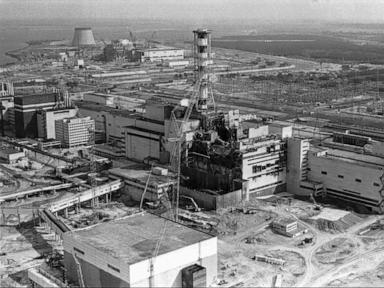
In April 1986, a series of human errors and design flaws at Chernobyl turned the word "nuclear" into a synonym for "apocalypse." We watched the grainy footage of graphite fires and felt a collective shiver. For decades, the cooling towers that dotted our horizons became tombstones—monuments to a technology we decided was too volatile for our trembling hands. We retreated. We burned coal. We choked the sky with carbon because it felt safer to deal with a slow poison than a sudden flash.
But the silence is being interrupted again. Not by an alarm, but by a realization.
The Girl and the Grid
Consider a hypothetical resident of a city like Bucharest or Chicago. Let’s call her Elena. Elena doesn’t care about the physics of neutron moderation. She cares that her heat stays on during a polar vortex. She cares that the air her daughter breathes doesn’t trigger another asthma attack.
For thirty years, Elena’s world was powered by the ghosts of ancient ferns—coal and gas. It was reliable, but it was dirty. Then came the promise of the wind and the sun. It felt clean. It felt virtuous. But as the sun dipped below the horizon and the wind died down during the coldest week of February, the grid began to groan. The "green" transition hit a wall of cold, hard physics: density.
To power a city with wind, you need an empire of steel and land. To power it with the atom, you need a plot of land the size of a shopping mall.
The global revival of nuclear energy isn't happening because we suddenly stopped being afraid of radiation. It’s happening because we became more afraid of the dark. From the fjords of Finland to the industrial hubs of China, the calculus has shifted. The monster in the basement turned out to be the only thing capable of holding up the roof.
The Physics of Forgiveness
We are currently witnessing a massive life-extension project. In places like California and Germany, plants that were scheduled for execution are being granted stays of entry. The Diabolo Canyon power plant, once a target for every environmental protestor in the West, is now viewed as an indispensable anchor for a state trying to banish fossil fuels.
Why the change of heart? Because we’ve learned that the "intermittency problem" of renewables isn't just a technical hurdle; it’s a human one.
Imagine a hospital. The ventilators in the ICU require a steady, unwavering flow of electrons. $P = VI$. The power must be constant. You cannot tell a patient to wait for a gust of wind. Traditionally, natural gas filled those gaps. But as geopolitical tensions turn gas pipelines into weapons of war, nations are looking back at the uranium pellet—a piece of fuel the size of a gummy bear that holds as much energy as a ton of coal.
The new reactors being designed today are not the behemoths of the 1970s. We are moving toward Small Modular Reactors (SMRs). Think of them as the difference between a mainframe computer that fills a room and the laptop on your desk. These reactors are designed to be "walk-away safe."
If a 20th-century reactor was a campfire that needed constant tending to stay contained, an SMR is more like a candle in a glass jar. If you stop tending it, the flame simply goes out. The physics of passive safety means we are no longer relying solely on a tired operator making the right choice at 3:00 AM. We are relying on gravity and convection.
The Price of Ghost Stories
The greatest barrier to the nuclear revival isn't the waste or the risk of a meltdown. It’s the trauma.
We are a species that tells stories to survive. The story of nuclear energy has been told through the lens of Godzilla and The Simpsons. We grew up with the glowing green sludge as the ultimate villain. But the reality is far more mundane and, ironically, far safer.
Statistically, nuclear energy is one of the safest ways to generate electricity, rivaling wind and solar in deaths per terawatt-hour. It is far safer than the "silent killer" of particulate matter from coal plants, which claims millions of lives annually through respiratory failure. Yet, we don't write horror movies about coal soot. We don't have a "Chernobyl" for the slow, grinding reality of climate change.
The cost of our fear has been forty years of lost time.
In France, they made a different choice decades ago. They leaned into the atom. As a result, they enjoy some of the lowest carbon emissions in Europe and some of the most stable electricity prices. They didn't see it as a deal with the devil; they saw it as a civil engineering project. Now, the rest of the world is frantically trying to read their blueprints.
The Invisible Stakes
As we move toward 2030 and beyond, the demand for electricity is set to explode. It isn’t just about lightbulbs anymore. It’s about the massive server farms training Artificial Intelligence. It’s about the desalination plants providing water to drought-stricken regions. It’s about the transition to electric vehicles.
We are building a world that runs on a digital heartbeat. That heartbeat cannot skip.
The revival of nuclear energy is a confession. It is an admission that the world is more complex than the slogans of the 1990s suggested. We need a "baseload"—a heavy, unmoving foundation of power that doesn't care if the clouds are thick or the air is still.
There is a deep, quiet irony in the fact that the technology which once threatened to end civilization is now the most viable tool for saving it. We are learning to split the atom a second time—not in a laboratory, but in our minds. We are splitting the concept of "nuclear" away from "weaponry" and fusing it to "survival."
The cooling towers are not tombstones. They are lungs.
In the small towns where these plants are being revitalized, the mood is changing. Workers who thought their specialized skills were relics of a bygone era are being called back. Apprentices are learning how to weld to standards that are almost spiritual in their precision. There is a sense of purpose returning to the industry. It’s the feeling of being useful again.
The shift is messy. It’s expensive. Building a nuclear plant remains a logistical nightmare of regulation and capital. But the alternative—a slow descent into energy poverty and climatic instability—is finally viewed as the greater risk.
We are stepping back into the control room. We are checking the dials. We are choosing the stillness.
The coffee is still lukewarm, and the floor wax still smells the same. But the lights staying on in Elena’s daughter's bedroom are no longer a miracle of ancient carbon. They are the result of a quiet, steady flicker of heat from a metal we have finally learned to respect without hating.
The atom doesn't care about our narratives. It doesn't care about our movies or our protests. It simply waits for us to decide how much power we are willing to handle to keep the darkness at bay.