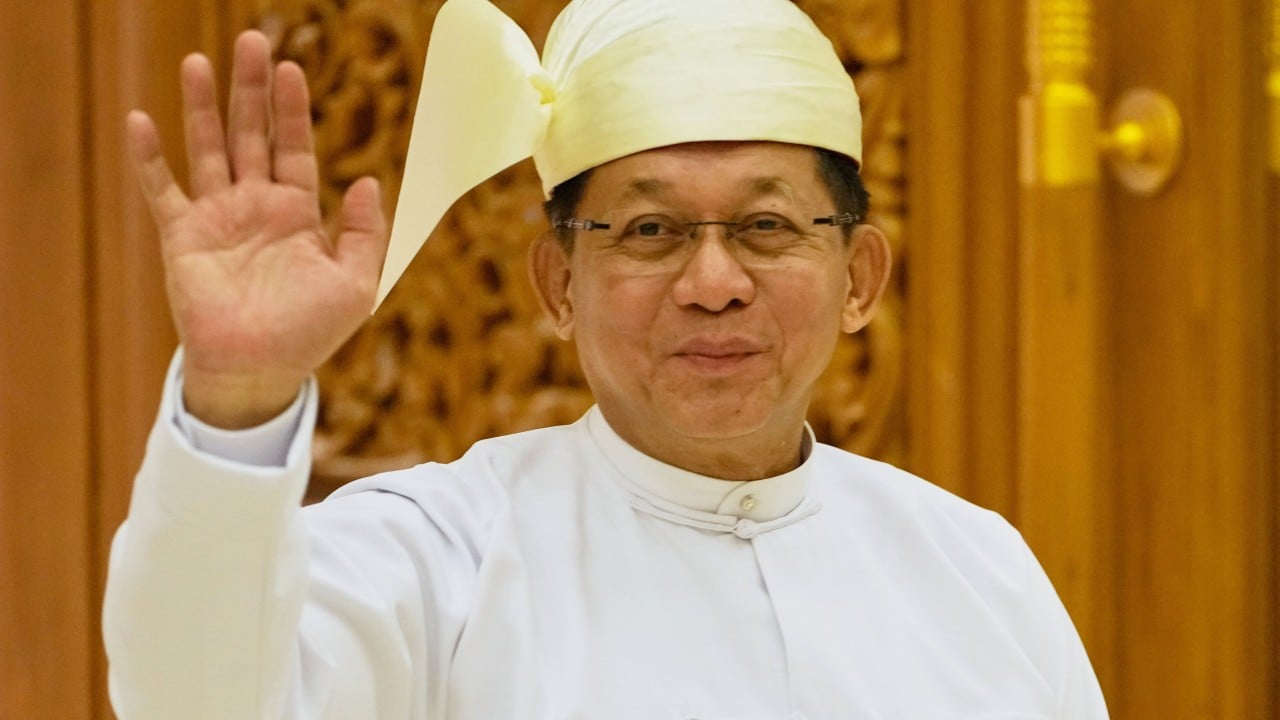
The air in the conference room in Jakarta is climate-controlled to a precise, sterile coolness. It is the kind of air that feels expensive. On the mahogany table sits a row of laptops, their cameras blinking with a soft, green light. Across the sea, in a place the diplomats rarely visit anymore, the air smells of wet ash and diesel.
For three years, the Association of Southeast Asian Nations—ASEAN—has treated Myanmar like a ghost at the feast. They stopped sending invitations to the big parties. They issued stern memos. They drew a line in the sand and waited for the generals in Naypyidaw to cross it. The generals didn't cross it; they simply dug in. Now, the silence is breaking, not with a roar, but with the soft hum of a Zoom call.
We are witnessing the beginning of a "tentative" re-engagement. It is a sterile word for a messy, blood-soaked reality.
Consider a hypothetical mid-level diplomat we will call Min. He sits in a darkened office in Naypyidaw, adjusting his tie before the camera flickers to life. He represents a junta that is losing ground, losing soldiers, and losing the will of its people. On the other side of the screen sit representatives from Thailand, Indonesia, and Laos. They aren't looking at Min as a friend. They are looking at him as a leak in a dam that they are desperate to plug.
The Geography of Desperation
Diplomacy is often described as a chess match, but that is too dignified. It’s more like a neighborhood association trying to figure out what to do about the house on the corner that is currently on fire. You can ignore the smoke for a while. You can tell the owner they aren't allowed at the annual barbecue until they put the flames out. But eventually, the embers start landing on your own roof.
Thailand is feeling the heat. Refugees are crossing the porous border by the thousands. Scams and human trafficking rings operate in the lawless shadows of the borderlands, siphoning off billions of dollars and destroying lives from Bangkok to Berlin. For the neighbors, "re-engagement" isn't about endorsing a regime. It’s about survival.
The virtual talks held recently represent a shift in the weather. For a long time, the "Five-Point Consensus"—a roadmap for peace that has mostly gathered dust—was the only tool in the shed. It demanded an end to violence and a dialogue between all parties. The junta ignored it. ASEAN, in turn, barred Myanmar’s political leaders from high-level summits.
But a vacuum is a dangerous thing in geopolitics. While ASEAN stood on principle, the ground shifted. Resistance forces—the People’s Defence Forces (PDF) and ethnic armed organizations—began winning. The junta is now more fragile than it has been in decades.
The Screen as a Shield
There is a specific kind of cowardice and a specific kind of bravery found in a video call.
When you sit across a table from someone, you can smell their sweat. You can see the slight tremor in their hands. You are forced to acknowledge their humanity. A screen does the opposite. It flattens the world. It allows the diplomats to talk about "humanitarian corridors" and "de-escalation" without having to look at the grime under the fingernails of the men who oversee the air strikes.
This tentative outreach is being led by a "Troika" mechanism—a group consisting of the past, present, and future chairs of ASEAN (Indonesia, Laos, and Malaysia). It is a clever bit of bureaucratic maneuvering designed to ensure continuity. They are trying to find a way to talk to the junta without "recognizing" them. It is a tightrope walk over an abyss.
If you are a mother in Sagaing hiding in a jungle clearing because your village was burned, these talks feel like an insult. To her, there is nothing "tentative" about her life. Her reality is binary: life or death. The nuance of a diplomatic "informal consultation" doesn't put food in her children's mouths or stop the roar of a Yak-130 overhead.
Why the Silence Failed
We often think that isolation is the ultimate punishment. In our personal lives, the "silent treatment" is a weapon. In international relations, we call it sanctions and non-participation. But the junta in Myanmar is built on a foundation of isolation. They have spent sixty years learning how to live in a cellar.
By cutting off all but the most basic channels, ASEAN inadvertently gave up its only leverage: the power of the nudge.
Thailand’s recent push for a more "flexible" approach isn't a sign of weakness; it’s an admission of reality. They are the ones dealing with the fallout. They are the ones seeing the broken bodies and the shuttered trade routes. When your neighbor’s house is burning, you don't send a letter of complaint. You grab a hose, even if you have to talk to the person who started the fire to find the outdoor tap.
The risk, of course, is that talking becomes a form of oxygen. Every time a general gets to present his "reality" to a regional forum, it chips away at the legitimacy of the resistance. It suggests that the status quo is negotiable.
The Invisible Stakes
What is actually being discussed in these virtual rooms? It isn't just about elections or "returns to democracy." That is the lofty language for the press releases.
The real talk is about the price of rice. It’s about the flow of electricity. It’s about the "Cyber-Scam Centers" that have turned parts of Myanmar into a digital Wild West where thousands of people are held in debt bondage, forced to fleece strangers across the globe. These centers are a cancer on the region, and they can only be dismantled if there is some semblance of order.
The diplomats are trying to figure out if there is a version of Myanmar that doesn't involve a total collapse. Because a total collapse in the heart of Southeast Asia is a nightmare that no one—not even the most ardent supporters of the resistance—wants to see. A failed state of 55 million people is a black hole that will swallow the prosperity of the entire region.
The Ghost in the Machine
There is a third party in these calls, though they aren't on the invite list: the National Unity Government (NUG). They are the shadow cabinet, the elected officials forced into exile or hiding.
For ASEAN to truly re-engage, they eventually have to bridge the gap between the men with the guns and the people with the mandate. Right now, the virtual talks are mostly with the guns. It is a lopsided conversation.
Imagine the frustration of an NUG minister, sitting in a safehouse with a flickering internet connection, watching the "official" representatives of his country occupy a screen that should be his. The stakes are his life's work, the future of his children, and the very definition of what it means to be a citizen of Myanmar.
He knows that every "informal" meeting is a test. Can the junta be moved? Can they be bribed with legitimacy into stopping the slaughter? Or are they simply using the talks to buy time, waiting for the world to grow bored of their particular tragedy?
The Architecture of the Long Game
Patience is a luxury the dying do not have, but it is the only currency diplomats trade in.
The move toward virtual talks is a sign that the "wait and see" period is over. The "Five-Point Consensus" is being treated less like a static document and more like a set of suggestions. We are entering a phase of "minilateralism"—small groups of countries taking the lead because the larger body is too slow, too divided, or too scared to act.
This isn't a breakthrough. It’s a probe.
It is the sound of a key turning in a rusted lock. It might open the door to a room where peace is possible. Or it might just break off in the lock, leaving everyone trapped in the dark.
As the laptops are closed in Jakarta and the lights go out in the diplomatic mission in Naypyidaw, the reality remains unchanged on the ground. The hum of the computer fan is replaced by the humid silence of a country waiting for the next rain, or the next raid.
The screen has been dimmed, but the smoke hasn't cleared. It is drifting across the border, thicker than ever, reminding the neighbors that you can turn off a camera, but you cannot turn off a revolution.
The tragedy of Myanmar has always been its proximity to those who feel they can afford to wait. But as the "tentative" talks continue, the lesson is becoming clear: in a connected world, there is no such thing as a distant fire. We are all breathing the same air.