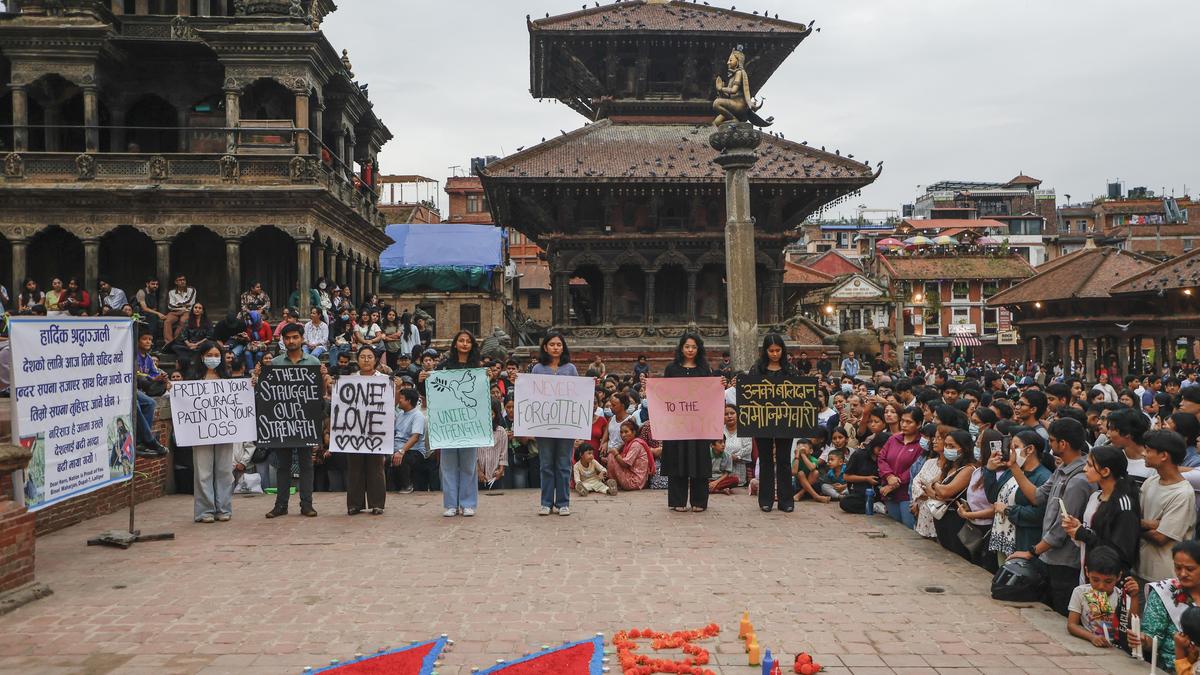
The smell of burnt rubber doesn't leave your nostrils easily. It clings to the fine hairs of your nose, a sharp, chemical reminder that something has shifted in the air of Kathmandu. In September, that scent became the city’s new perfume.
Twenty-year-old Aarav—a name as common as the dust on the Ring Road—spent most of his life being told to wait. Wait for the degree. Wait for the job market to stabilize. Wait for the elders to decide which way the political wind should blow. But in the sweltering heat of that particular autumn, Aarav stopped waiting. He found himself standing on a street corner, holding a sign that felt heavier than the backpack he’d carried through twelve years of schooling. He wasn't alone.
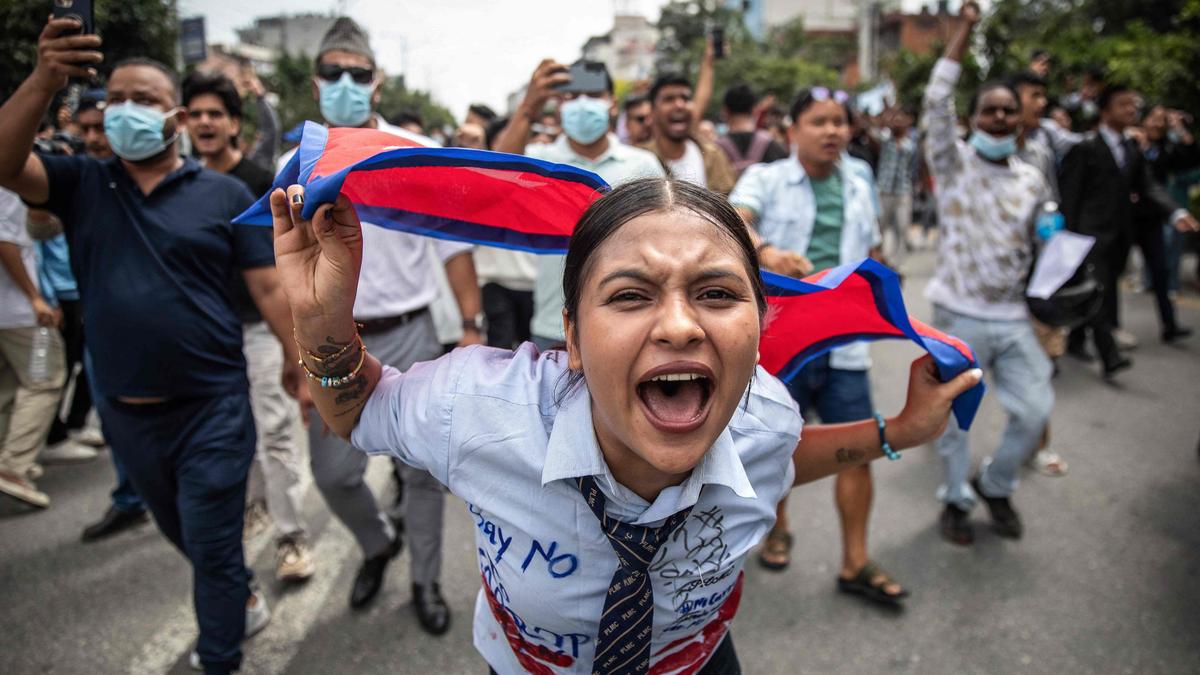
Thousands of young people, most of them born well after the civil war ended, flooded the streets. They weren't there because a political party told them to be. In fact, they were there specifically because the parties hadn't. This was the month the "Silent Valley" found its voice, and it wasn't a polite request. It was a roar.
The Myth of the Docile Youth
For decades, the narrative surrounding Nepal’s youth was one of quiet exodus. The dream wasn't to build a life in the shadows of the Himalayas; it was to find a way out of them. We saw it every day at the Tribhuvan International Airport. Lines of young men and women in crisp white shirts, clutching passports like golden tickets, heading to the Gulf, to Malaysia, to anywhere that offered a wage instead of a promise.
Statistics tell a cold story: nearly 2,000 people leaving every single day. But statistics don't capture the hollow feeling in a mother’s chest when she realizes her son is now just a voice on a WhatsApp call. They don't account for the collective grief of a nation selling its future to pay for its present.
Then came September.
The uprising didn't start in a boardroom or a secret basement. It started on screens. TikTok videos and encrypted messages began to bypass the traditional gatekeepers of information. The youth realized that while they were busy being "the leaders of tomorrow," the leaders of today were mortgaging that tomorrow for personal gain.
Consider a hypothetical student named Maya. She represents the thousands of nursing students who realized their qualifications were worth more abroad than at home because the local healthcare system was strangled by corruption. Maya didn’t want to go to Australia. She wanted to work in her village. But when she saw the systemic hurdles placed in her way—the bribes required for placement, the lack of basic equipment—the frustration turned into a cold, hard resolve. When she stepped onto the pavement in September, she wasn't just protesting a policy. She was fighting for the right to stay home.
When the Digital Becomes Physical
The shift from online venting to physical presence happened with startling speed. The older generation, the veterans of the 1990 and 2006 movements, watched from their balconies with a mix of awe and terror. This was different. There were no flags of the hammer and sickle, no suns or trees representing the established political dynasties.
The air was thick with a new kind of energy. It was decentralized. Chaotic. Raw.
The authorities tried the old playbook. They deployed water cannons and tear gas. They expected the crowd to scatter like dry leaves. Instead, the youth stood their ground, washing their eyes with bottled water and tossing the canisters back. The physical confrontation was merely a reflection of the internal one: the fear of the baton was finally outweighed by the fear of a stagnant life.
The core of the unrest wasn't just about one law or one tax. It was a rejection of the "Gerontocracy"—the rule by the old. In Nepal, the average age is 24, but the average age of the people making decisions is closer to 70. This massive disconnect created a friction that finally ignited. The youth were demanding a seat at a table that hadn't been polished in thirty years.
The Economics of Despair
To understand why this happened in September, we have to look at the grocery bill. Imagine trying to explain to your father why a kilo of tomatoes now costs what a full meal used to. The inflation wasn't just a line on a graph; it was a physical weight.
While the elite argued over coalition governments and ministerial portfolios, the cost of living was quietly strangling the middle class. The youth felt this most acutely. They were the ones entering a job market that didn't exist, in an economy that seemed designed to fail them.
The "invisible stakes" of this uprising were the mental health of an entire generation. We don't talk about anxiety in the tea shops of Patan. We don't discuss the depression of a twenty-four-year-old with a Master’s degree who has to ask his parents for tea money. But those feelings were the fuel for the fire. The protest was a giant, collective therapy session held in the middle of the street, where the diagnosis was "enough is enough."
A Culture in Flux
Something shifted in the social fabric during those weeks. Traditionally, Nepali society is built on a deep, almost unquestioning respect for seniority. You don't argue with your uncle, and you certainly don't argue with a minister.
But the September uprising saw a breakdown of this hierarchy. Young people began calling out their elders on public forums, pointing out the hypocrisy of those who fought for democracy decades ago only to hoard it like a private treasure. This wasn't just a political shift; it was a cultural earthquake.
The music changed, too. The songs blaring from portable speakers weren't the folk tunes of the hills or the polished pop of the city. They were rap tracks, grime, and spoken word—lyrical bullets aimed at the status quo. The language of the protest was modern, global, and unapologetically bold.
The Cost of Silence
It is tempting to look at the aftermath and ask, "What actually changed?" The same faces still occupy the parliament. The laws are still tangled in bureaucracy. If you look only at the surface, you might think the September uprising was a flash in the pan.
That would be a mistake.
The real change happened in the psyche of the people. The "game" didn't change because of a new law; it changed because the players realized they didn't have to follow the old rules. The youth realized their power. They saw that a coordinated group of "keyboard warriors" could actually force the hand of a government.
The fear has shifted. It no longer belongs to the student facing the riot police. It belongs to the politician who realizes that the next time they fail to deliver, the crowd won't just be thousands—it will be millions.
We are living in the "after." The streets have been cleaned. The burnt rubber has faded. But if you walk through the alleyways of Kathmandu and look into the eyes of the young man selling mobile cards or the young woman coding in a dark cafe, you see it.
The silence of the valley has been broken. It’s a low hum now, a vibration beneath the pavement, waiting for the next time the promises turn to dust. The youth of Nepal didn't just change the game; they tore up the board and started writing their own rules in the margins of a history that tried to forget them.
The mountains remain tall and indifferent, but the people at their feet are no longer looking up for permission to exist. They are looking at each other.