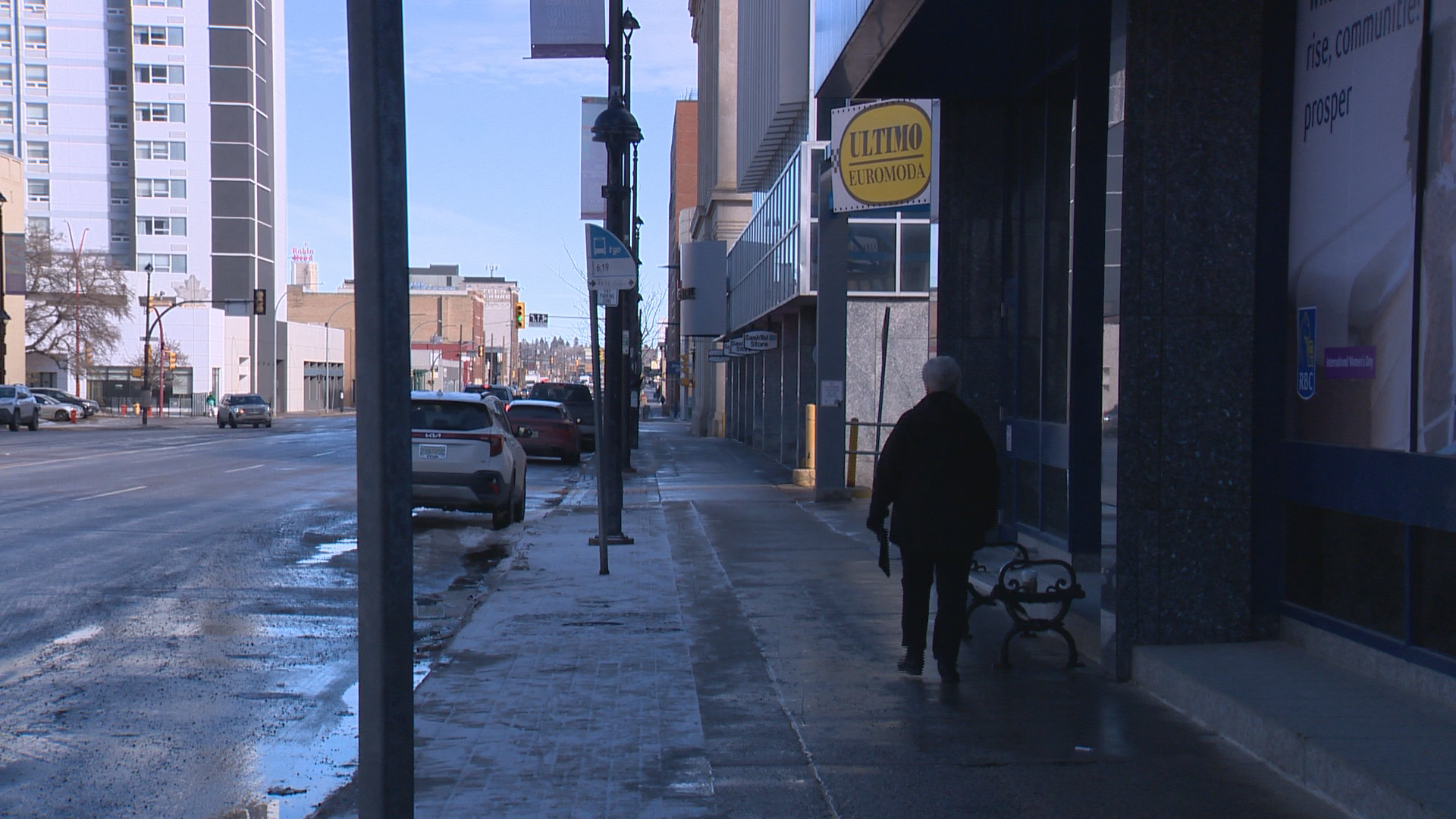
Saskatoon is about to find out if its big-city dreams can survive a small-town layout. The City’s "Link" Bus Rapid Transit (BRT) project is no longer just a bunch of colourful lines on a map; it's a looming reality for 1st Avenue that has local business owners sounding the alarm. This isn't just about buses arriving every few minutes. It's about a complete gutting of one of downtown’s most critical corridors, and if you’re a shop owner or a frequent driver in the core, the math isn’t looking great.
On March 17, 2026, leaders from the Downtown Saskatoon Business Improvement District (BID) and the North Saskatoon Business Association (NSBA) stood near 1st Avenue to voice what many have been whispering for months: the current plan for 1st Avenue is a potential commercial killer.
The 1st Avenue squeeze
The city's blueprint for 1st Avenue between 20th and 25th Streets is aggressive. They want to take a street that currently moves a lot of cars and turn it into a transit-first zone. Specifically, the plan involves carving out two dedicated bus lanes right down the center of the road.
What does that leave for everyone else? One single lane of regular traffic in each direction.
If you've ever tried to navigate downtown Saskatoon during a blizzard or 5 p.m. rush hour, you know how fragile the traffic flow is. Cutting 1st Avenue down to a single lane is a massive gamble. Business groups are worried that once drivers realize they’re stuck behind a slow-moving delivery truck or a car waiting to turn, they’ll just stop coming downtown. As Keith Moen from the NSBA put it, if people can't get in easily, they simply won't go.
The parking problem nobody wants to solve
Then there’s the 61-stall elephant in the room. To make space for those center-running buses and boarding platforms, the city is axing 61 on-street parking spots.
The City’s justification for this is based on a survey that suggests downtown has "abundant" parking. But Shawna Nelson of the Downtown BID pointed out a glaring flaw in that data. The survey was conducted on a Wednesday and Saturday in August. Anyone who lives here knows that half the city is at the lake in August. Judging downtown parking demand based on the quietest month of the year is like judging a restaurant's popularity by looking at the dining room at 3 p.m. on a Tuesday.
For a business like Robles Goldsmith & Jewellery on 1st Avenue, those street spots are a lifeline. They don't have a back alley for couriers or a private lot for clients. When those 61 spots vanish, so does the "convenience factor" that keeps local shops competitive against big-box centers with oceans of free asphalt.
Snow removal and the winter reality
We live in a city where winter isn't an "event"—it's a six-month lifestyle. One of the biggest unanswered questions is how snow removal will work on a single-lane street with a raised transit platform in the middle.
Current windrowing practices usually involve pushing snow to the side or the center. With dedicated bus lanes and narrow traffic corridors, there's nowhere for the white stuff to go without blocking either the buses or the cars. If the city can't keep 1st Avenue clear, the "rapid" in Bus Rapid Transit becomes a joke, and the single lane for cars becomes a glorified goat path.
Why 1st Avenue matters more than you think
1st Avenue was chosen as the north-south "spine" for the Link system because it’s where all three planned lines (Red, Blue, and Green) will eventually converge. It’s supposed to be the high-traffic heart of the system. But the "Transit-Oriented Development" goals for this area feel a bit like putting the cart before the horse.
The city says this infrastructure will encourage more people to live and work downtown. That’s a nice theory. In practice, you're asking existing businesses to suffer through years of construction (slated for 2027) and a permanent loss of accessibility for a ridership boom that might not happen for a decade.
The consultation gap
There's a growing feeling that "public engagement" in Saskatoon has become a one-way street. The BID and NSBA represent over 1,700 businesses, and they're saying their voices aren't actually being heard—just recorded.
Holding engagement sessions during business hours, when a small shop owner can't exactly lock the door and leave, is a classic mistake. The result is a plan that looks great in a CAD drawing but fails the "real world" test of someone trying to drop off a delivery or find a spot to grab a quick coffee.
The City maintains they've been working with these groups, but the disconnect is obvious. When business leaders are holding press conferences to "raise red flags" just weeks before a design report goes to the Standing Policy Committee on Transportation, it’s clear the "collaboration" has broken down.
What happens next
The Link design team is expected to present their report to the Standing Policy Committee on Transportation in April 2026. This is the crunch time. If the city pushes through with the single-lane, center-boarding design without addressing the parking and snow removal concerns, they risk a permanent rift with the downtown business community.
If you’re a business owner on the 1st Avenue corridor, now is the time to get loud. Don't assume the BID or the NSBA has it covered; individual voices in the council chamber carry weight.
- Review the renderings: Check the City of Saskatoon’s Link resources to see exactly how the boarding platforms sit in front of your shop.
- Document your needs: If you rely on street-side couriers or have specific peak-hour parking needs, get that data ready for the April committee meeting.
- Show up in April: The Standing Policy Committee on Transportation meetings are public. Be there, or at least submit a letter for the record.
The "Link" is coming whether we like it or not, but the shape it takes on 1st Avenue shouldn't be decided by a parking survey from a quiet Saturday in August. If Saskatoon wants a world-class transit system, it needs to build one that doesn't sacrifice its downtown core in the process.